


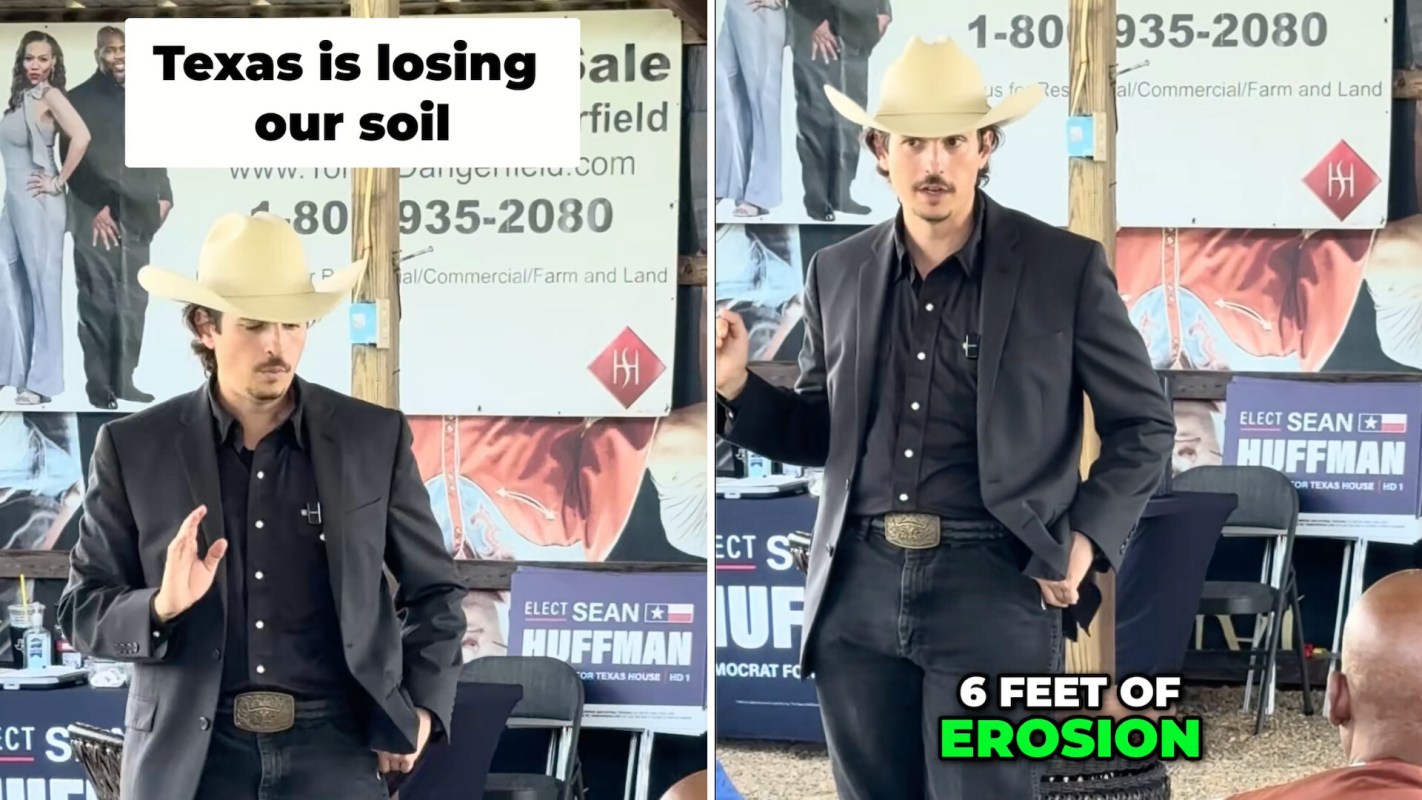
A Texas farmer's blunt warning about soil loss on TikTok is striking a nerve online, tapping into growing concern about the future of food, farming, and land stewardship.
Clayton Tucker (@ClaytonTuckerTX), who is running to be Texas' Agricultural Commissioner, shared a video where he warned, "We are losing our soil at an incredibly scary clip."
@claytontuckertx Our soil is dying, and the Greedy Few keep treating our land like it's disposable. Some experts warn we may only have 50 to 80 harvests left before soil nutrition collapses. If we want healthy food, lower prices, and a future for the next generation, we have to rebuild our soil now. Sign our petition to save Texas soil >> Link in bio #Texas #SaveTexasSoil #HealthyFood #PeopleOverProfits ♬ original sound - Clayton Tucker
The post has drawn attention for a deeply unsettling estimate. Tucker stated that farmers may have "50 to 80 harvests left before our soil nutrition dramatically just tanks."
That claim has been mostly pushed back on by sources such as Our World in Data, which said that "these claims are overblown, but soil erosion is a problem and we can do something about it." Our World in Data dug deeper into the concern and what led to it, finding that it's more about what could happen with no management efforts to maintain soil health — and if corporate interest overtake those efforts.
In any case, the concern still underscores the importance of proper management efforts and overall environmental health for wider areas that can contribute to nearby growing conditions.
"Our soil is dying, and the Greedy Few keep treating our land like it's disposable," he wrote in the video's caption. "[...] If we want healthy food, lower prices, and a future for the next generation, we have to rebuild our soil now."
TCD Picks » Quince Spotlight
💡These best-sellers from Quince deliver affordable, sustainable luxury for all




Healthy soil is the foundation of food systems everywhere. It helps crops access nutrients, hold water more effectively during drought, and even store carbon.
When soil is depleted, farms often become more reliant on expensive inputs. Harvests can grow less resilient, and consumers may eventually feel the effects through higher prices and less reliable food supplies.
Even if the exact "50 to 80 harvests" timeline is exaggerated, Tucker's concern comes from a valid place, as degraded soil poses a threat to farmers, communities, and ecosystems.
Practices like cover cropping, compost use, and reduced tilling can help rebuild soil over time. They can help create the kind of regenerative agriculture that has gained renewed attention in recent years.
The issue is especially significant in a state like Texas, where drought, heat, and extreme weather already strain farms. Better soil can help land absorb and retain moisture, making communities more resilient when conditions turn harsh.
Commenters largely agreed that soil restoration should be a bigger priority.
One person wrote, "biodiversity is key," adding that while it may be "harder to harvest," it is "better for us [and] better for the planet."
Another stated, "We need to start doing crop rotation."

Get TCD's free newsletters for easy tips, smart advice, and a chance to earn $5,000 toward home upgrades. To see more stories like this one, change your Google preferences here.






