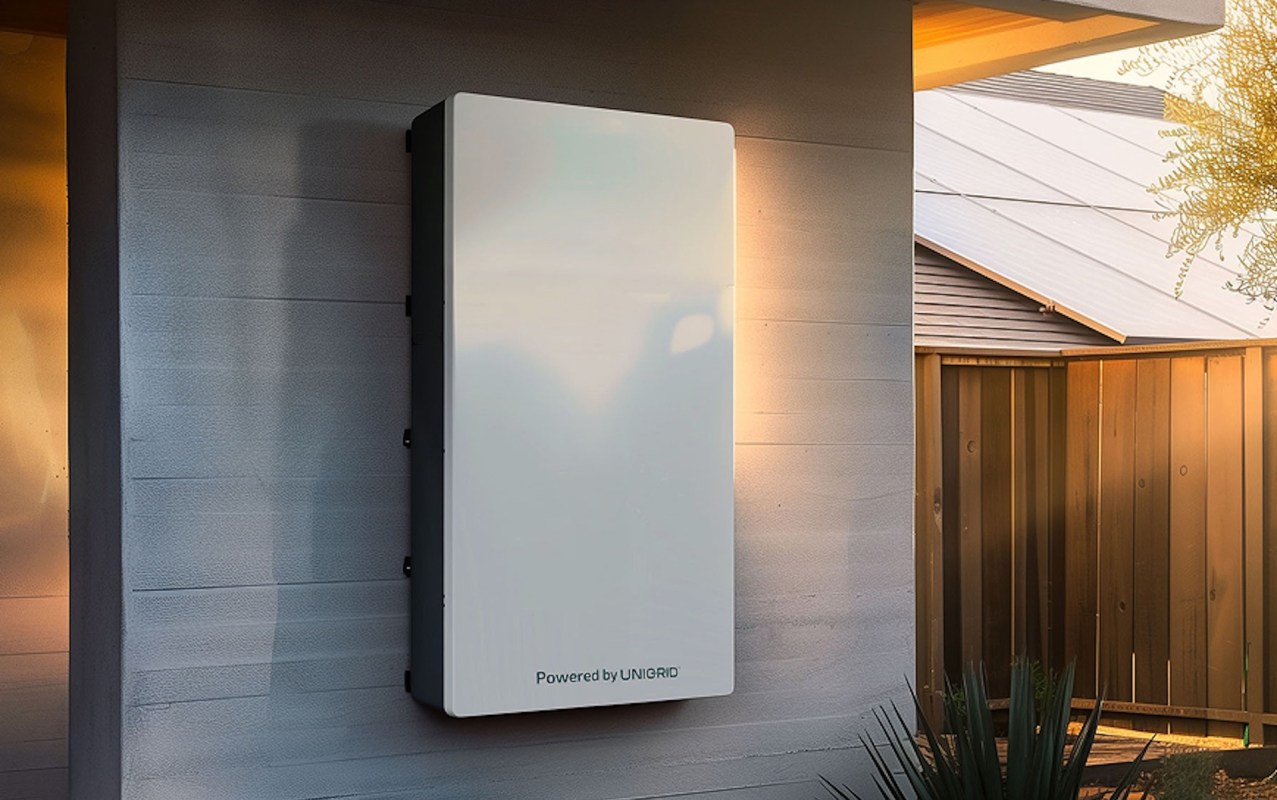
A new kind of home battery is beginning to reach households — and it could offer a safer, longer-lasting backup option for people looking to lower energy bills and better withstand outages.
Unigrid, a California company, says homes in Europe have already received installations of Na+Casa, its first residential sodium-ion battery system.
What's happening?
Na+Casa is Unigrid's newly introduced residential energy storage product, and it uses sodium-ion chemistry instead of the lithium-ion cells found in many home batteries.
Pv magazine USA reported that Unigrid rates the system for 10,000 complete charge-discharge cycles, which the company says is equivalent to more than 27 years of daily cycling.
The battery uses Unigrid's proprietary sodium chromium oxide cathode technology, which the company says is meant to eliminate the fire risk associated with conventional lithium-ion cells.
Each Na+Casa battery offers 9.25 kilowatt-hours of usable storage and can either be attached to a wall or fitted with optional wheels.
TCD Picks » Good Store Spotlight
Get 10% off your next purchase with code TCD10


The unit can be charged in temperatures from -4 to 140 degrees Fahrenheit and can discharge power from -40 to 140 degrees.
"As residential energy bills rise — especially during extreme weather events such as the record heatwave we are seeing around the world — homeowners need storage that is safe, reliable, and financially sound," said Unigrid CEO Darren H. S. Tan, per pv magazine.
Why does it matter?
A home battery can keep the lights on during blackouts, use stored solar power after sunset, and help households avoid expensive electricity during peak-rate hours.
A battery that lasts for decades could improve the economics for families considering a solar-plus-storage setup, especially as utility bills rise and extreme weather puts more strain on the grid.
Sodium is more abundant than lithium, which could help diversify battery manufacturing and ease some of the cost and sourcing pressures tied to today's battery market.
What's being done?
According to Unigrid, Na+Casa works with most existing hybrid inverters, a feature that could help homeowners add storage to current solar setups instead of replacing them.
The company says it is also trying to keep the system priced in line with lithium-ion products now on the market.
Na+Casa already carries UN 38.3 certification, with CE listing plus UL 9540 and UL1973 certifications still pending.
Unigrid plans to bring the battery to the U.S. before the end of 2026.
Na+Casa is also arriving as more sodium-ion developers work to introduce alternatives for homes and businesses, and that growing competition could expand the storage choices available.

Get TCD's free newsletters for easy tips, smart advice, and a chance to earn $5,000 toward home upgrades. To see more stories like this one, change your Google preferences here.