


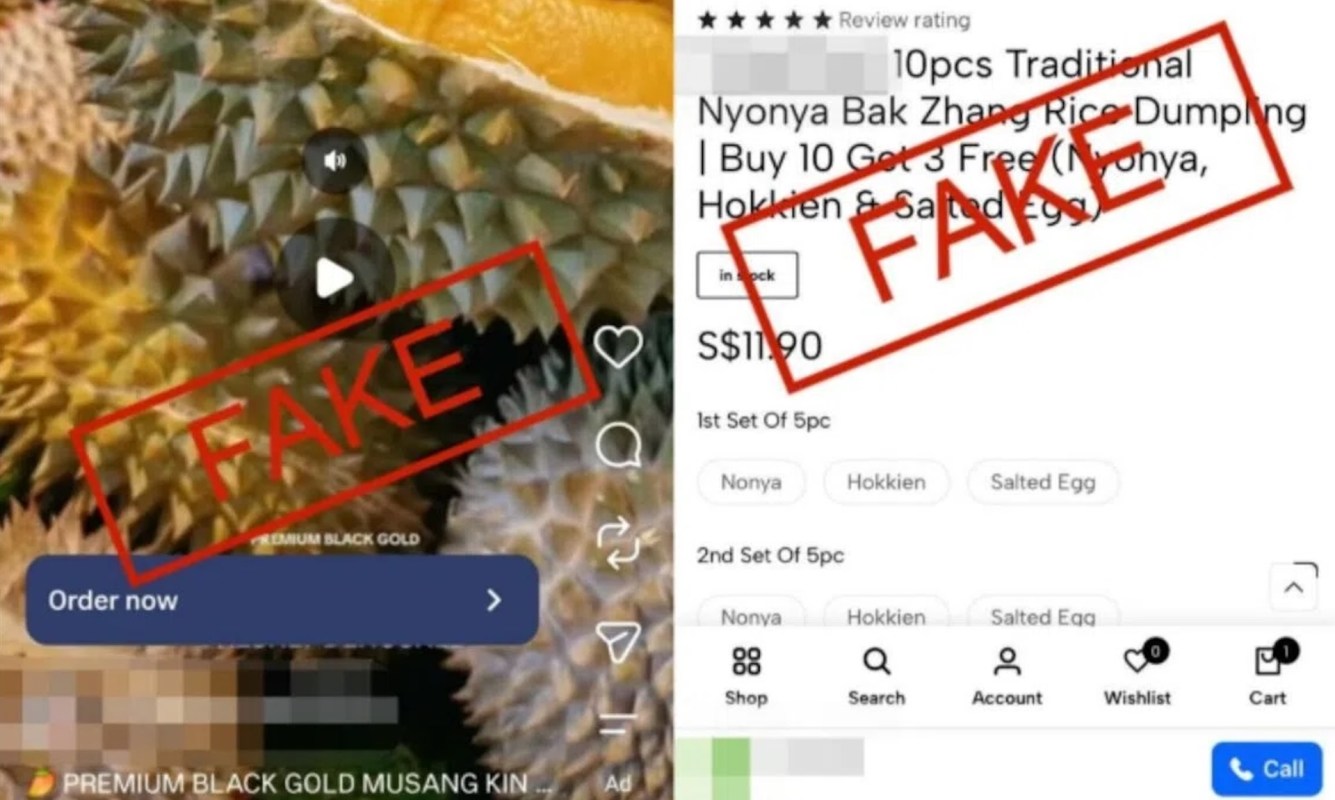
Bargain shopping on social media turned costly for hundreds of people in Singapore after fake ads promising cheap products lured them into phishing traps.
At least 246 victims have lost at least $1.4 million after clicking promotions for low-cost food, fashion, and household goods.
Here's what to know
According to The Straits Times, Singapore police said in an Oct. 2 statement that fraudulent social media ads lured victims and sent them to phishing websites. One example police cited was rice dumplings on sale in a "buy 10 get 3 free" offer.
Clicks on those bargain promotions did not lead to real retailers. Instead, victims landed on look-alike sites set up to collect their card details and i-banking credentials.
To complete the supposed purchases, the outlet said victims were asked for banking information. That sometimes meant card details or i-banking credentials, and sometimes both. Some victims also provided one-time passwords or approved digital-token requests to complete the payments.
For many, the scam became obvious only after unfamiliar charges appeared on their cards or money was withdrawn from their bank accounts.
TCD Picks » Quince Spotlight
💡These best-sellers from Quince deliver affordable, sustainable luxury for all




More background
The Straits Times noted that reports of these phishing scams are increasing, according to the authorities.
That increase is unfolding even as some broader scam figures in Singapore have improved. In mid-year scam statistics, police put losses for the first half of 2026 at $410.6 million, compared with $500.2 million in the same stretch of 2025, according to the publication.
The number of reported scam cases also fell about 14%, from 19,644 in the first half of 2025 to 16,821 in the first half of 2026. Since 2019, scam losses in Singapore have topped a whopping $4 billion, according to The Straits Times.
What can be done?
Police urged the public to follow the anti-scam "ACT" framework, which organizes the advice into three parts. They are improving account security, recognizing warning signs early, and reporting suspicious activity, the outlet said.
The "Add security features" step addresses cases in which victims lost money after entering card details and i-banking credentials. Additional account protections can make it harder for scammers to profit even if someone lands on a fake website.
The "Check for signs" step matches the pattern police described. Treat a deal that seems unusually cheap, a redirect from a social media ad to an unfamiliar website, or any request for banking credentials, one-time passwords, or digital token approval as serious red flags.
Under "Tell," the public can check www.ScamShield.gov.sg or call the 24-hour ScamShield Helpline at 1799 for scam information, according to The Straits Times.
Where can I learn more?
Too-good-to-be-true online deals can take many forms, including suspicious shopping posts, crypto ads, and other schemes.
• On Reddit, shoppers warned that suspicious online listings could lead straight to stolen personal information.
• In the U.K., a woman in her 70s clicked a crypto ad and lost £250,000.
• Online shoppers said an AI-generated sweater turned a simple purchase into what looked like fraud.

Get TCD's free newsletters for easy tips, smart advice, and a chance to earn $5,000 toward home upgrades. To see more stories like this one, change your Google preferences here.






