


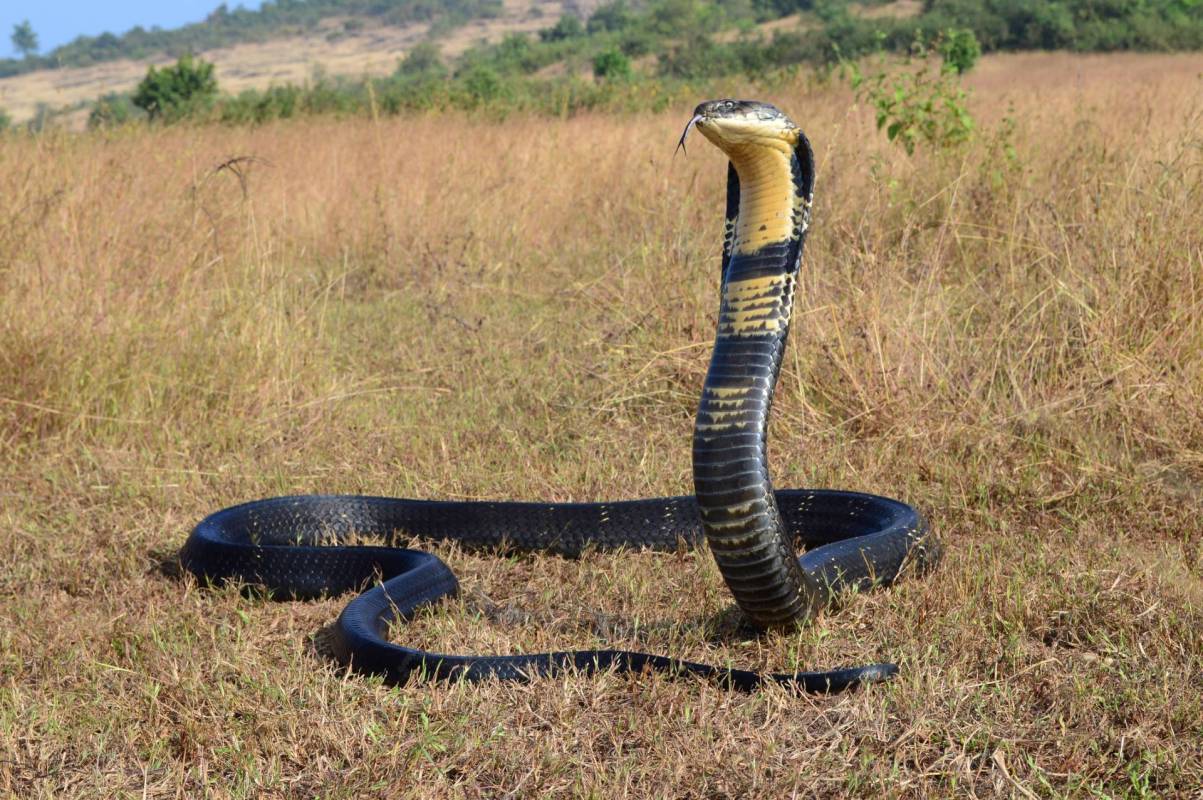
In popular imagination, cannibalism in animals sounds like an extreme exception. For snakes, though, researchers say it may occur often enough to qualify as a repeated survival tactic, as Live Science details.
A study suggests separate snake lineages have reached the same behavior over and over, treating cannibalism as a practical response to stress, food shortages, and other survival pressures rather than as a biological oddity.
What's happening?
Researchers documented 503 incidents across 207 snake species and concluded that the behavior likely evolved at least 11 times independently, Live Science noted. Their findings were published in Biological Reviews.
The records covered both captive and wild snakes from every continent where snakes are found, Live Science noted. Researchers said the reports most often involved the Colubridae, Viperidae, and Elapidae families.
Colubrids, the largest snake family, made up 29% of the reports. Vipers accounted for 21%, and elapids, a group that includes cobras, represented about 19%.
"For us humans, we don't think of cannibalism as something common –– it's something weird and disgusting," lead author Bruna Falcão of the University of São Paulo told Live Science. "But for snakes, it's good for them; it's good for their ecological fitness. … It's strategic."
TCD Picks » Quince Spotlight
💡These best-sellers from Quince deliver affordable, sustainable luxury for all




The researchers also found an anatomical constraint on the behavior. Live Science noted that there were no cases in species whose jaws cannot open wide enough to swallow another snake.
Why does it matter?
The review offers another example of how adaptable snakes can be when conditions become harsh.
Cannibalism has often been treated by scientists as maladaptive, but the new analysis adds to evidence that it can provide evolutionary benefits in some circumstances, especially when prey is limited or when snakes have broader diets.
Human activity can amplify many of the pressures tied to unusual animal behavior, including habitat damage, falling prey numbers, and the stresses associated with captivity.
The study noted that many of the reported viper cannibalism cases came from captive environments, where confinement and limited access to food may be contributing to the behavior.
A better understanding of these trends could help zookeepers, wildlife professionals, and conservationists manage snakes in human care and make more sense of the behavior seen in disrupted ecosystems.
"None of us expected that … snakes could be so cannibalistic, and no one was talking about it," Falcão revealed to Live Science. "The more we were searching, the more cases we found."
What's being done?
One important advance is that researchers are now assembling the evidence in a more organized way.
Earlier documentation of snake cannibalism was spread across individual reports, books, and archival sources, which made broader evolutionary patterns harder to recognize, Live Science said.
That gives scientists a stronger starting point for future research into which factors matter most, including food shortages, mating behavior, captivity, and habitat stress.
It also potentially adds new insight into how snakes have been able to evolve so successfully and adapt to life on every continent but Antarctica. Falcão suggested to Live Science that cannibalism might be a key part of the snake's opportunistic resilience globally.
"It's really surprising for [cannibalism] to evolve independently 11 times in snake lineages," she concluded to the outlet.

Get TCD's free newsletters for easy tips, smart advice, and a chance to earn $5,000 toward home upgrades. To see more stories like this one, change your Google preferences here.






