


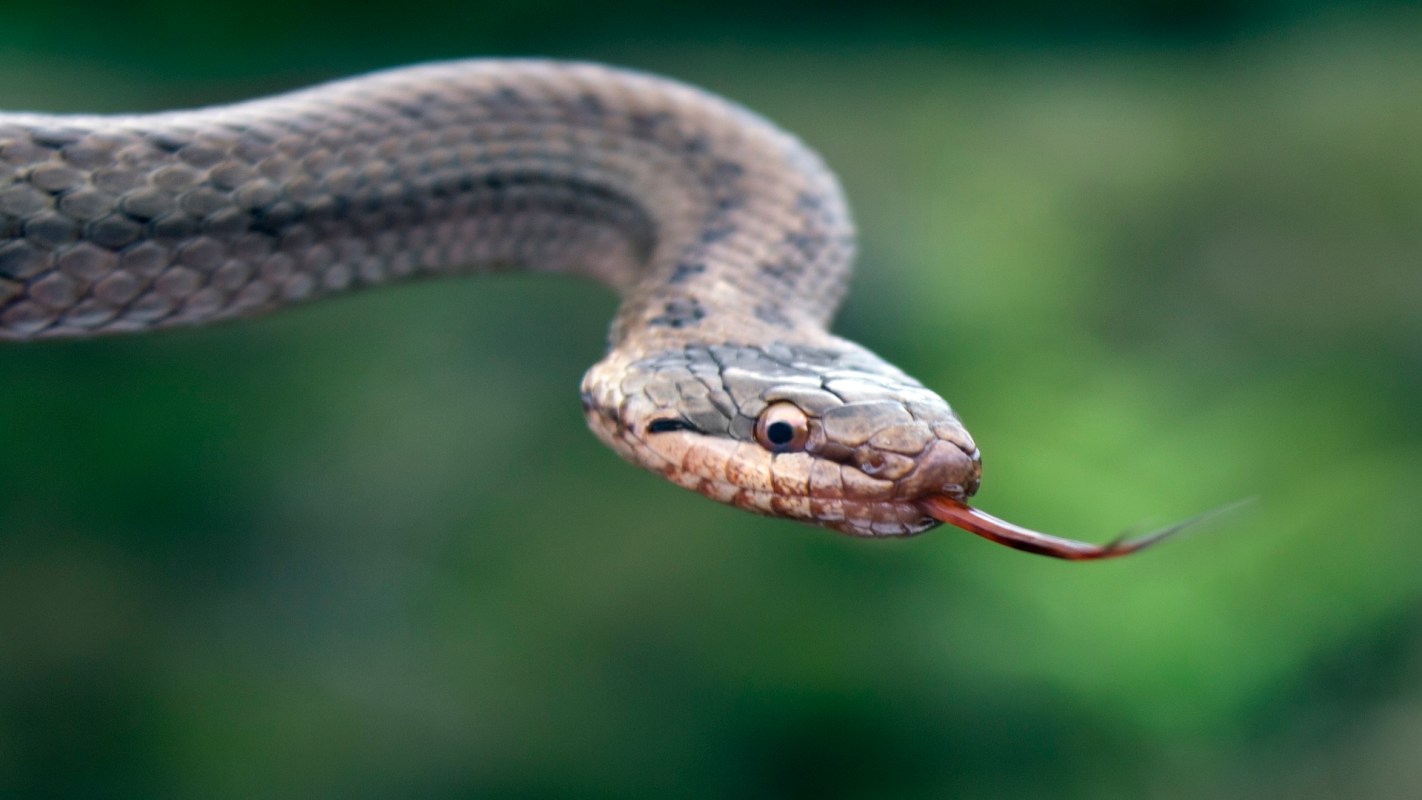
An Italian study is challenging the long-standing view that Britain's smooth snake is harmless.
Researchers found evidence the species may be able to deliver venom through rear fangs — a finding that could make it Britain's second venomous snake, alongside the adder, according to the BBC's Discover Wildlife.
Here's what to know
In the journal Zootaxa, researchers described the smooth snake, or Coronella austriaca, as having sheathed rear fangs connected to the venom-producing Duvernoy's gland.
That anatomy suggests it may be able to envenomate prey after capture, rather than attack as people typically expect of venomous snakes.
This species feeds on lizards, juvenile snakes, and small mammals, subduing them by coiling around them. Instead of depending on a swift front-fanged strike, it may use a prolonged bite that helps with digestion.
Long regarded in the U.K. as a nonthreatening native snake, the smooth snake is relatively slender and usually grows to about 24 to 30 inches (60 to 75 centimeters).
TCD Picks » Quince Spotlight
💡These best-sellers from Quince deliver affordable, sustainable luxury for all




It is found across much of central and southern Europe and in parts of western Asia and southern Russia, while its British population is limited to heathlands in southern England.
More background
Researchers Alessandro Paterna and Grégoire Meier, of OPHIS Museo Paleontologico e Centro Erpetologico in Teramo, Italy, analyzed the snake's head anatomy.
They examined five specimens across three developmental stages and identified anatomical connections between the rear fangs and the gland.
Rather than showing that the smooth snake had suddenly become dangerous, the finding suggests scientists may have underestimated how this familiar species handles prey.
Earlier research put the gland's dry weight at around 0.00004 ounces (1 milligram), even though its secretions have also been described as highly toxic.
What can be done?
The authors discussed their findings in the published study.
"We must consider that Coronella austriaca presents an opisthoglyphous/rear-fanged condition, and that the secretion produced by the venom/Duvernoy glands is inoculated into the prey through prolonged and masticated bites in a low-pressure system," they wrote.
Where can I learn more?
Questions about venom delivery and snakebite risk reach far beyond Britain's smooth snake. Reporting has tracked climate-driven range shifts, human encounters, and changing snake behavior in several regions.
• Worldwide, scientists warn venomous snakes may spread as warming reshapes habitats.
• Public health experts say rising snakebite threats could affect billions as climates shift.
• In India, warmer conditions are tied to troubling changes in snakebite incidence and risk.

Get TCD's free newsletters for easy tips, smart advice, and a chance to earn $5,000 toward home upgrades. To see more stories like this one, change your Google preferences here.






