


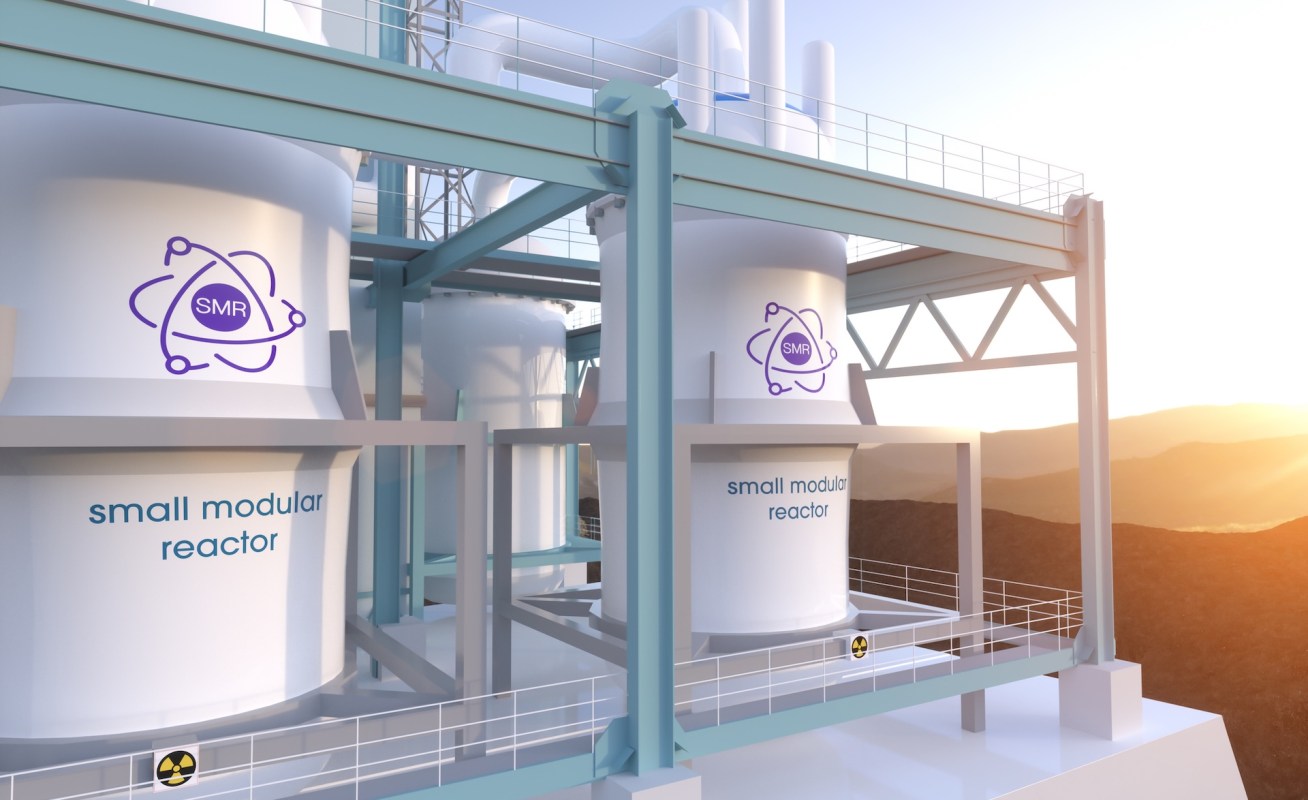
Heavy industry may be where small nuclear reactors make money first, according to new research, even as the technology remains far from transforming the broader U.S. power grid.
The study points to factory complexes that need round-the-clock heat, power, and clean hydrogen in one location as a better match for the technology than direct competition with low-cost renewables or big existing generators.
If that holds, industrial operators rather than utilities could become the earliest serious test case for small modular reactors, or SMRs.
Here's what to know
Sites like ammonia plants, oil refineries, steel mills, and other manufacturers that depend on steady process heat appear to offer the best U.S. market for SMRs, according to a new analysis published in Nature Communications, cited by Interesting Engineering. The study says the reactors are unlikely to win out in the open electricity market against inexpensive renewables and existing large-scale power generation.
To reach that conclusion, researchers from the University of Michigan and Idaho National Laboratory modeled energy demand across dozens of ammonia synthesis plants, nine steel mills, 47 oil refineries, and nearly 1,000 manufacturing sites that rely on process heat.
Industries that already consume significant hydrogen appear to be the most promising early fit. In ammonia production and petroleum refining, SMRs could provide the heat and electricity needed to make clean hydrogen on-site, reducing the costs and risks of transporting such a volatile fuel over long distances.
TCD Picks » Quince Spotlight
💡These best-sellers from Quince deliver affordable, sustainable luxury for all




More background
Under the SMR concept, reactors would be built in a more modular way at centralized sites, then moved by rail or barge and installed in clusters as local energy needs require. That differs from traditional nuclear plants, which are largely constructed on-site through massive, highly customized projects.
The study found that U.S. industrial facilities produced 1,499 million tons of carbon dioxide in 2020. Researchers estimated that replacing some fossil-fuel-based industrial heat and hydrogen with nuclear-derived alternatives could lower emissions by as much as 14% over two production cycles.
Still, the economics remain fragile. The analysis found that these projects become viable much faster when paired with a federal clean-hydrogen tax credit worth up to $1.36 per pound of clean hydrogen.
What's being done?
Researchers found that suitable factory locations could host about 91 gigawatts-electric of SMR capacity in an early phase. As manufacturing methods improve and more units are built, that figure could rise to 171.9 gigawatts-electric.
That kind of rollout could give developers a more controlled environment to test whether SMRs can reliably provide both electricity and high-temperature heat before trying to compete more directly with other power sources. No SMR has entered commercial operation in the United States yet, making real-world demonstration especially important.
Cleaner fertilizer production, refining, and manufacturing could eventually help reduce industrial pollution while supporting domestic energy supply.
The technology may have its strongest chance in applications that reward continuous output and industrial heat, not in markets where wind, solar, and existing power plants already dominate on price.
As Brendan Kochunas, associate professor of nuclear engineering and radiological sciences at the University of Michigan and study co-author, said, "There's a lot of momentum around increased deployment of nuclear energy and small modular reactors, but this study provides the first comprehensive analysis of where it actually makes business sense to build and operate them."
Where can I learn more?
For a broader look at where nuclear technology could gain traction, these stories dig into some of the most plausible paths. They cover the cost challenges facing SMRs, coal-to-nuclear conversions, and other reactor concepts.
• In the U.S., experts will examine serious challenges for SMRs as cost pressures persist.
• Across the U.S., former coal sites could offer nuclear conversion opportunities instead of retirement.
• Advanced reactor developers say molten salt systems could improve safety and flexibility underground.

Get TCD's free newsletters for easy tips, smart advice, and a chance to earn $5,000 toward home upgrades. To see more stories like this one, change your Google preferences here.






