


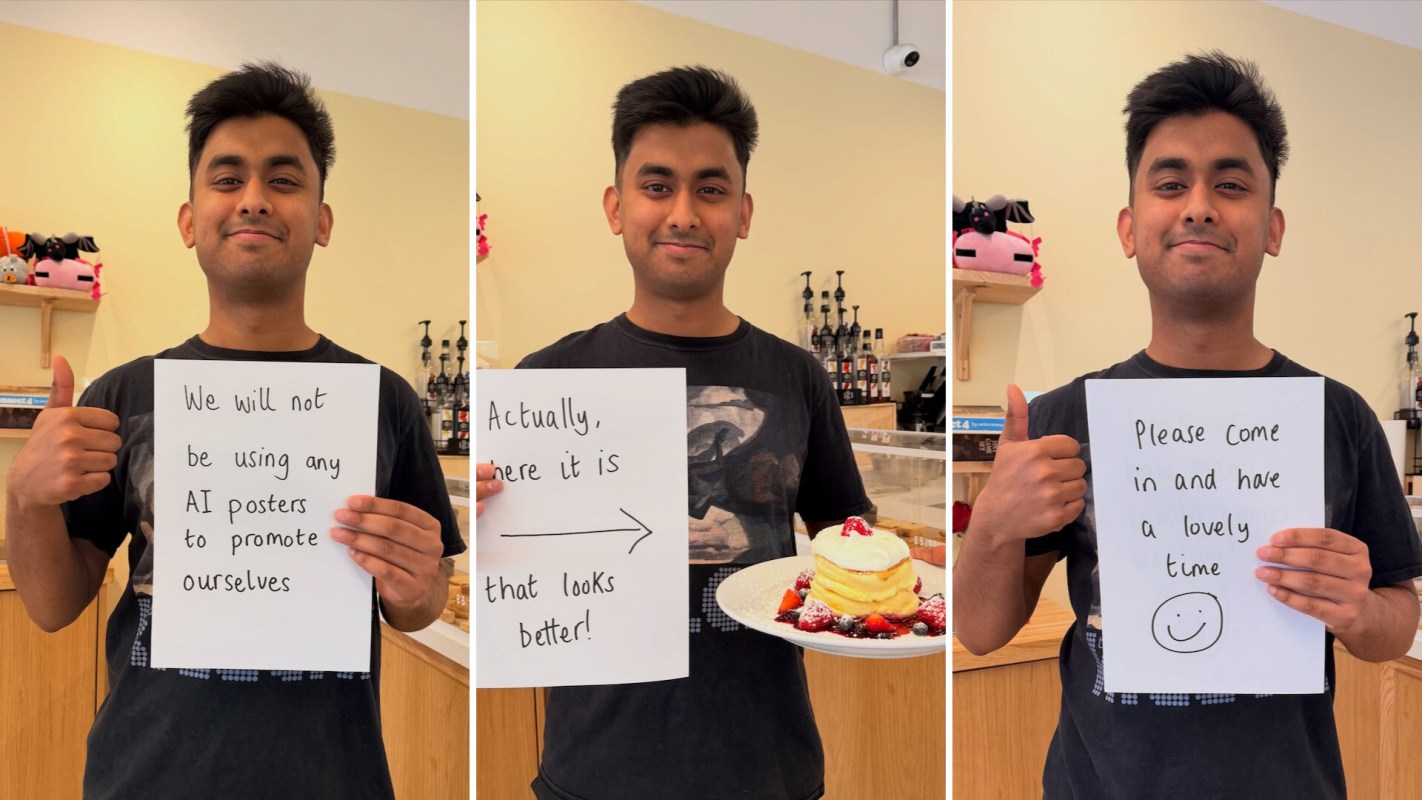
Some small businesses — including shops, bars, libraries, and stylists — are drawing viral attention by rejecting the wave of near-identical artificial-intelligence-generated flyers that have flooded social feeds and storefronts, instead posting proudly hand-drawn signs that emphasize a more human touch.
Here's what to know
According to 404 Media, the backlash to generic AI marketing is becoming a trend in its own right. It follows July's so-called "ChatGPT flyer pandemic," when ads for surf lessons, takeout, and other local businesses began to blur into a single machine-made style.
"I would rather your event flyer look like this than see more AI slop," read one event post on Instagram, which featured smiling stick figures and the line "I will come to this event." Across similar posts, businesses are swapping AI graphics for pencil sketches, marker notes, and cardboard signs that signal a more human touch.
The same message appeared in other forms, too. A library shared a cardboard notice that read, "We will not be using AI to create content," while a bar posted a handwritten sign that said, "We will NOT be using any AI post to promote the following …"
One cafe turned that homemade feel into its whole pitch. Its sign said, "We will not be using any AI posters to promote ourselves. Instead, I will be using this paper and marker pen."
Another image added: "the pancakes are really really GOOD!"
TCD Picks » Quince Spotlight
💡These best-sellers from Quince deliver affordable, sustainable luxury for all




More background
The signs are tapping into a real sense of fatigue. When every flyer starts to look machine-made, local businesses can lose the personality that makes them worth visiting.
Community spaces — bars, libraries, cafes, salons, and music shops — often depend on trust and familiarity. A handwritten sign may be rough around the edges, but it shows there is a real person behind the counter, not just another copy-and-paste marketing template.
Frustration is growing over disposable, low-effort content crowding public life and online spaces.
Rachel Karten, writer of the Link In Bio newsletter, also highlighted additional examples that 404 Media had found, suggesting the idea may be spreading beyond a one-off gimmick.
What can be done?
Clear information, original photos, hand lettering, and honest humor can often connect better than mass-produced visuals that look like everyone else's.
That does not mean every business needs to swear off technology. But these posts suggest people want transparency, personality, and signs that do not insult their intelligence.
Where can I learn more?
The push for handwritten signs is part of a much bigger discomfort with how AI is changing work, public life, and trust. That frustration is also showing up in fights over data centers, employee pushback inside major companies, and growing anger over the costs of the AI boom.
• Across the tech industry, public backlash against AI is growing over jobs, water, and power demands.
• Tech billionaires are floating workers should get paid as anger rises over AI-driven job losses.
• At Amazon, 1,000-plus employees signed a damning letter confronting controversial AI use.
• U.S. officials are labeling some AI protesters as threats amid fights over data centers.
These stories also help explain why even a cardboard sign can feel like a cultural statement. For businesses trying to sound human again, that wider backlash matters.

Get TCD's free newsletters for easy tips, smart advice, and a chance to earn $5,000 toward home upgrades. To see more stories like this one, change your Google preferences here.






