


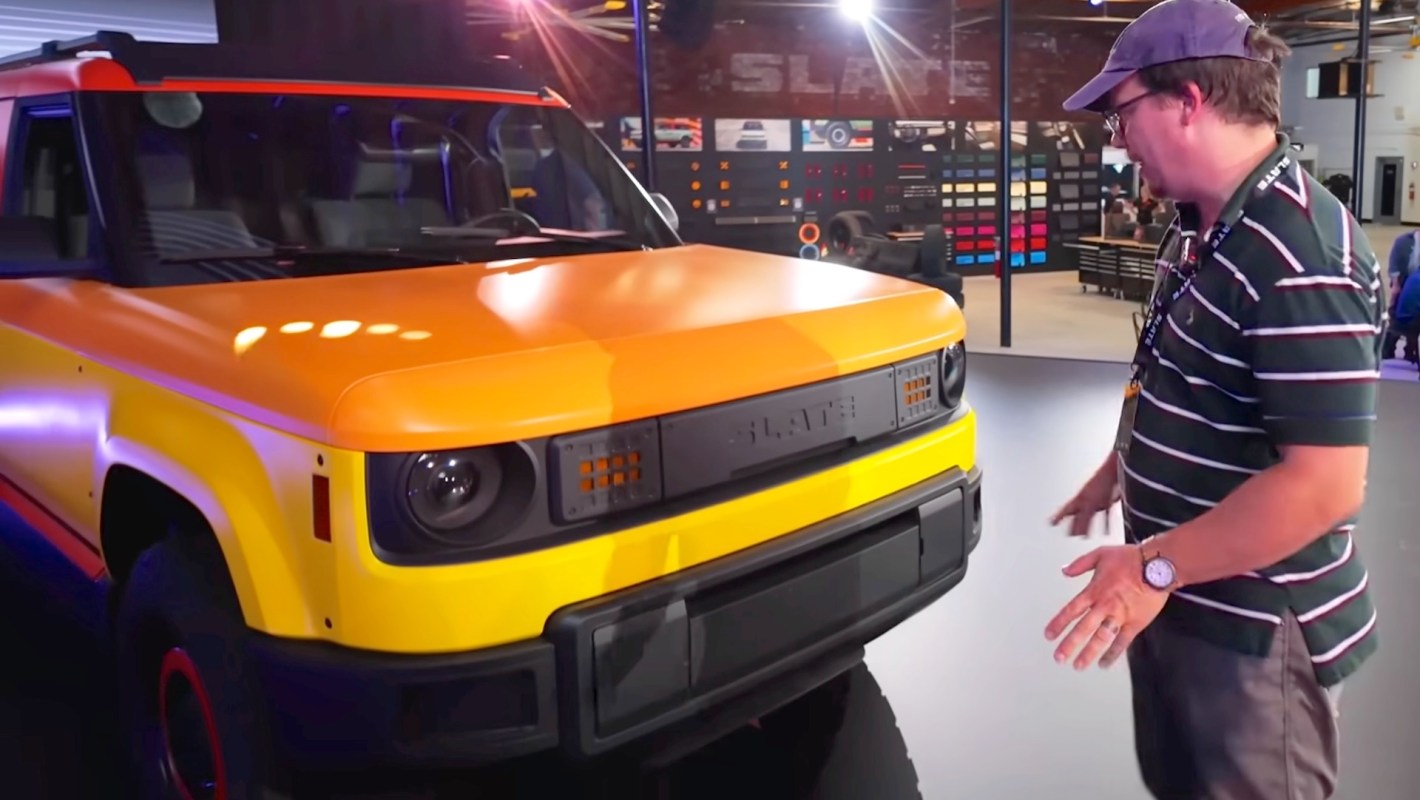
Online interest is building around a no-frills electric pickup at a time when many car shoppers say new vehicles have become overpriced, overengineered, and hard to fix.
That explains the reaction to the Slate EV truck, which packages the traits many people have said they want: a cheaper EV, straightforward equipment, practical range, and a layout that owners are able to service themselves.
What's happening?
An Autopian article about Slate's electric pickup was shared through a recent Reddit discussion, posted with the headline, "I Drove The New Slate EV Truck. It's Insanely Fun For $24,950."

Much of the conversation focused on the numbers: a price near $25,000, rear-wheel drive, roughly 205 miles of driving from a battery of about 65 kilowatt-hours, and a basic interior that leaves out more expensive add-ons.
At that price, commenters were treating it as not only the cheapest new EV but also potentially the cheapest new truck available in the U.S. — the Ford Maverick used to clock in under $25,000, but even now with an employee pricing event, it starts at $26,771. Still, it should be noted that the base price for the Slate still comes with minimal features, right down to having no radio.
Another major draw is the Slate truck's emphasis on being easier to fix by its owner. Reports say it uses dyed plastic body panels, modular pieces that can be swapped out, and free service manuals, a combination that could make everyday repairs and minor crashes cheaper and easier to deal with.
TCD Picks » Quince Spotlight
💡These best-sellers from Quince deliver affordable, sustainable luxury for all




Skepticism showed up, too. Some Reddit users said the total could move beyond $30,000 once enhancements are added, while others questioned how a rear-wheel-drive-only truck with resistive cabin heat instead of a heat pump would perform and preserve range in winter.
Why does it matter?
The bigger point is accessibility. If an electric truck can really start around $25,000, it could make EV ownership more realistic for commuters, small-business owners, fleet buyers, and families shopping for a useful second vehicle.
EV ownership can save drivers money after the initial purchase. Drivers typically spend less on fuel than they would on gasoline, and EVs also tend to need less routine maintenance because they do not require oil changes and have fewer moving parts.
A design centered on easy repairs could bring down insurance and collision-related costs as well. When parts are simpler to replace and small damage is less likely to total out a vehicle, less material gets wasted and more trucks can stay in service longer.
But for buyers in snowy or bitterly cold climates, questions about traction, cabin-heating efficiency, and winter range are still part of the equation with a minimalist truck like this.
What can I do?
A simpler EV may be especially appealing for city driving, short delivery routes, weekend trips around town, or second-car duty in a household.
Drivers comparing options can also use this walkthrough to weigh range, charging, and cost factors before making their next vehicle electric. Affordability is improving across the market, but a lower upfront sticker combined with lower fuel and maintenance costs can be especially compelling.
Home charging is another major factor. Charging an EV at home is usually much cheaper than relying on public chargers. Qmerit offers free, instant installation estimates for faster Level 2 home chargers. More on Qmerit here.
And if the Slate shows there is genuine appetite for compact, basic EVs that are easy to repair, larger automakers could face pressure to answer with affordable models of their own.
One commenter captured the surprise by writing, "I can't believe something r/cars actually asked for came true. Small stripped down 2 door truck." Another emphasized the price-to-range combination: "It's impressive what a US based startup managed to achieve - sub 30k EV with actual range."

Get TCD's free newsletters for easy tips, smart advice, and a chance to earn $5,000 toward home upgrades. To see more stories like this one, change your Google preferences here.






