


Office workers in Singapore spent months unaware that chilled ceiling beams were keeping them comfortable, offering a quieter alternative to conventional air conditioning.
Here's what to know
At first, staff simply believed the exposed pipes and panels — a "warehouse kind of look" — were for aesthetics rather than a discreet cooling system, the Japan Times reported.
The eight-story Paya Lebar Green building uses active chilled beams to keep offices at about 24 degrees Celsius (75 degrees Fahrenheit).
According to the building's designers, DP Architects, the system uses over 30% less energy than conventional air conditioning.
Air jets pull warmer room air across ceiling coils before sending it back into circulation. Water pumped through those coils is chilled in a top-floor plant.
The quiet office and technicians' discussions eventually revealed the novel cooling setup to human resources professional Renuga Shekar and her colleagues.
Upgrading heating and cooling is one of the best ways to save on utility bills and protect against rising energy prices. Palmetto can help you understand your HVAC options and reduce your energy bills with newer, more efficient HVACs and heat pumps. Palmetto's Comfort Plan network helps you find efficient home heating and cooling solutions and connects you with vetted installers.
More background
Daytime temperatures typically reach a high of about 31 to 33 C (88 to 91 F) year-round in Singapore.
Crushed by your bills? See instant solar savings from vetted installers in just a few clicks With energy prices through the roof, there's never been a better time to go solar — and EasyHome can help you find the best prices from the best installers in your area. EasyHome takes the guesswork and headaches out of energy upgrades by showing you estimated savings from a network of vetted local partners. To get started, just enter your ZIP and share a few details about your home — seeing your estimate is really that easy. |

Per-person air conditioner ownership is higher in Singapore than elsewhere in Southeast Asia, and roughly 99% of private homes are air-conditioned.
Studies cited by The Japan Times found that buildings use 40% to 60% of their energy for cooling. Singapore's building sector also produces one-fifth of the country's pollution.
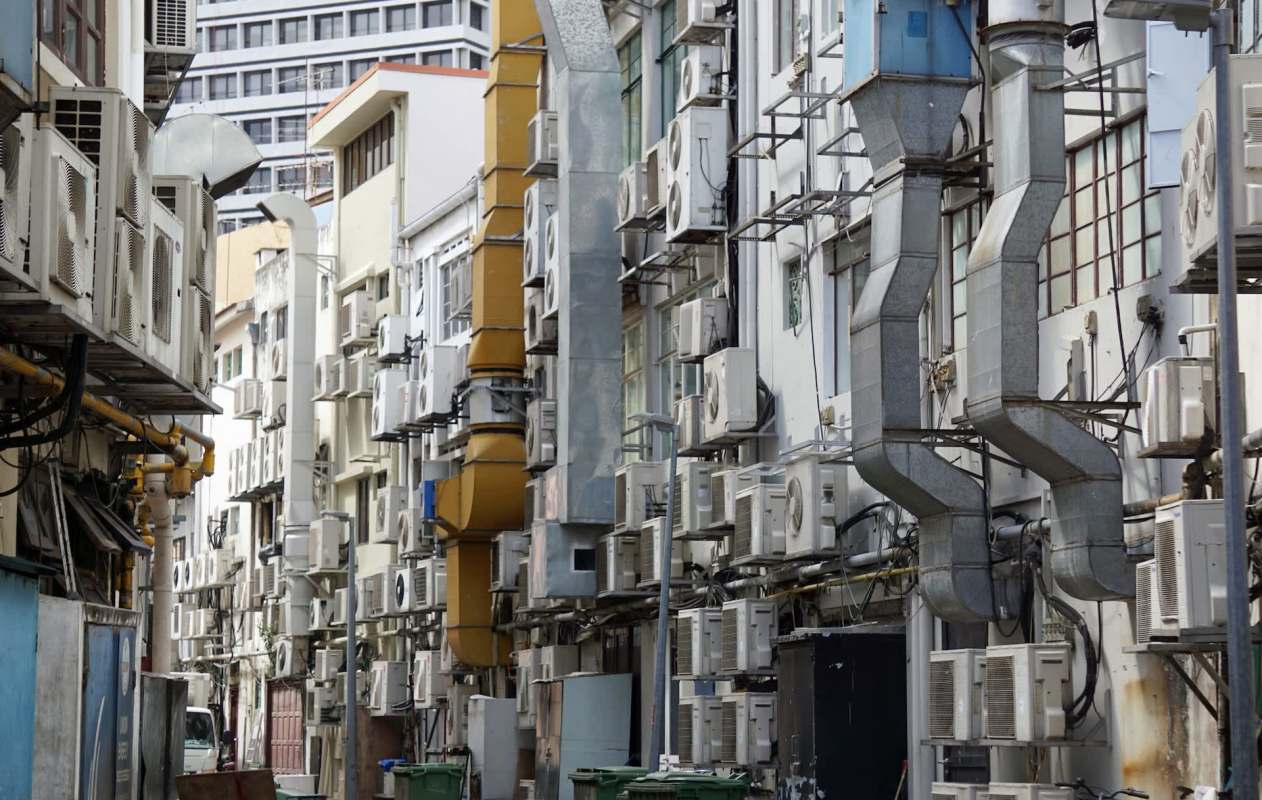
Generating fossil-fuel electricity to power conventional air conditioners produces heat-trapping pollution that contributes to rising global temperatures. Units also release heat directly outdoors.
The office's system, known as passive displacement cooling, uses ceiling coils to cool air, which sinks and then rises as it warms.
This method reduces reliance on mechanical fans, cutting electricity consumption and noise.
What's being done?
Singapore is backing alternatives to conventional cooling.
A 2024 Singapore government study on these alternatives identified potential energy savings of up to 48%, per the Japan Times.
By mid-2026, alternative cooling technologies were in use in at least 33 public buildings and 14 private ones.
For homeowners who aren't ready to spend upfront, Palmetto's Comfort Plan includes $0-down options that can lower heating and cooling costs by up to 50%. Palmetto Comfort Plans also include 12 years of free maintenance, helping households manage routine system upkeep.
Homeowners can pair solar panels with electric appliances like efficient HVACs to drive utility costs even lower. EasyHome makes it easy to compare your solar options and find the best solar system and installer for your home and budget.
"We didn't even realize how different the air cooling system is because it was very seamless, and in terms of the temperature, ideal for everybody in the office," Shekar said.
Where can I learn more?
Singapore's chilled beams offer one way of many to keep buildings comfortable as temperatures rise.
• In Boston, a 120-year-old school's air-conditioning upgrade gave 400 students their first cool September.
• Worldwide, surging air-conditioning demand makes clean electricity increasingly important as temperatures rise.
• In the United States, air conditioning cuts heat deaths in half, though extreme heat remains dangerous.

Get TCD's free newsletters for easy tips, smart advice, and a chance to earn $5,000 toward home upgrades. To see more stories like this one, change your Google preferences here.






