


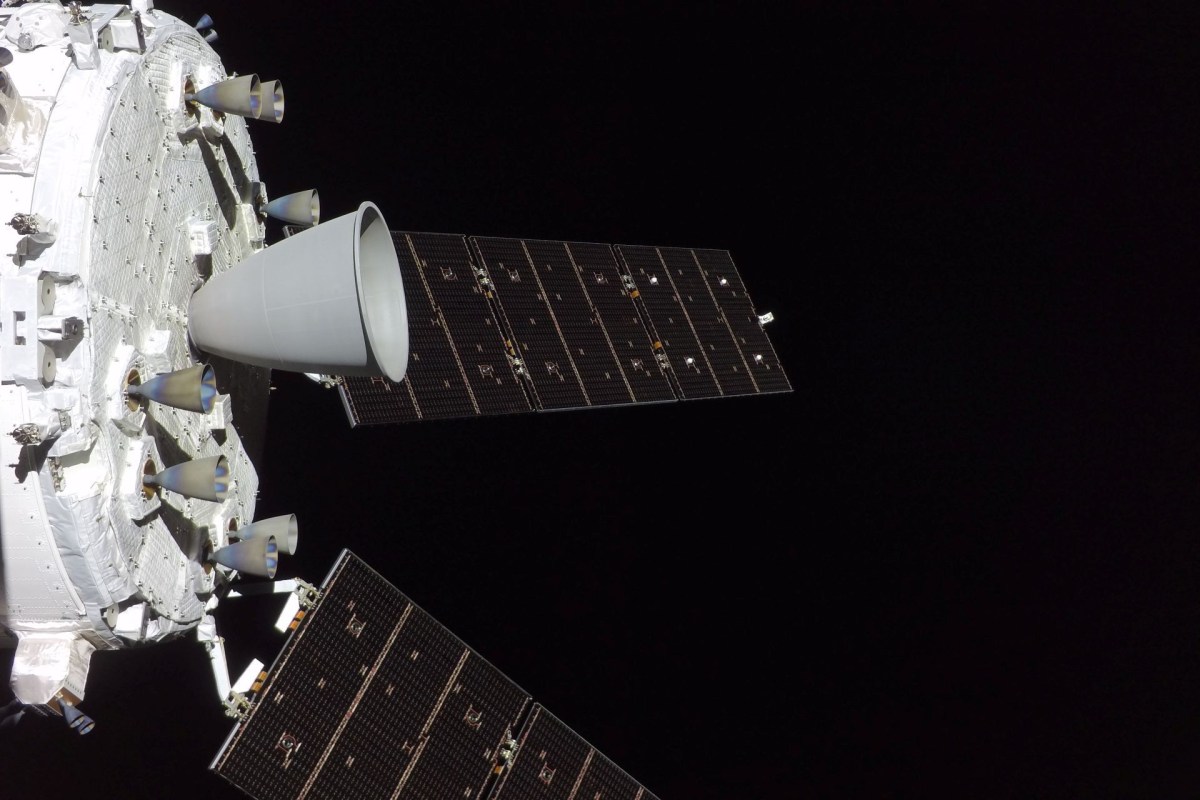
A new study led by the University of Surrey in England suggests one of the best ways to make satellites cheaper may come from a familiar material much closer to home: silicon.
Researchers estimated that replacing the solar cells now standard in space with newer silicon versions could cut satellite power costs by up to 90% and reduce the amount of solar-cell weight a spacecraft needs by about half, Phys.org reported.
Here's what to know
The review in the journal Acta Astronautica found that silicon solar cells could provide a far cheaper option than the triple-junction cells that have long been the norm for spacecraft.
For decades, space hardware has depended on triple-junction cells made with materials such as gallium, indium, and germanium, and those cells cost about $250 to $450 per watt.
Silicon, by contrast, is priced in the tens of cents per watt.
As of November 2025, the three main silicon designs — PERC, TOPCon, and heterojunction — averaged $0.275, $0.285, and $0.39 per watt.
TCD Picks » Quince Spotlight
💡These best-sellers from Quince deliver affordable, sustainable luxury for all




Performance has improved, too. Silicon heterostructure cells have reached 27.8% efficiency, while perovskite/silicon tandems have hit 34.85%.
To test what that could mean in realistic use, the Surrey team modeled two spacecraft setups: one side of a 3U CubeSat and a Micro Sat from Surrey Satellite Technology Limited.
Even with protective space-qualified glass included, the study found savings of about 85% to 90%.
More background
Silicon has been used in space before. From 1958 to 1977, it was the standard solar-cell material for spacecraft, until gallium arsenide cells took over because they delivered better efficiency and radiation resistance.
What is different now is how far silicon technology has advanced. Today's designs are much more sophisticated, suggesting that a once-left-behind material could be positioned for a return to orbit.
Lighter, cheaper satellites can ripple through the aerospace sector and beyond. Lower launch mass can free up room for fuel or instruments, while lower hardware costs can make it more affordable for companies and governments to expand services people rely on every day, such as weather forecasting, communications, navigation, and Earth monitoring.
Those services can help cities respond to extreme weather, support agriculture, and improve emergency planning — all while easing the cost pressures that often limit satellite deployment.
What's being done?
The study suggests the next challenge isn't simply proving that silicon is inexpensive, but figuring out how to shield it in space without adding too much cost and weight.
For silicon arrays, researchers found that the biggest expense comes from the protective coverglass. If engineers can improve radiation tolerance, they may be able to use thinner glass or substrates.
That could create a double benefit: lower costs for satellite operators and lighter spacecraft that are cheaper to launch. For companies building space-based networks or scientific missions, that may open the door to more frequent launches and more affordable systems.
Tommy Richards, a Ph.D. student focused on future space solar cell technology and the review's first author, discussed the study's findings.
"The interesting finding for us was not that silicon is cheaper but where the remaining cost sits," he began. "Once you put silicon cells behind space-qualified glass, the glass is what you are paying for. That changes what we should be working on."
"If we can make the cell itself tougher against radiation, we can use thinner glass or substrates, and we cut cost and weight at the same time. It reframes the problem from a materials contest into an engineering one we know how to attack."
Where can I learn more?
Advanced developments are changing the face of space technology, bringing benefits that can be seen on Earth.
• NASA and Ascent Solar are testing ultralight solar film for satellites and the space station.
• NASA may be turning perovskite solar cells into a lighter power option for spacecraft.
• At King's College London, engineers said space-based solar power could supply electricity at continental scale.

Get TCD's free newsletters for easy tips, smart advice, and a chance to earn $5,000 toward home upgrades. To see more stories like this one, change your Google preferences here.






