


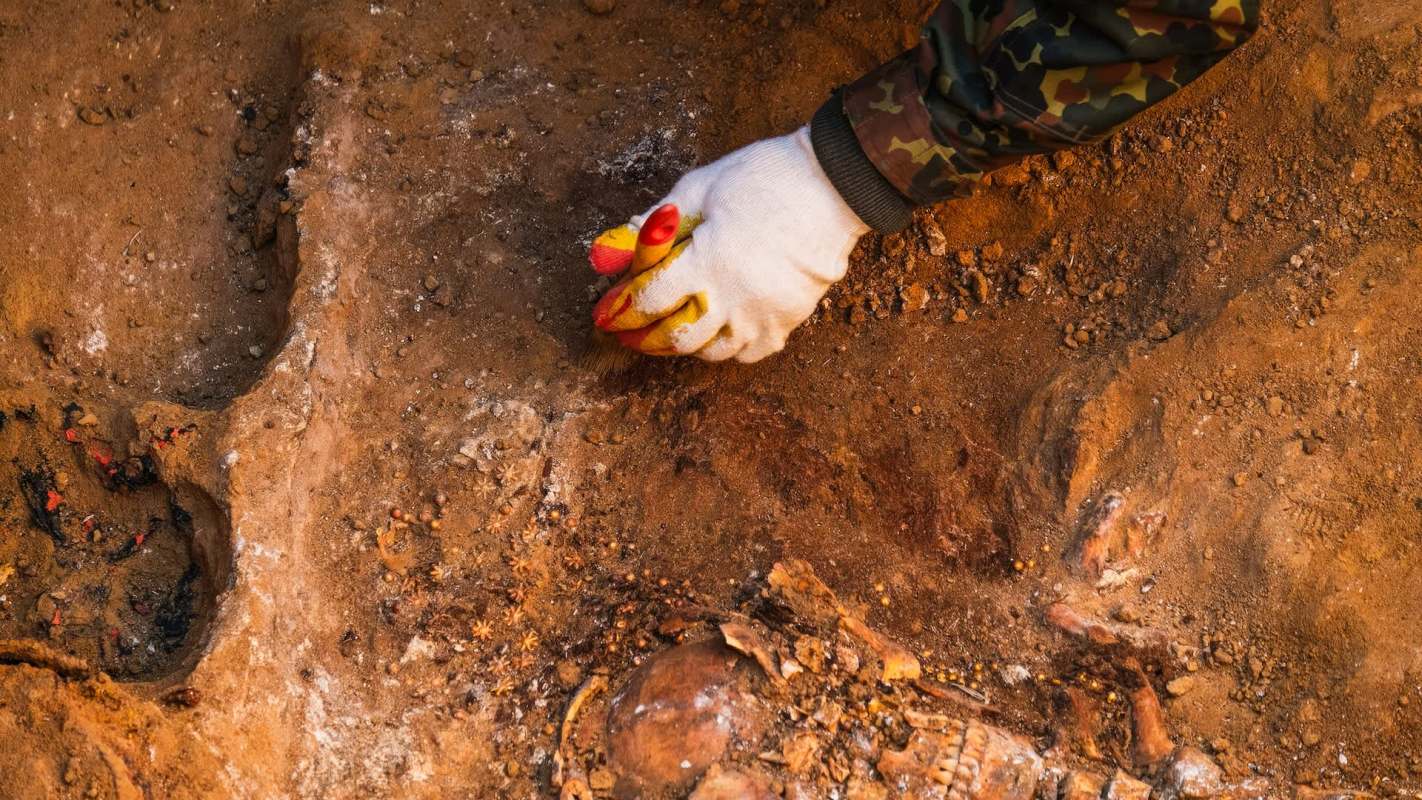
A lavishly furnished grave discovered in southern Siberia is offering new clues about how powerful and influential people lived — and were honored after death — in the medieval era.
More than a millennium after the burial, archaeologists say a pair of gold-plated earrings found near a woman's skull point to wealth, ritual practice, and cultural ties that stretched across long distances.
According to a report from Arkeonews, researchers discovered the burial at the Sayany-Pogranichnoye-4 cemetery in Russia's Krasnoyarsk region. Inside were the remains of an adult woman and a newborn child, along with an exceptional assortment of personal belongings and horse-related gear.
Laboratory testing found that the earrings were made from different metal compositions. The bronze ornaments were ring-shaped, showed traces of gilding, and had long pendants, including a lower bead, mostly of silver, that appears to have been intended to resemble a pearl.
The grave contained 83 recorded objects, most of which were tied to horses, such as stirrups, bits, gilded fittings, bridle decorations, buckles, and plaques.
1,000-Year-Old Elite Woman's Burial with a Horse and Gold-Plated Earrings Found in the Sayan Mountainshttps://t.co/2rjWCAL8Io pic.twitter.com/D35YJG0HWv
— Arkeonews (@ArkeoNews) June 6, 2026
Arkeonews noted that the woman was also buried with a fragment of a Chinese-style "grape mirror," a spindle whorl, a knife, and a "horse skin" deposit, in which the skull and limbs were placed beside the hide — a ritual linked to high-status nomadic burials across the Sayan-Altai region.
TCD Picks » Quince Spotlight
💡These best-sellers from Quince deliver affordable, sustainable luxury for all




A sign of broader cultural contact appears on one stirrup, which was decorated with silver-wire damascening in a style associated with late Tang-period Chinese art.
Well-preserved graves of elite women from this era are uncommon. Researchers said only a few dozen similar examples are known, making this site useful for studying social status, gender, and ritual on the medieval frontier.
The burial came to light during advance studies connected to the planned Kyzyl-Kuragino rail line.
They say the mix of jewelry, horse gear, and imported-style objects offers a clear view of how prestige and identity were expressed.

Get TCD's free newsletters for easy tips, smart advice, and a chance to earn $5,000 toward home upgrades. To see more stories like this one, change your Google preferences here.






