


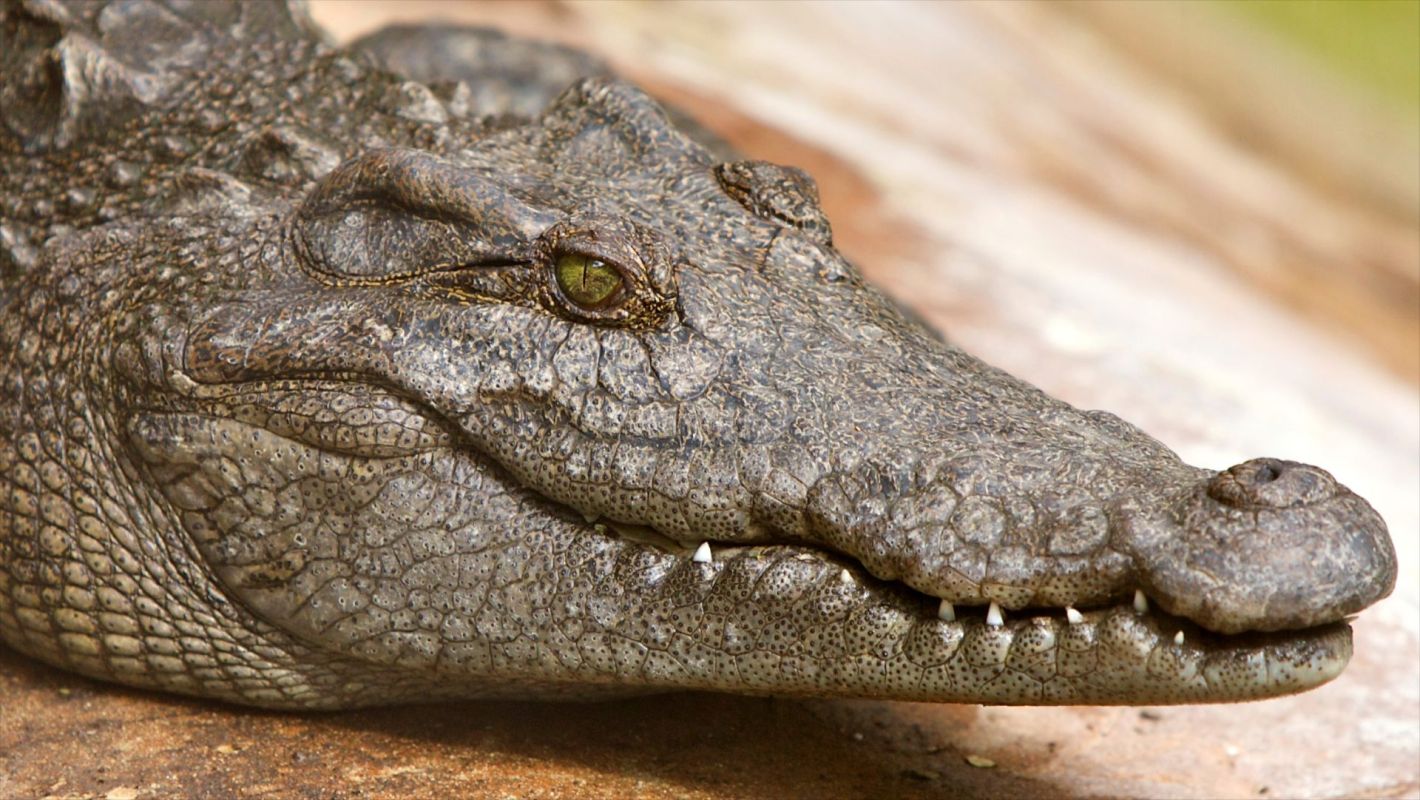
South Korean authorities are investigating the strange appearance of a Siamese crocodile in a local stream. Because the species is critically endangered, the case is drawing added scrutiny over whether the animal had been kept privately and was then abandoned.
What happened?
After the reptile was captured on Saturday, police in Yeoju, Gyeonggi Province, began reviewing security camera footage from the area around Soyang Stream and asking nearby residents what they know, according to The Korea Herald.
The outlet shared an image of the crocodile after it was captured.
Using photographs and video supplied by the city, the National Institute of Biological Resources matched the animal to a Siamese crocodile, according to The Korea Herald. This species of freshwater crocodile can reach lengths of 10 to 13 feet once they reach adulthood.
Investigators are now checking local registration records for anyone in the area who may have reported keeping a Siamese crocodile or a similar wild animal, per The Korea Herald.
An official from the country's Ministry of Climate, Energy and Environment told the outlet that authorities are considering two main possibilities. First, that the reptile came from a licensed breeding facility and was later abandoned after a legal purchase, or second, that it entered the country illegally through a smuggling operation.
TCD Picks » Quince Spotlight
💡These best-sellers from Quince deliver affordable, sustainable luxury for all




But for now, the crocodile is being kept at the Yeoju animal protection center. The center published a notice on its website Monday attempting to identify its owner. Because the notice went up before the species was discovered to be a Siamese croc, the reptile was initially recorded as a spectacled caiman.
The listing provided its weight as 3.3 pounds and said its sex was unknown, according to The Korea Herald.
Why does it matter?
The appearance of a nonnative predator in a nearby stream can raise safety concerns for local residents.
It is also a welfare issue for the crocodile itself. An endangered species removed from its natural range and left in an unfamiliar ecosystem faces stress, injury, and poor odds of survival. Even when acquired legally, wild animals can easily outgrow enclosures, require highly specialized care, and create risks for both owners and surrounding communities.
The Siamese crocodile is protected by the strictest CITES category, Appendix I, which is reserved for species facing the greatest extinction risk. That designation heavily restricts capturing, selling, or keeping the animal without prior authorization.
Unusual wildlife encounters are often tied to human activity rather than animal behavior alone. Through trafficking, exotic pet ownership, habitat disruption, or abandonment, people often create the conditions that place wild animals in dangerous or unfamiliar settings.
And as BBC Future has reported, many conflicts between humans and wildlife are shaped by the ways humans alter animals' environments and movement.

Get TCD's free newsletters for easy tips, smart advice, and a chance to earn $5,000 toward home upgrades. To see more stories like this one, change your Google preferences here.






