


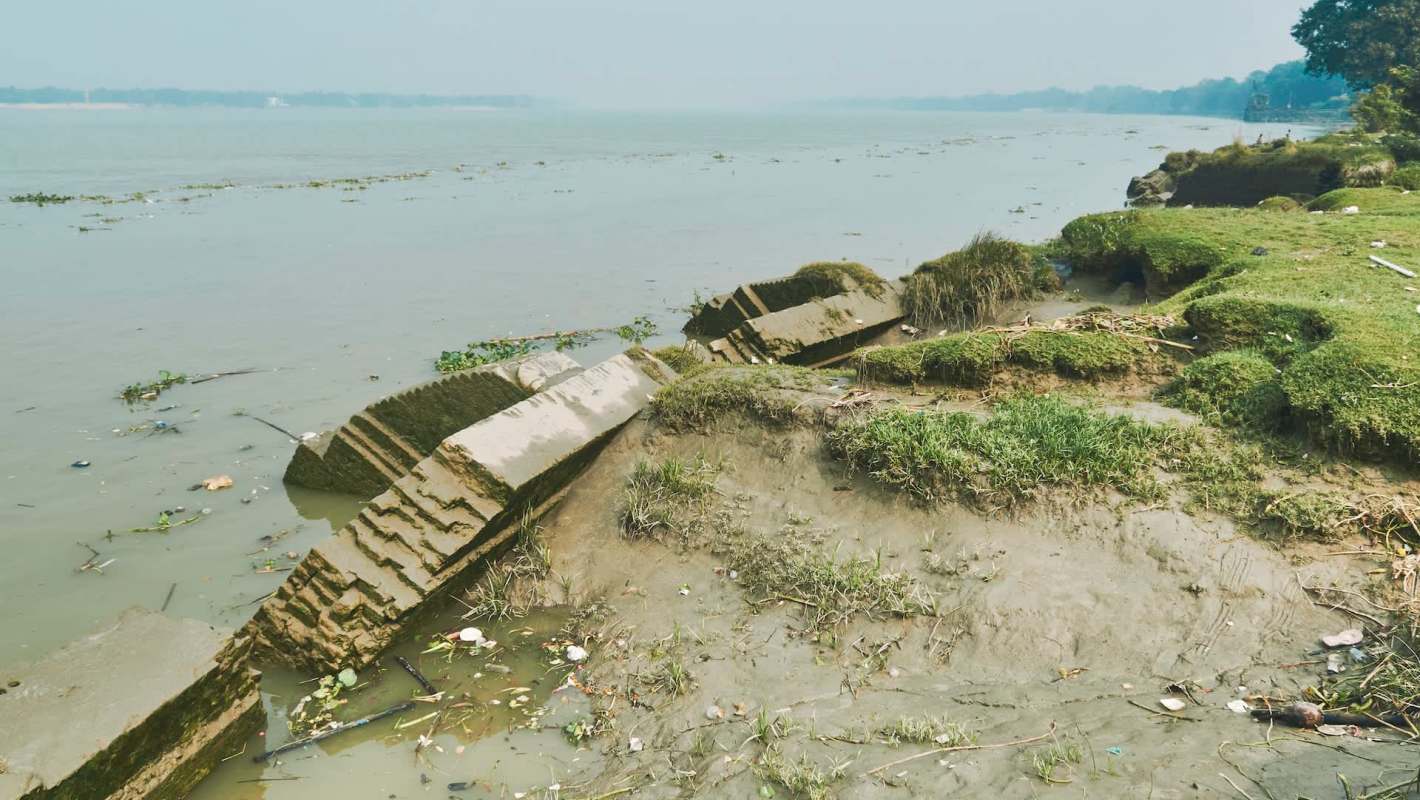
Flooding and severe erosion along the Ganges River have brought down a 175-year-old Shiva temple in India's Malda district, The Times of India reported.
Here's what to know
In Muniramtola, Ratua, the Ganges consumed the temple after a substantial stretch of the riverbank collapsed, according to The Times of India.
The South China Morning Post (@SCMP.News) posted footage on TikTok on Sept. 8 showing the riverbank breaking apart under the structure before it tipped forward and vanished into the water.
@scmp.news Ancient Indian temple collapses into Ganges River from riverbank erosion #india #westbengal #temple #disaster ♬ original sound - South China Morning Post
"Residents could only watch in horror as the ancient temple was swallowed up by the river," text imposed over the footage stated.
It also said sandbags couldn't do enough to stop the river's strong current, and the incident "comes amid intensifying erosion across parts of the Indian city."
Erosion had threatened the temple, and temporary protective measures kept it standing only for a time before intensifying floods overwhelmed them.
TCD Picks » Quince Spotlight
💡These best-sellers from Quince deliver affordable, sustainable luxury for all




Bhutni island, regarded as the hardest-hit area in Manikchak block, lost access to its only hospital. Basic treatment now happens at the panchayat, which is the name for a village council, office. Care for pregnant women is taking place in two school buildings in Manikchak.
Once the embankment breached on Sept. 2, floodwater submerged at least 62 villages across three panchayats as well as the local police station. Authorities also moved 1,725 people in Ratua to relief camps operating in schools, and 63 families from Khaskol sheltered at Khaskol High School.
More background
The temple was a crucial part of local culture.
"In our childhood, the river was nearly 15 km [over 9 miles] away from the temple," local schoolteacher Alok Mandal said, according to The Times of India. "It was immensely popular among devotees, and a weekly market centred on it drew thousands, even from neighbouring Bihar."
Losses have mounted elsewhere in Malda too. In English Bazar, erosion in Khaskol destroyed large stretches of land and mango orchards, deepening the district's economic and humanitarian strain.
What's being done?
Relief work has continued with state ministers present in the affected areas. In Bhutni, authorities opened shelters and shifted emergency support to safer sites as floodwaters kept spreading.
Gouri Shankar Ghosh, the minister overseeing mass education extension and library services, went to Bhutni to review the response.
"Two relief centres have been set up for displaced residents, and food is being provided to those taking shelter on the remaining sections of the embankment," Ghosh said, as The Times of India relayed.
Officials said work on a replacement embankment would have to wait until floodwaters recede and a fresh plan can be drawn up. The focus is on providing the necessities for people and getting people out of the most dangerous areas.
Where can I learn more?
As extreme weather events unfortunately become more common, there are more floods happening that are upending people's lives and livelihoods.
• Flooding in China collapsed roads, and more than 25,000 residents were evacuated from parts of Shaanxi in 24 hours.
• A stretch of road in South Devon, England, collapsed after winter storms, cutting off a key link between Kingsbridge and Dartmouth.
• Coastal erosion along North Carolina's Outer Banks has become impossible to ignore as homes are literally falling into the sea.

Get TCD's free newsletters for easy tips, smart advice, and a chance to earn $5,000 toward home upgrades. To see more stories like this one, change your Google preferences here.






