


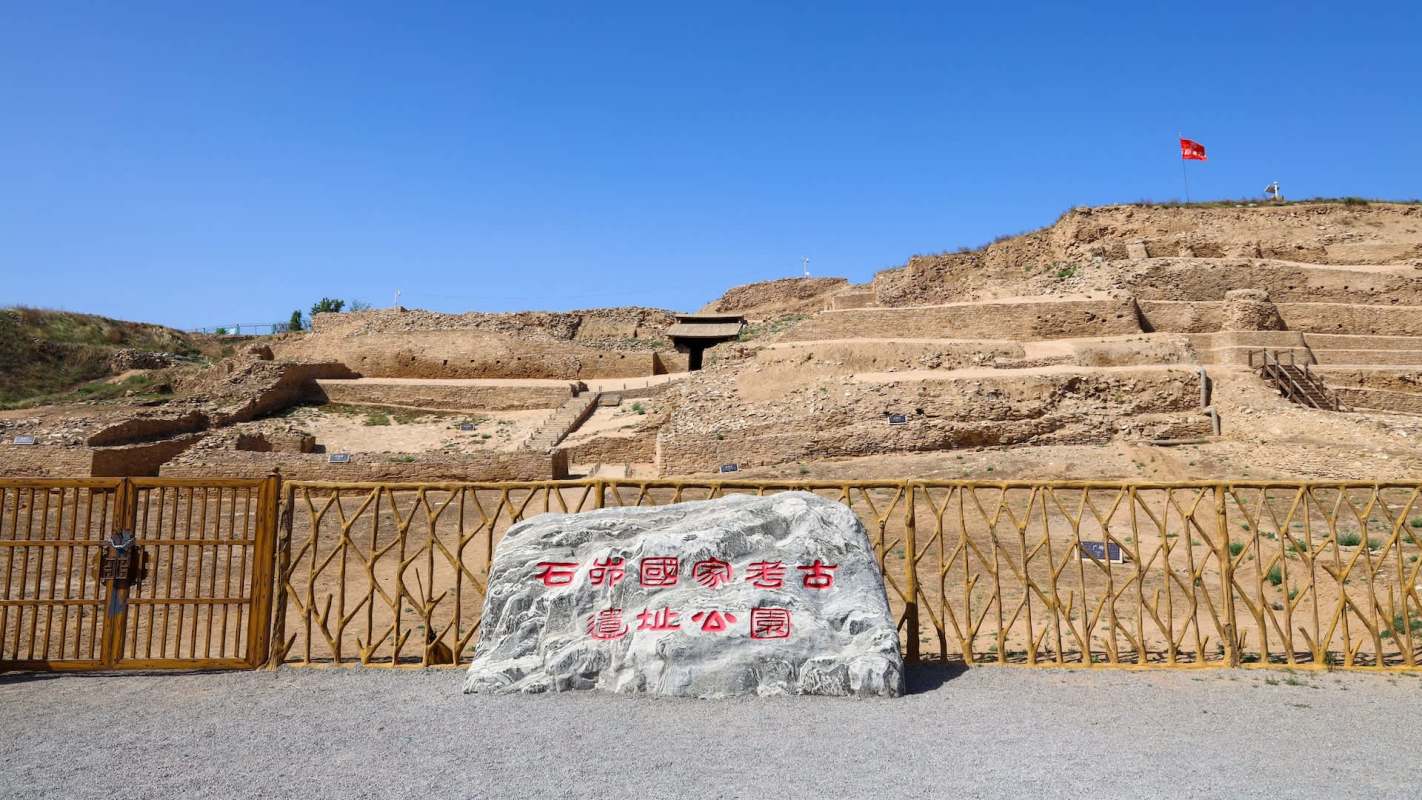
Long before China's imperial dynasties emerged, the people of Shimao were building massive stone walls, burying elites in elaborate tombs, and organizing society in ways that still feel strikingly familiar.
Genetic research is sharpening that picture, revealing both where this 4,000-year-old population came from and how violent some of its rituals were.
What happened?
A study published in Nature and reported on by the South China Morning Post examined human remains from the Shimao Neolithic Site in Shaanxi and found that human sacrifice there was organized along gender lines.
Shimao was occupied from about 2300 to 1800 B.C., and its stone fortifications were once misidentified as part of the Great Wall before jade finds showed the site was far older.
Using ancient DNA, the researchers determined that male and female sacrificial victims were buried in separate areas, pointing to different ritual roles.
Men were concentrated near an eastern gate, while women were buried close to elite cemeteries.
TCD Picks » Quince Spotlight
💡These best-sellers from Quince deliver affordable, sustainable luxury for all




The team said the male victims may have been part of rites connected to wall construction, whereas the women may have been sacrificed in acts of "ancestor veneration" meant to honor nobles or rulers, per the newspaper.
The research also showed that the Shimao people were descended from the earlier Yangshao culture, rather than being newcomers who seized control of the area.
Why does it matter?
For a site this old, evidence this specific is unusual, especially since conventional archaeology has often struggled to answer basic questions about the people who lived there.
DNA can reveal family ties, migration patterns, and power structures that broken pottery and stone walls cannot.
At Shimao, scientists could see not only that sacrifice occurred but also how social rank and gender may have shaped it.
"The lack of kinship between the elite tomb owners and the sacrificed people in the tombs may suggest that graves were centred around social elites and their families, and the sacrifice rite was administered according to social status," the authors wrote, per the SCMP.
The findings also complicate simple invasion stories. The Shimao population appears to have developed locally while mixing selectively with neighboring groups, including Taosi communities and Yumin groups in Inner Mongolia.
What's being done?
Researchers are applying more advanced DNA tools to ancient sites to investigate questions that older methods could not fully resolve.
That includes identifying who people were related to, whether populations moved or mixed, and how leadership may have been passed down.
At Shimao, the evidence shows that power remained within elite family lines across several generations, indicating a durable hierarchy that in some ways resembled later hereditary rule.
The results also suggest that, even in what seems to have been a patriarchal system, women could still reach the highest positions of authority.
"Ancient DNA studies are interesting because they show us previous population histories. For example, by comparing ancient DNA results at one site with other previous genetic samples, we can figure out if groups were related to each other or migrated into different parts of Asia," said Michael Rivera, a bioanthropologist and bioarchaeologist at the University of Hong Kong who was not involved in the study.
"They were not recent migrants or conquerors but evolved locally and were connected to communities in Shanxi and Inner Mongolia," Rivera told the SCMP. "... I think how identities and social hierarchies could possibly have been regulated by elites at the time is really interesting. There is a set of 4,000-year-old politics there that is fascinating to consider."

Get TCD's free newsletters for easy tips, smart advice, and a chance to earn $5,000 toward home upgrades. To see more stories like this one, change your Google preferences here.






