


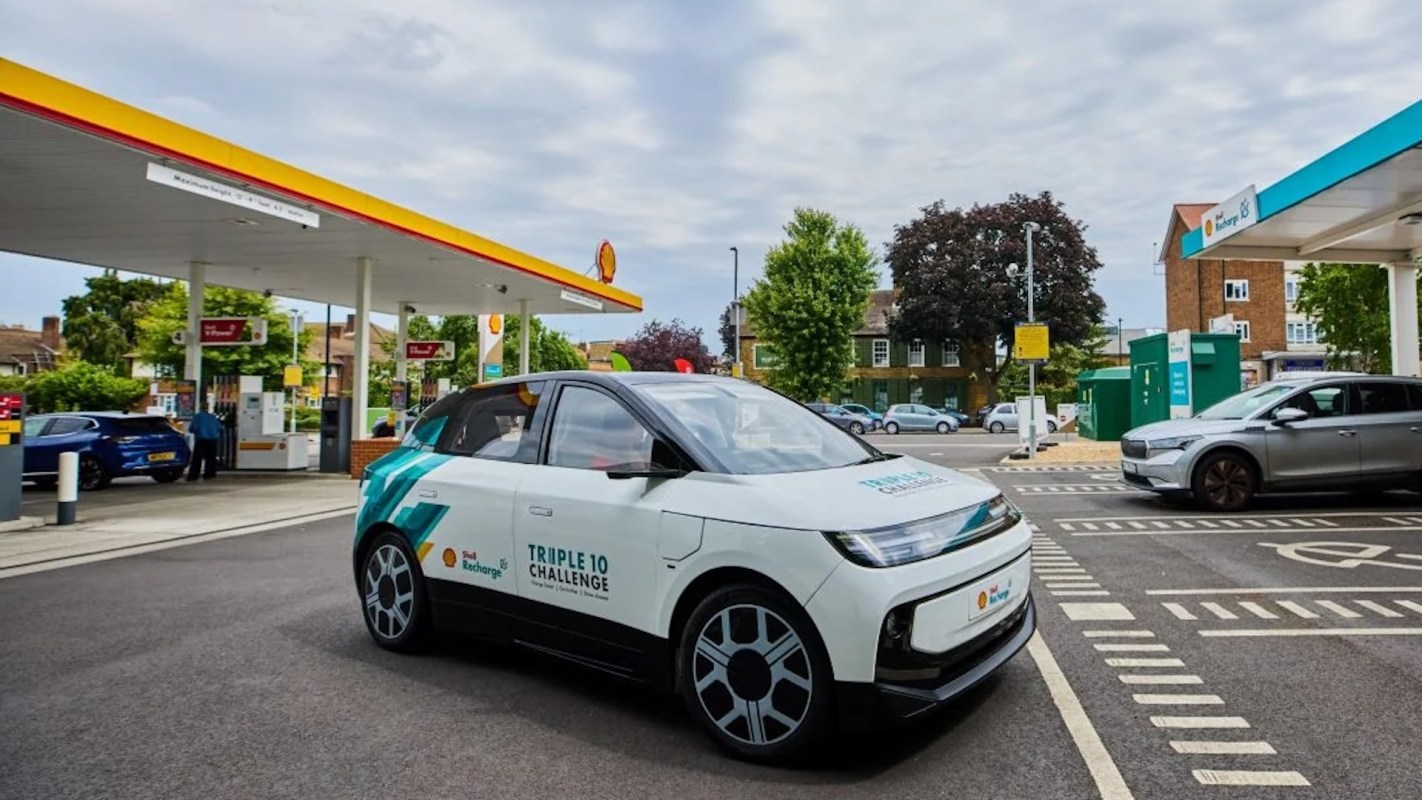
The oil giant Shell has landed in an unlikely spot: at the center of EV chatter, as the company announced it has completed a challenge to build what could be one of the most efficient electric vehicles ever built.
What happened?
As described in a recent video by YouTube creator The Electric Viking, Shell's proof-of-concept EV, dubbed the "Triple 10 Challenge," is designed around three ambitious targets: no more than 10 tons of lifetime carbon emissions from manufacturing through end of use, a 10% to 80% recharge in under 10 minutes, and energy consumption of just 10 kilowatt-hours per 100 kilometers.
While a typical EV adds about 8 miles, or 13 kilometers, of range per minute, The Electric Viking said Shell's prototype can add about 15 miles, or 24 kilometers, in the same timeframe.
Importantly, the video emphasized that Shell reportedly reached that pace on a 175-kilowatt charger already common at many stations, rather than the 1,000-kilowatt-plus hardware some ultra-fast-charging EVs use.
The video also says the prototype gets 199 miles (320 kilometers) of range from a relatively small 32-kWh battery pack. It credits that performance to immersion cooling: instead of moving coolant through piping around the battery, Shell submerges the battery, motor, and power electronics in a non-conductive dielectric fluid so the system can stay cooler and maintain higher charging rates longer.
Why does it matter?
The prototype could matter even if this exact vehicle never reaches buyers. If its approach enables faster charging on hardware that's already in place, road trips could become easier without waiting for an entirely new charging network. A smaller battery could also lower EV costs, reduce vehicle weight, and cut pollution tied to manufacturing.
TCD Picks » Quince Spotlight
💡These best-sellers from Quince deliver affordable, sustainable luxury for all




EVs already help many households save money through lower fuel costs and reduced routine maintenance compared with gas-powered cars. If automakers can pair those savings with lighter vehicles and quicker charging, the transition becomes more practical for even more drivers.
While the prototype is exciting, it's important to note that Shell is one of the world's leading oil producers and has been accused by climate advocates of greenwashing. And this car, as of now, remains a concept, and Shell has no plans to bring it into production.
But it does show that Shell is thinking seriously about the future of transportation and where its oil business may fit 10, 20, 30 years down the road. It only makes sense for each oil company specializing in gasoline, in particular, to focus on adding EV chargers and supporting the transition — and profiting off it in the process — instead of stubbornly spending money fighting it.
In other words, Shell and other oil companies still have the chance to be Blockbuster seeing Netflix coming with years to figure it out instead of being blindsided. Instead of continuing to be Blockbuster and nothing else, they can pivot to also specialize in what's (already) coming.
What are people saying?
Commenters were divided between surprise and skepticism.
One wrote, "It's called survival. Shell sees the end game of oil."
Another said, "If the oil companies get on board with EVs instead of fighting them, this industry will change dramatically… and quickly."
A third commenter wrote, "That 10-minute recharge on an existing 175 kW dispenser is the real breakthrough here—emphasizing thermal management and cell capability rather than just gun speed to pump energy."
"Either this is a prototype to show off and then do nothing [with] or Shell has realized that if you can't beat them, join them," another wrote.
Another commenter was more cynical.
"They'll patent it and never let anyone make it," they wrote.

Get TCD's free newsletters for easy tips, smart advice, and a chance to earn $5,000 toward home upgrades. To see more stories like this one, change your Google preferences here.






