


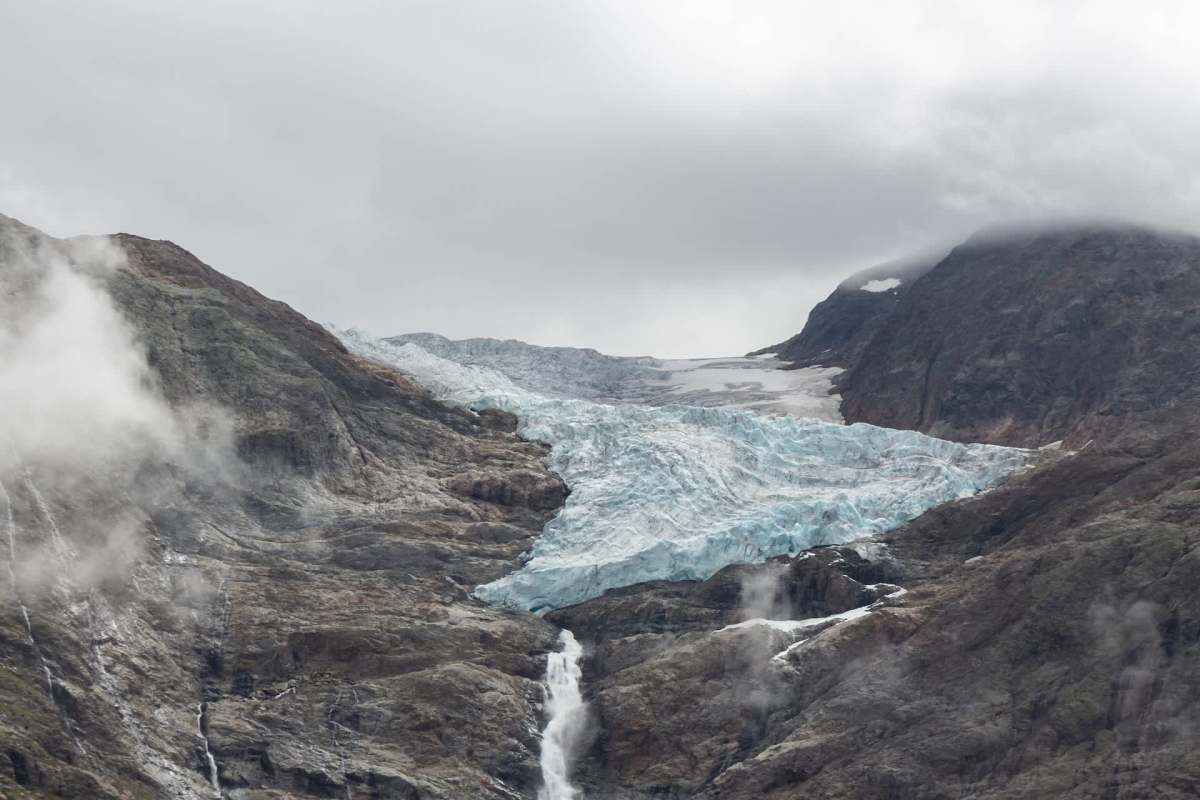
Four graduate students in Switzerland have helped to discover that sheep's wool could be used to protect vulnerable glacier ice in a project called "Keep it Wool."
Here's what to know
In a trial run by Summit Foundation and the University of Lausanne, two wool blankets produced by Fisolan were placed on about 2,100 square feet of the Tsanfleuron Glacier in western Switzerland in June.
Reuters later reported that the research team evaluated the wool against the plastic glacier covers that are more commonly used to protect ice. Project manager Timothée Steiner told the news outlet that biweekly measurements showed the wool limited melting just as effectively.
Project organizers said that roughly 40% to 70% of Swiss sheep's wool is thrown away each year, so the effort could also help turn an agricultural byproduct into a potential local conservation tool.
"I thought it wouldn't be stable enough," Niklaus Saegesser of Fisolan told Reuters.
The early results do not suggest that wool can save Alpine glaciers on its own, but they do indicate that places already using protective coverings may be able to reduce their reliance on plastic to preserve key patches of ice.
TCD Picks » Quince Spotlight
💡These best-sellers from Quince deliver affordable, sustainable luxury for all




More background
Glacier blankets work by reflecting sunlight, cutting the amount of heat absorbed by the ice.
The insulating quality of wool made the material worth testing against the synthetic sheets already being used across some ski areas and glacier attractions.
Plastic-based covers bring their own concerns. Reuters reported that synthetic tarps can release microfibers into mountain meltwater, adding to the pollution concerns for delicate alpine landscapes.
Still, the scale of these covers is tiny compared to the glacier crisis as a whole.
According to Reuters, protective sheets cover only about 0.02% of Switzerland's glacier surface. Summit Foundation estimated they save around 392,000 cubic yards of snow each year, while the country loses nearly 1.3 billion cubic yards of glacier ice annually.
What else?
The project's backers have been careful not to overstate the results. The test covered just two small patches, and questions remain about cost and about how well wool would hold up after repeated exposure to sun, wind, and rain.
At the same time, if discarded wool can be turned into glacier covers, it could support a more local supply chain for nearby farms and communities already dealing with shrinking snow and ice.
"Now we have a result we can see and even touch," Elliot Gaffiot, a graduate student involved in the project, told Reuters. "It worked incredibly well."

Get TCD's free newsletters for easy tips, smart advice, and a chance to earn $5,000 toward home upgrades. To see more stories like this one, change your Google preferences here.






