


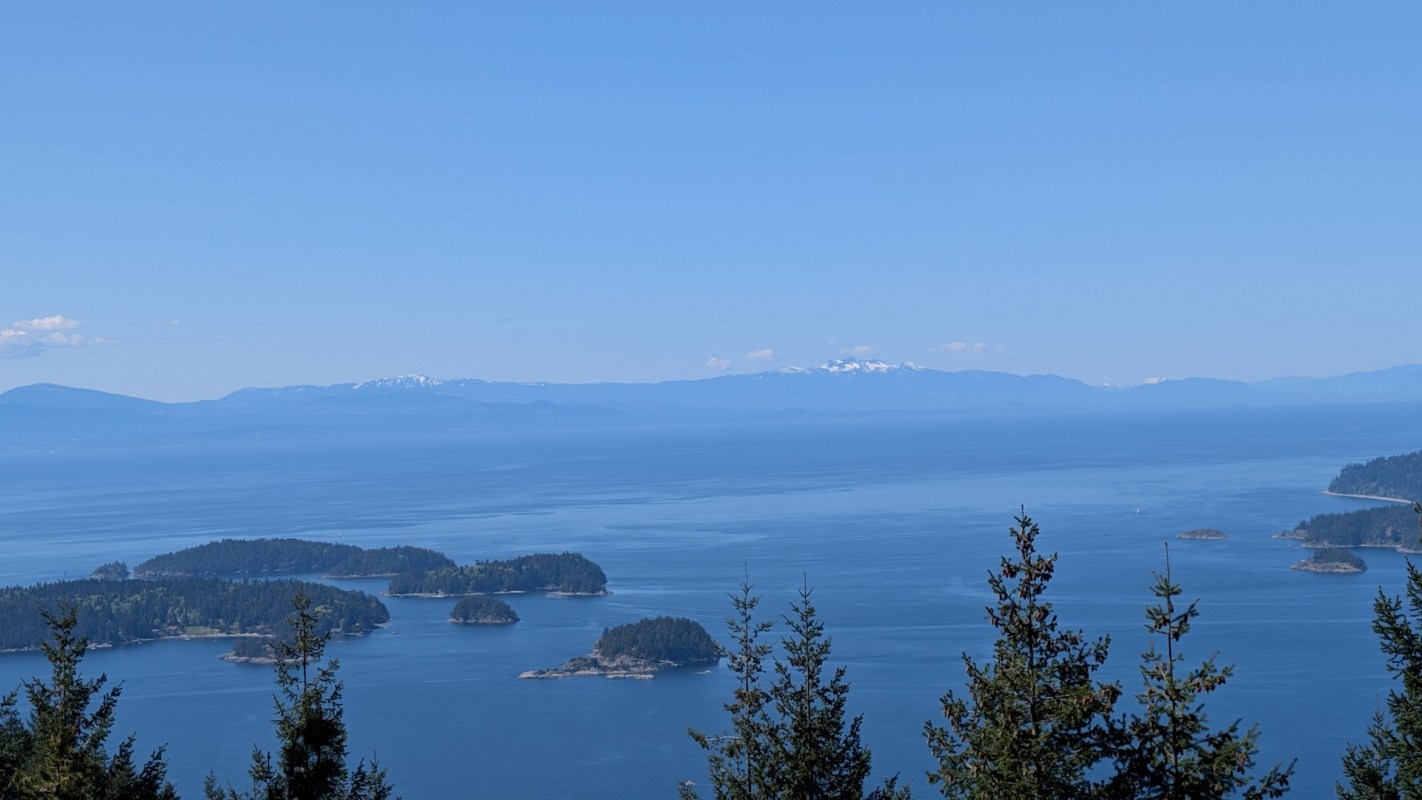
Tiny sea spiders in Canada's Salish Sea are giving scientists a rare glimpse into an often-overlooked part of coastal life. Two of the creatures are entirely new to science.
Some sea spiders feed on hydroids, including jellyfish, by draining their fluids through a proboscis.
Here's what to know
According to UBC News, University of British Columbia researchers documented two new sea spider species in the Salish Sea, the first from the region to be formally described in roughly a century.
The findings, published in the journal Organisms Diversity & Evolution, add to what scientists know about a group of animals few researchers have studied closely.
The team gathered specimens on dives as deep as 59 feet between September 2023 and August 2024, at sites near Quadra Island, Vancouver, Bamfield, and Victoria.
One species, Callipallene pilosuspedes, is named for the long spines lining its legs; the Latin name roughly means "hairy feet." The other, Tanystylum kiixin, is named after an Indigenous village site near where researchers first collected it.
TCD Picks » Quince Spotlight
💡These best-sellers from Quince deliver affordable, sustainable luxury for all




Lead author Cormac Toler-Scott did the research as a master's student in zoology at the university. He said some shallow-water sea spiders live as parasites on larger organisms, using "this weird apparatus called a proboscis to suck the juices out of their host." Sea spiders are marine arthropods, and their relatives include horseshoe crabs, scorpions, and spiders.
More background
"I was interested in how sea spiders are impacted by climate change and human disturbance, because marine invertebrates in the Salish Sea are particularly at-risk, and I couldn't find anything," Toler-Scott said.
"That's largely because people don't know much about what species exist here and what their lifestyle is."
What's being done?
Before this study, no one had combined detailed imaging with genetic analysis to examine the Salish Sea's sea spiders in such depth.
The team also produced the first DNA sequences for several species and put together a guide for identifying the region's sea spiders.
The two newly described species are now listed in a global database.
Researchers found only one specimen of Callipallene pilosuspedes. Tanystylum kiixin, meanwhile, often had small parasites living on it, which Toler-Scott described as "an ecosystem within an ecosystem within an ecosystem."
Additional species probably remain undiscovered. "I only had one field season but there's definitely more diversity out there that we haven't documented," he said.
He added, "In order to understand how marine invertebrates are being impacted by things like climate change and how we can better protect these key elements of the ecosystem, we have to be able to identify them."
Where can I learn more?
These stories look at other unusual marine sightings and the pressures reshaping coastal ecosystems. They cover jellyfish strandings, marine heat stress, invasive invertebrates, and a rare deep-sea fish sighting.
• In Torquay, England, alien jellyfish wash up along beaches amid soaring temperatures.
• Off São Paulo, marine heatwaves are threatening bottom-of-the-food-chain species and regional fisheries.
• Across Europe, green crabs invading coastlines are now being promoted as a sustainable meal.
• In northeast England, Tees Rivers Trust inspectors made a 'leathery' discovery in an oyster pot.
• Near Tenerife in the Canary Islands, scientists document the jaw-dropping appearance of a black devil anglerfish.

Get TCD's free newsletters for easy tips, smart advice, and a chance to earn $5,000 toward home upgrades. To see more stories like this one, change your Google preferences here.






