


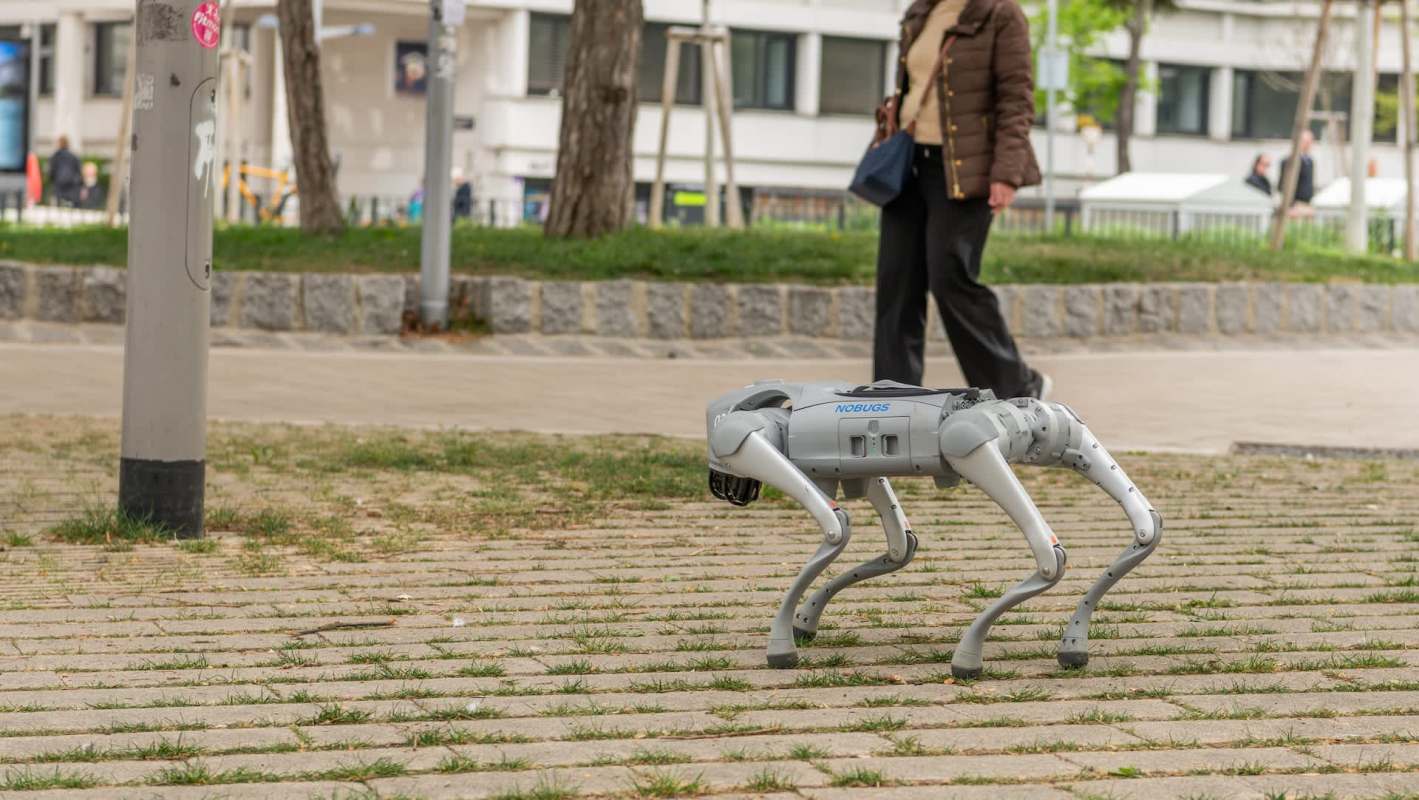
Walking a robot dog for $20 an hour might sound easier than handling a living pet. But workers responding to one San Francisco startup's advertised gig faced an unexpected challenge: carrying the 33-pound machines back when they overheated or stopped working.
Here's what to know
Applicants could receive paid training without any robotics experience. Dimensional sought workers for four- to six-hour outdoor testing routes around San Francisco, according to Fox Business, citing The New York Times.
The since-deleted Facebook listing, dated Oct. 5, emphasized the chance to get paid quickly.
"Start right away and get paid right after each completed shift. Paid training is included," the posting said, as shown in a screenshot shared by the Times.
Carrying the equipment was part of the job's physical requirements.
More background
Based in San Francisco's Dogpatch neighborhood, Dimensional has bought more than 100 robotic dogs and 50 humanoid machines from suppliers in the United States, China, and Germany, according to the Times.
TCD Picks » Quince Spotlight
💡These best-sellers from Quince deliver affordable, sustainable luxury for all




A mobile app or handheld remote lets operators steer the machines instead of leaving them to navigate city streets entirely on their own. The robot dogs used on the walks came from Unitree, a Chinese robotics company, and cost about $2,000 each.
AI requires electricity to operate, but it could also help optimize clean-energy systems.
Those potential benefits must be weighed against energy and water consumption, security risks, and possible increases in electricity bills. The reporting, however, does not establish the resource footprint of Dimensional's tests.
What's being done?
People still help the machines get through unpredictable street conditions in Dimensional's walking program. The company is also developing an open-source operating system through which AI agents could send commands to robots, according to the Times.
The walks do not show that the machines can complete the routes independently; they are exercises in gathering data. Onboard cameras and sensors provide that information while people guide the robotic dogs, founder Stash Pomichter told the Times.
"What we determined from our dog-walking experiment was that agents are still very bad at controlling hardware," he told the Times. "And humans are still needed in the loop."
Where can I learn more?
Dimensional's walking program offers a street-level look at the work it takes to keep robots running. These stories explore AI hiring concerns, robot repairs and safety, shelf-restocking machines, and the workers supporting supposedly autonomous systems.
• A New Zealand job seeker feared a timed AI interview was a data grab.
• Japan is deploying a robot repair ambulance to fix machines and provide replacements.
• In Denmark, humanoid robots are learning to restock shelves, but only after dark.
• Across the Global South, AI's hidden human workforce is organizing while powering supposedly autonomous systems.

Get TCD's free newsletters for easy tips, smart advice, and a chance to earn $5,000 toward home upgrades. To see more stories like this one, change your Google preferences here.






