


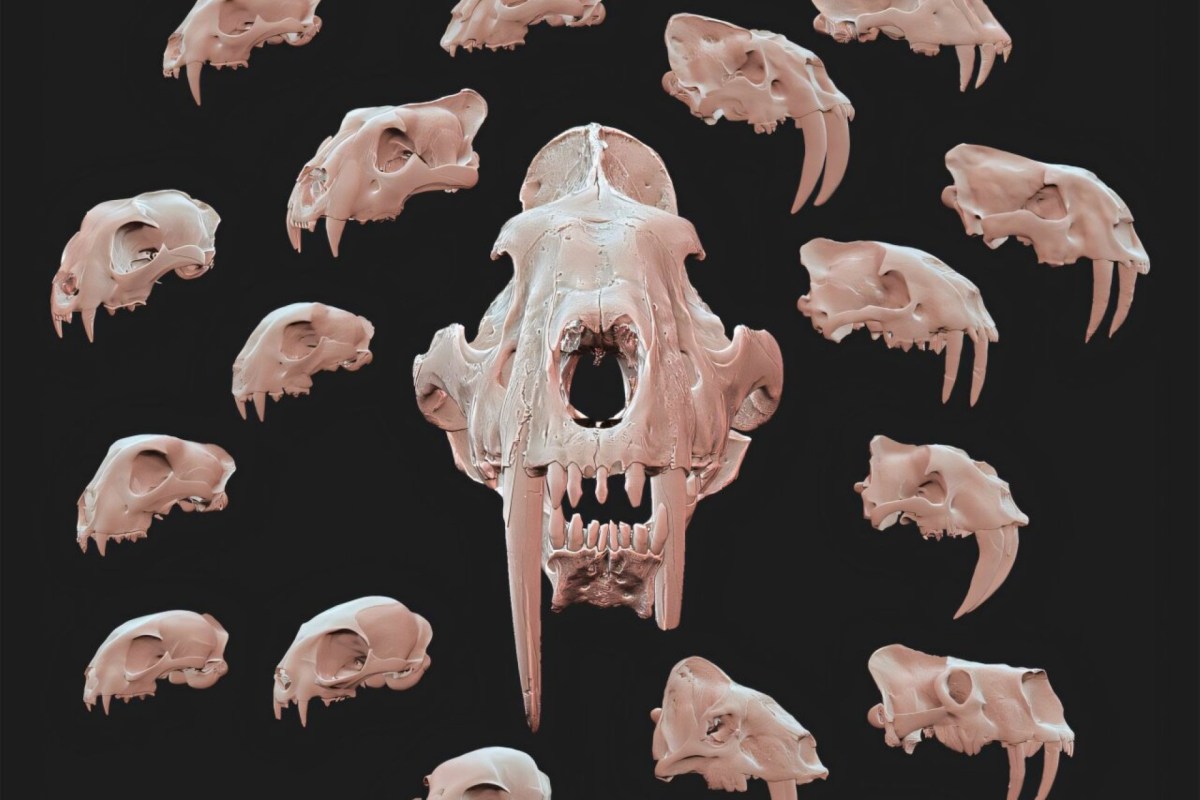
A postdoctoral researcher recently identified a 5-million-year-old saber-toothed cat fossil — but the discovery didn't happen in the field. Instead, the previously unrecognized specimen was found tucked away in a drawer at the American Museum of Natural History in New York City.
What happened?
According to Phys.org, after finding the fossil, Narimane Chatar, a University of California Berkeley postdoctoral fellow, recognized the nearly complete skull, teeth, and lower jaw as belonging to the species Adelphailurus kansensis. Until now, the ancient saber-toothed cat had been known only from jaw fragments and isolated teeth.
The rediscovered specimen is the first fully complete skull of the animal ever recorded.
The identification gives researchers a clearer view of how saber-toothed cats changed over millions of years before disappearing around 10,000 years ago.
A new paper published in the Journal of Vertebrate Paleontology says that the changing tooth shapes of saber-toothed cats over millions of years may offer new clues about how the iconic predators went extinct.
Why does it matter?
In saber-toothed cats, the upper canines were adapted for slicing flesh and severing arteries. But compared to the rounder, sturdier teeth of modern big cats and other carnivores, those teeth were also more fragile.
TCD Picks » Quince Spotlight
💡These best-sellers from Quince deliver affordable, sustainable luxury for all




As the group evolved, some species pushed that feature further, and Smilodon fatalis eventually developed upper canines up to 7 inches long.
Those oversized teeth may have been a major advantage when large prey was abundant. After the last ice age, though, as big herbivores such as bison and camels declined, saber-toothed cats may have been less able to adjust than carnivores equipped for a broader range of feeding strategies, Phys.org reported.
Chatar told Phys.org the rediscovered fossil highlights a basic compromise in carnivore tooth evolution: "Slicing and crushing are basically the two main things a carnivorous mammal's teeth can do. But for saber-toothed animals, there's a clear tradeoff. Those upper canines were extremely efficient but also break very easily."
She added that the same pattern seems to appear repeatedly in saber-toothed cats, saying, "We've never found any lineage that started developing long upper canines and then stopped and went back to a less specialized state; once a group starts, [the fangs] go crazy, and then they go extinct."

Get TCD's free newsletters for easy tips, smart advice, and a chance to earn $5,000 toward home upgrades. To see more stories like this one, change your Google preferences here.






