


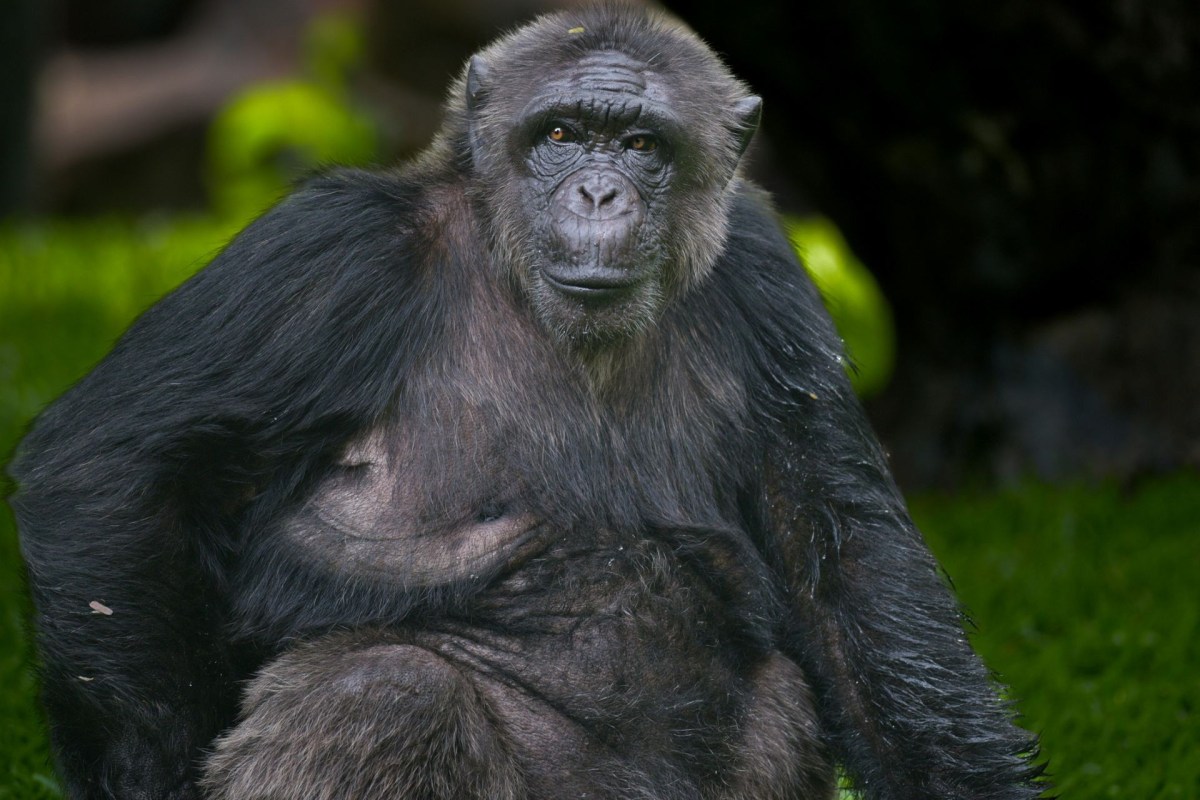
A team overseen by a longtime ally of Russian leader Vladimir Putin is investigating aging in elderly monkeys, research that could help identify ways to extend human life.
Here's what to know
The Kurchatov Institute houses a primate population of more than 7,000 animals across 22 species, according to United24 Media, citing ZN.ua's Nov. 11 reporting.
The institute is led by Mikhail Kovalchuk, a longtime Putin associate who also serves as an unofficial science adviser. Researchers examine the animals' brains and blood vessels as part of a screening program that also includes biochemical tests and structural analysis.
The institute's partnership with the Russian Scientific Center of Surgery has produced a repository for blood taken from long-lived monkeys.
Konstantin Kotenko, the surgical center's director, said the samples would help researchers explore how aging happens.
More background
Putin also has close ties to billionaire Yuri Kovalchuk, Mikhail's brother. Putin's eldest daughter, endocrinologist Maria Vorontsova, works in genetics research.
TCD Picks » Quince Spotlight
💡These best-sellers from Quince deliver affordable, sustainable luxury for all




Vorontsova characterized efforts to exceed the natural limits of human lifespan as attempts to "cheat God." She made the remarks during an October appearance at the Moscow School of Management Skolkovo, after the opening of a longevity laboratory there.
Journalists overheard Putin and Chinese leader Xi Jinping discussing whether humans could eventually live to 150. The exchange took place during Putin's Sept. 2025 visit to China and reflected his publicly expressed interest in unusually long lifespans.
Russian state scientists are also developing a gene therapy that United24 Media identified as the centerpiece of a $26 billion anti-aging initiative. The therapy aims to slow cellular aging.
What's being done?
United24 Media reported that Russia will support research into extending healthy human life through "New Health Preservation Technologies," with almost $217 million allocated to the program in its 2027–2029 budget.
The reported spending plans include about $1.7 million to investigate the biological causes of aging and about $3.5 million to print biological tissues and organs. Roughly $7.5 million is designated for preventive medicine and healthy-longevity technologies.
State scientists say they have used bioprinting to produce human cartilage tissue and a mouse's thyroid gland. The target for replacing human organs is 2030, with the same deadline for cultivating organs within mini-pigs, according to United24 Media.
"We are screening elderly monkeys to trace all stages of aging. We assess individuals from 18 to over 30 years old. We conduct a full screening: biochemical, structural analysis, we study blood vessels, the brain—everything. Primates are the closest example to us. This is the basis for creating a regulatory system for extending [lifespan]," Kovalchuk said.
Where can I learn more?
Russia's research raises questions about how long humans can live and the role of primates in finding answers. These stories examine monkey breeding, laboratory animal welfare, anti-aging claims, and exceptionally long-lived people.
• A Palantir co-founder's $20 million monkey-breeding investment faces lawsuits as animal-testing rules shift.
• Scientist Bill Andrews says an anti-aging pill is three years away after decades pursuing a cure for aging.
• A Wisconsin audit says eight UW-Madison lab monkeys missed required pain medication after experiments.
• A New York filmmaker spent a decade with supercentenarians, finding clues to living well.

Get TCD's free newsletters for easy tips, smart advice, and a chance to earn $5,000 toward home upgrades. To see more stories like this one, change your Google preferences here.






