


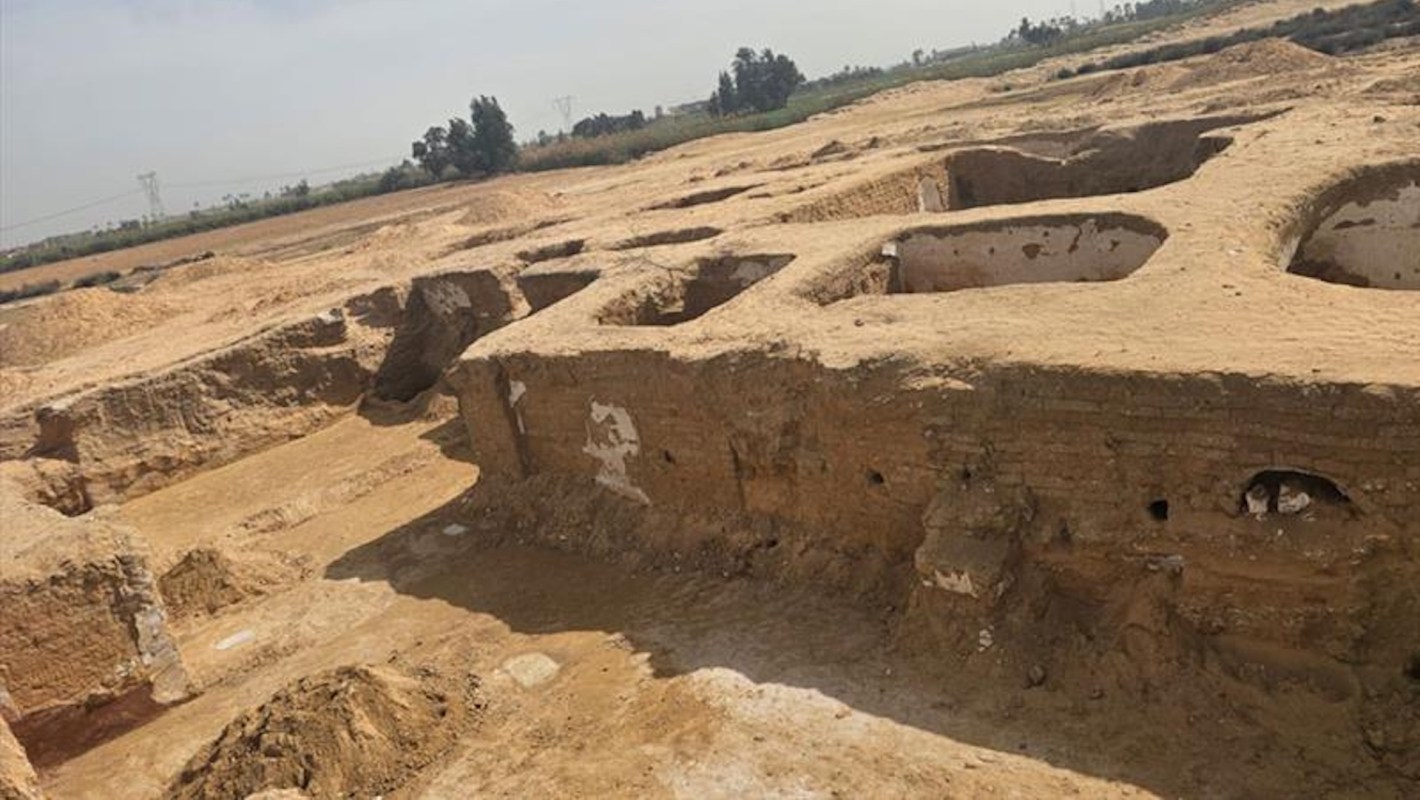
Egypt's ancient monuments often capture most of the public attention, but a new discovery is shining a light on a very different chapter of the country's past. Archaeologists in northern Egypt have uncovered the ruins of an enormous early Christian monastery, offering a rare glimpse into the era that followed the age of the pharaohs.
What happened?
Work in the Al-Ruba'iyat area of Al-Qalaye in Hosh Issa uncovered a fifth-century Coptic monastery, according to Popular Mechanics. By current estimates, it ranks among the biggest monastic complexes known from Christian history.
The excavation revealed 13 arched rooms that included monks' quarters, shared spaces, storage rooms, kitchen facilities, and larger halls intended for instruction and hospitality.
Researchers also found evidence that the structure expanded over time, suggesting the monastery evolved as its community grew.
Among the discoveries were pottery vessels and fragments, column bases and capitals, a marble column, and, as Popular Mechanics described it, a prayer room identified by a limestone cross.
A large northern hall with stone benches decorated with plant designs was likely used to welcome guests.
TCD Picks » Quince Spotlight
💡These best-sellers from Quince deliver affordable, sustainable luxury for all




The site also preserved traces of Coptic art, including walls covered in murals depicting monks, braided patterns, gazelles, foliage, and eight-petaled flowers in red, black, and white pigments that have faded with age.
Why does it matter?
Historically, the site helps illuminate a pivotal shift in Egypt's past.
By the fifth century, Egypt had become a center of Coptic art and culture after Christianity had arrived around 49 C.E. with Saint Mark the Evangelist, according to Popular Mechanics.
The monastery shows how communities adapted in the centuries after the Ptolemaic period, when older religious traditions gave way to churches, monasteries, and new centers of learning.
Animal bones, seashells, and food-storage vessels offer clues about what monks ate, while the guest hall suggests these communities were not entirely cut off from the outside world.
What's being done?
The excavation was led by archaeologist Samir Rizq Abdel-Hafez and is part of ongoing efforts by Egypt's antiquities authorities to better document the country's early Christian heritage, Popular Mechanics noted.
Researchers are now studying the architecture, artwork, and artifacts to better understand how the monastery functioned and how it changed over time.
The remains suggest a complex that expanded as monastic life became more organized. The discovery also builds on earlier work at Al-Qalaye, where previous missions uncovered monastic cells, service buildings, and pottery.
Together, those finds point to a sizable religious center rather than an isolated outpost.
Egypt's Supreme Council of Antiquities has also investigated other nearby early Christian sites, including Ain al-Kharab in the Kharga Oasis, which yielded churches, cemeteries, homes, and a mural of Christ healing a sick person.
Continued excavation at both sites could reveal more about the development of Coptic art and daily life.

Get TCD's free newsletters for easy tips, smart advice, and a chance to earn $5,000 toward home upgrades. To see more stories like this one, change your Google preferences here.






