


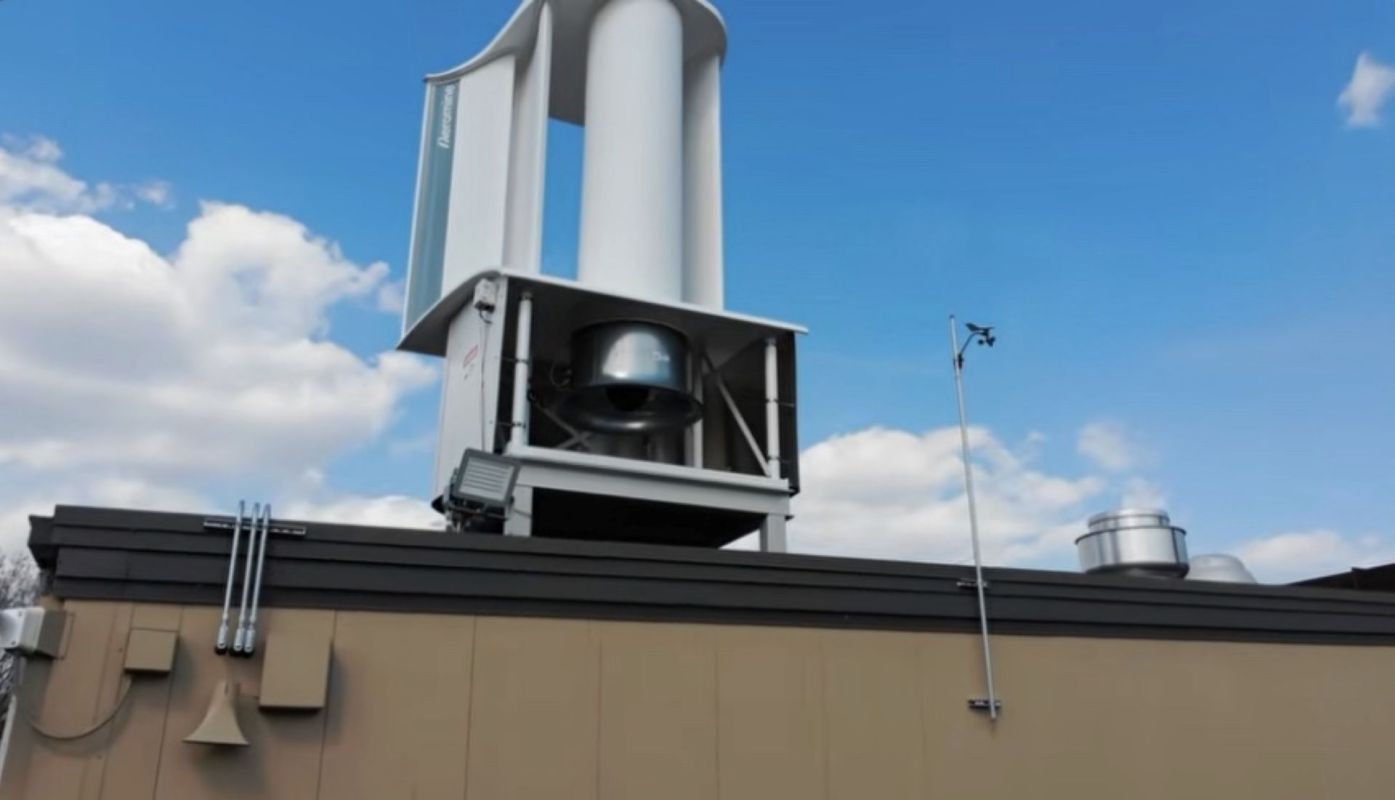
A new rooftop wind-energy system is being pitched as a simpler, more reliable way for commercial buildings to generate clean electricity, even when the sun isn't shining.
What's happening?
An Instagram post by Interesting Engineering describes the technology, created by Aeromine Technology, as a flat-roof system that turns airflow around the building into usable power while leaving no moving parts visible.
The system generates electricity with a hermetically sealed permanent-magnet generator driven by an internal propeller, which is the only moving part inside the unit. That propeller is turned by air pulled upward through the device after wind is pushed over the parapet of a flat-roofed building and then sped up further by two vertical airfoils.
As that flow passes a central column, pressure drops behind it to create a vacuum effect within the system. By using the building's shape to capture rooftop wind, the design is able to avoid the look of a traditional turbine while still benefiting from breezy conditions.
The combination of features could make the device an attractive option for large, flat-roofed properties where users are looking to generate power on-site.
Why does it matter?
One of the biggest challenges facing the expanded rollout of renewable energy in dense urban environments is finding equipment that fits within the existing infrastructure.
TCD Picks » Quince Spotlight
💡These best-sellers from Quince deliver affordable, sustainable luxury for all




Large tower turbines are often impractical and impossible to install near commercial buildings, while rooftop solar can be hindered by limited available space. A roof-edge wind unit, however, offers another potential option.
When a building can produce more of its own electricity, there are numerous benefits. It often leads to lower utility costs, reduced demand on the grid, and more predictable energy bills over time.
To add to that, building energy costs usually flow downstream. When offices, stores, apartment operators, and industrial facilities spend less on power, that can help keep operating expenses lower and improve resilience during periods of high energy demand. This can all lead to lower costs for consumers.
The technology offers a number of potential health and environmental benefits, as well. The more electricity that comes from on-site renewable sources, the less need there is for pollution-heavy power generation elsewhere, which can help improve air quality and cut heat-trapping emissions.
What's being done?
Aeromine's design points to a broader shift in clean energy: making renewable systems easier to deploy where people already live and work.
Instead of requiring a separate field, tower, or major new footprint, this kind of technology uses a part of a building that already exists and is often underutilized.
This approach also could open the door to the possibility of pairing multiple technologies together. A flat roof might host solar panels while the roof edge captures wind, helping extend clean-energy production across more hours and weather conditions.
Distributed power systems can support local energy resilience and reduce pressure on aging electrical infrastructure, especially in areas with many large commercial rooftops.
By turning a roof edge into a power source, Aeromine is pitching a cleaner-energy idea that utilizes existing structures and wind patterns. While the new device won't meet all of society's energy demands on its own, it could ultimately play an important role in a future powered by cleaner, renewable energy.

Get TCD's free newsletters for easy tips, smart advice, and a chance to earn $5,000 toward home upgrades. To see more stories like this one, change your Google preferences here.






