


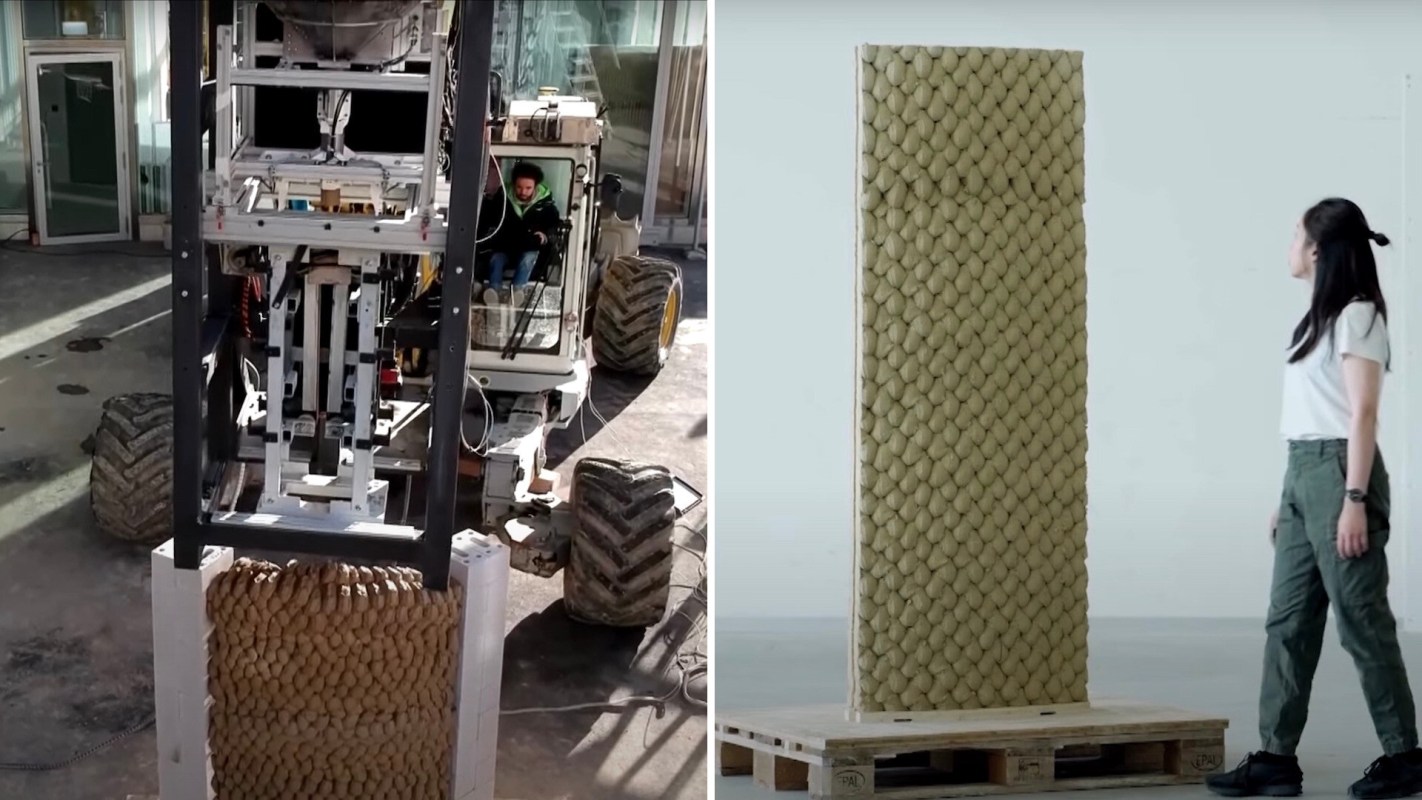
Scientists in Switzerland have designed a robot to easily 3D print walls using sustainable materials.
According to Reuters, the robot was designed by researchers at ETH Zurich and can print walls without formwork or frames to keep things in place, reducing the need for cement.
It uses a process known as impact printing, in which blobs of clay are dropped at a speed of 10 meters per second onto one another, using the force of the impact to keep everything in place and stable.
The technique can also compete with the speed of traditional cement-based construction, because there is no wait time for layers to dry.
Cement is a crucial piece of modern construction. It's durable, cheap, and readily available all over the world. However, creating cement exacts a hefty environmental toll.
It requires massive amounts of water and is responsible for 7% of global carbon emissions each year, according to Fair Planet. The amount of water it uses will become increasingly costly in a world where drinkable water is becoming more scarce.
TCD Picks » Quince Spotlight
💡These best-sellers from Quince deliver affordable, sustainable luxury for all




The cement sector produces both carbon monoxide and sulfur dioxide, according to the Environmental Protection Agency, which can lead to respiratory problems. Think tank Chatham House also estimated the industry is responsible for 8% of global carbon dioxide emissions each year.
ETH's robot addresses these issues by using locally sourced building waste such as silt and clay, a much more sustainable and environmentally friendly building material.
"If our system gets fully optimized, there's huge potential that it could be extremely fast, and also ecological at the same time," Dr. Lauren Vasey, the postdoctoral fellow who developed the robot at ETH Zurich, told Reuters.
|
Would you want to work inside a 3D-printed building?
Click your choice to see results and speak your mind. |
 Sure 💯
Join our free newsletter for weekly updates on the latest innovations improving our lives and shaping our future, and don't miss this cool list of easy ways to help yourself while helping the planet.






