


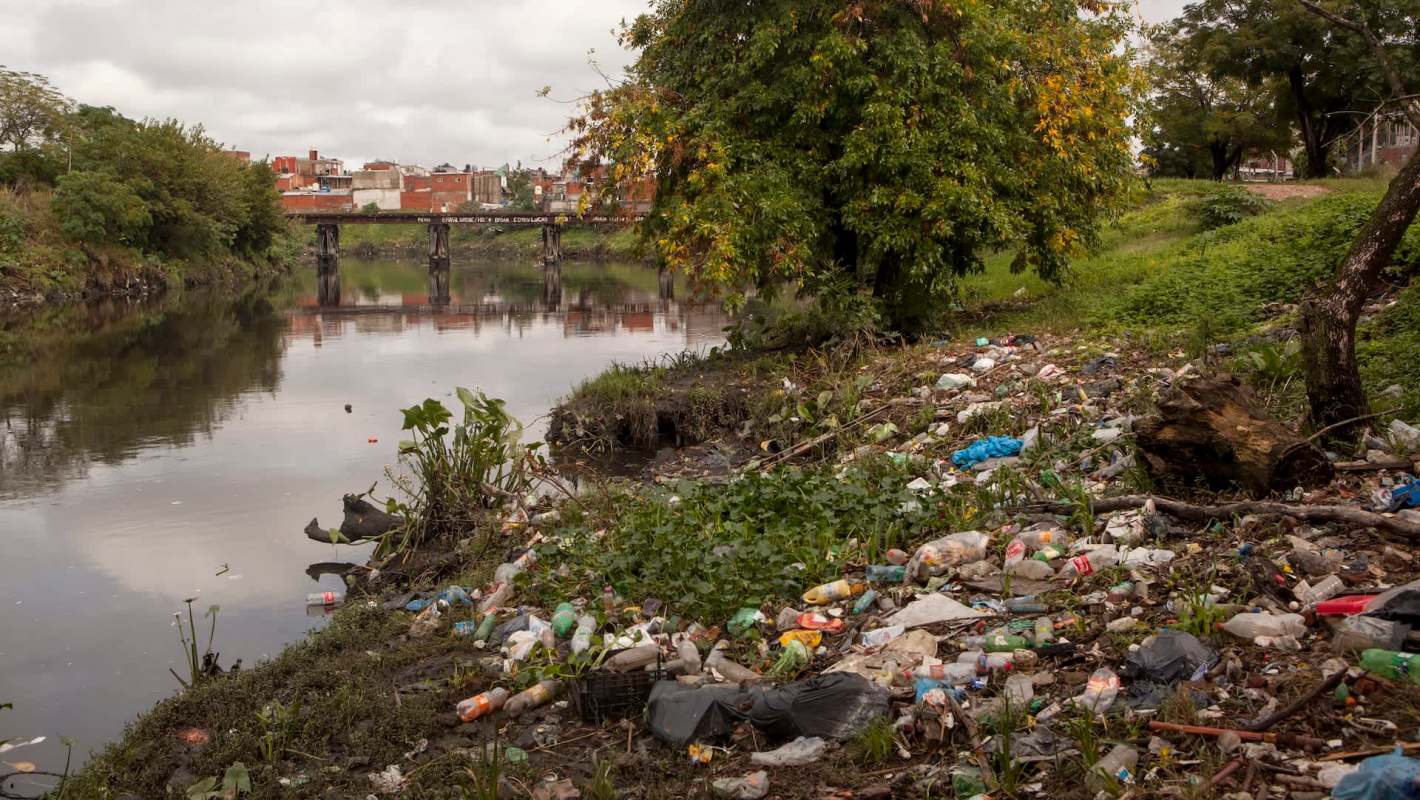
Repeated flooding in Costa Esperanza, Argentina, brought sewage, trash, and even animal carcasses into the neighborhood, convincing resident María Monges that her community could not wait for outside help to save its river.
That response developed into a community-led cleanup effort along Argentina's second-most-polluted river, the Guardian reported.
Here's what to know
After seeing local streams in Costa Esperanza become badly clogged, Monges started organizing her neighbors.
"You don't know what it was like — when we started cleaning up, all the streams were blocked up everywhere: rubbish, dead dogs … a bit of everything. It was unsanitary, but we carried on working anyway," she recalled.
By 2005, that effort had become the 9 de julio cooperative, which received tools, uniforms, and training from the provincial administration. Monges oversees weekday cleanup of streams that run off the river.
Roughly 4 million to 5 million people live in the Reconquista basin, and the river stretches about 51 miles through 18 municipalities in Buenos Aires province.
TCD Picks » Quince Spotlight
💡These best-sellers from Quince deliver affordable, sustainable luxury for all




Since at least the 1970s, it has received untreated sewage, industrial waste, and landfill leachate. Pollution has also been fueled by homes without proper infrastructure and by factories in the district of San Martín.
Natalia Gavazzo, an anthropologist and researcher at the National Scientific and Technical Research Council, described the scale of the damage.
"All of this not only pollutes the water, but also the soil and the air. In this area, there's no access to drinking water … all the aquifers are contaminated," she explained.
Gavazzo added that women lead much of Costa Esperanza's environmental activism, and that they "are not just victims" but "the key agents of mitigation and adaptation."
More background
The World Meteorological Organization's State of Global Water Resources report found repeated below-normal water levels across major parts of the larger La Plata basin from 2021 to 2025.
Although Buenos Aires province set up the Reconquista River Basin Committee in 2001, 2026 reports still described parts of the river near Costa Esperanza as facing "severe deterioration."
High E. coli levels and low oxygen make the river "not a suitable environment for aquatic life" and "a risk to the population," per Patricio Carmona, a biochemist specializing in environmental analysis.
Neighbor Lorena Batista, an employee of the National Institute of Industrial Technology, told the Guardian the odor is "like an acid."
"It is nauseating," added Monges' daughter, Zulma Monges.
Residents have dealt with rashes, respiratory problems, and gastrointestinal illnesses, though Zulma indicated skin issues have become less common since the cleanup work began.
What's being done?
Each month, Costa Esperanza residents meet to discuss neighborhood problems — from garbage buildup to water cuts — and bring them to local government representatives.
Grocer Rosa Valencia said the organizing is "very much a part of our lives; it's already become an integral part of the neighbourhood's culture."
In the area, the Foro por la Recuperación del Río Reconquista is pushing to create an ecological preserve, while the San Martín University's School of Habitat and Sustainability is working on artificial wetlands that could help filter pollutants.
Residents' efforts and results underscored the value of taking local action.
"It's beautiful when it's clean," Zulma told the outlet.
"The thing is, you have to stop the rubbish from reaching the neighbourhood. But this whole area … look, it's beautiful."
Where can I learn more?
Polluted waterways are forcing similar responses elsewhere, too. These articles feature flood survivors and restoration leaders cleaning rivers, protecting streams, and keeping trash out of the water.
• In Indonesia, five flood survivors built a mission to clean polluted rivers and beaches.
• In the Berkshires, residents dedicate free time to protect delicate community streams from worsening stormwater.
• In Thailand, The Ocean Cleanup launched a plastic interceptor in a heavily polluted river.

Get TCD's free newsletters for easy tips, smart advice, and a chance to earn $5,000 toward home upgrades. To see more stories like this one, change your Google preferences here.






