


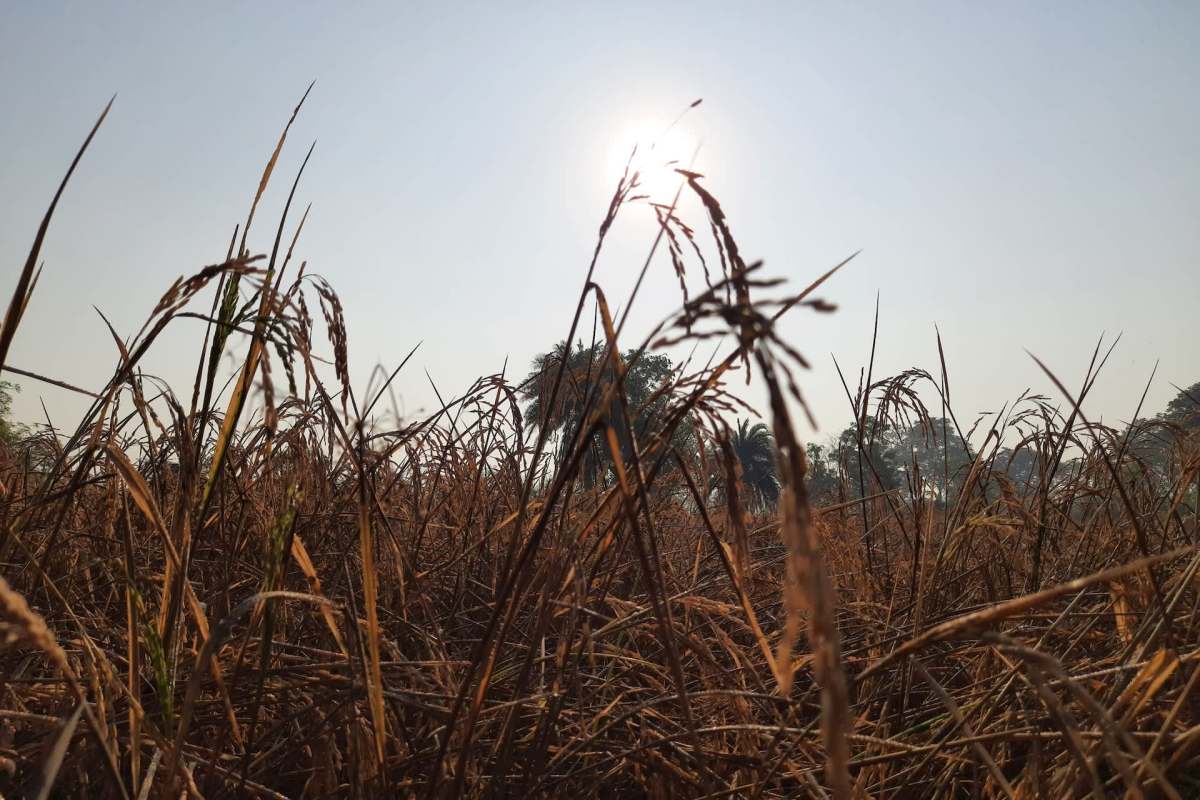
What if one of the world's most important staple foods is being pushed beyond its comfort zone faster than it can respond?
That may now be happening with rice, according to Live Science.
A new study found that rising global temperatures are heating some rice-growing regions roughly 5,000 times faster than the crop has historically evolved to tolerate.
In many areas, conditions are now moving outside the temperature range associated with about 9,000 years of human rice cultivation.
To reach that conclusion, researchers compared archaeological evidence of ancient rice farming with modern climate data.
They found that as humans expanded rice cultivation over millennia, the crop repeatedly shifted into cooler regions and adapted through selective breeding and agricultural practices.
TCD Picks » Quince Spotlight
💡These best-sellers from Quince deliver affordable, sustainable luxury for all




But while rice has gradually become more resilient to cooler environments, its tolerance for extreme heat appears to have changed very little.
That matters because rice is a staple food for more than half of the global population, with around 90% of production concentrated in Asia. Even small shifts in temperature can have large consequences on yields.
Although rice grows best in warm, wet environments, excessive heat can disrupt photosynthesis, damage pollen, and reduce grain growth — all of which directly lower harvests.
Rice is also deeply tied to livelihoods, supporting food security, employment, and entire regional economies.
For roughly 1 billion people involved in rice cultivation, hotter growing seasons, shifting rainfall patterns, and saltwater intrusion from rising seas are already adding pressure.
"We don't want to downweight the flexibility of human adaptation," study first author Nicolas Gauthier told Live Science. "But we also want to acknowledge that these adaptations have already occurred, and in some cases, we might be closer to the limits of what we can reasonably adapt to in that time frame."
Researchers say solutions are still possible. These include breeding more heat-tolerant rice varieties, improving irrigation and water management, and shifting production into cooler regions where feasible.
However, relocating production is not simple. Many rice-growing regions have developed over centuries, and moving them would require major infrastructure changes and could disrupt local economies.
That is why researchers emphasize the importance of long-term planning and climate-adaptive agriculture strategies.
"You could keep global rice production the same" by moving cultivation around, Gauthier said. "But that's not fixing the problem for people who live in South Asia who are relying on rice for their consumption."

Get TCD's free newsletters for easy tips, smart advice, and a chance to earn $5,000 toward home upgrades. To see more stories like this one, change your Google preferences here.






