


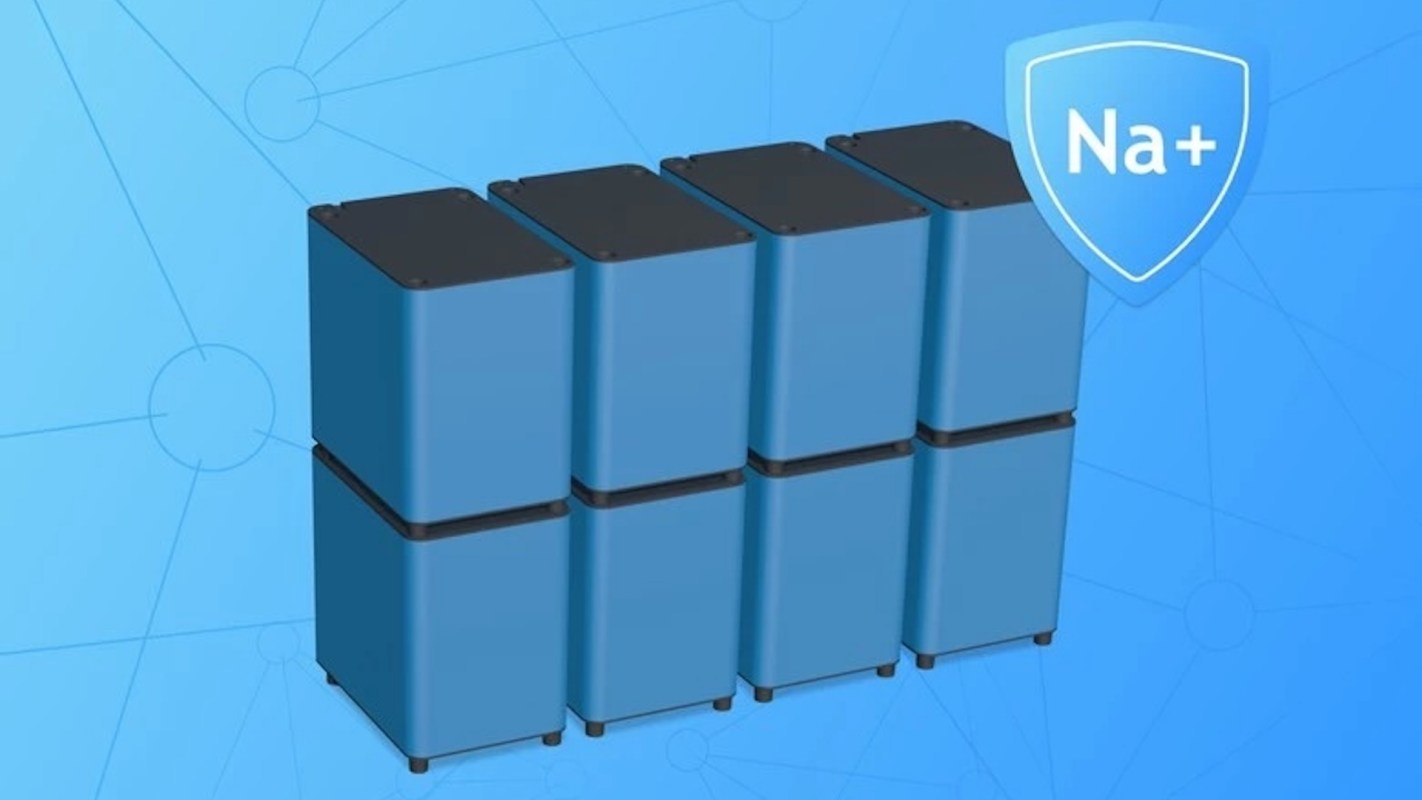
German startup Revolta AG has introduced a sodium-based home battery system that it says could make residential solar storage safer.
What happened?
According to Renewables Now, the company unveiled the new battery at Intersolar Europe 2026.
While most modern battery backups rely on lithium-ion technology, this product marks the first high-voltage sodium-based battery designed for residential use.
Revolta said, as reported by Renewables Now, that sodium-ion technology can offer significant safety benefits compared to traditional lithium-based designs. Sodium-ion batteries are known for thermal stability, which can help lower the risk of overheating and thermal runaway.
At the heart of the system is a custom high-frequency transformer and voltage-boosting design. According to Renewables Now, the technology increases voltage by about 50 times, allowing Revolta's 2.2-kilowatt-hour battery to operate using just three cells—far fewer than the many cells typically required in standard home battery systems.
Revolta says buyers will be able to scale the system from one 2.2-kWh module up to 10 modules for a combined 22 kWh.
TCD Picks » Quince Spotlight
💡These best-sellers from Quince deliver affordable, sustainable luxury for all




Why does it matter?
For households with rooftop solar, battery storage can make home energy use more convenient and efficient. By storing excess electricity generated during the day, batteries allow homeowners to keep using their own solar power after the sun goes down instead of relying as heavily on the grid.
A system designed to be safer and more compact could make that option more appealing to homeowners who have been hesitant about installing storage.
Cost and sourcing are part of the equation, too. Renewables Now reported that sodium is abundant and can be sourced sustainably at lower cost, including from sea salt.
Over time, that could help ease pressure on supply chains and potentially support more affordable energy storage options.
Home batteries are often valued because they can help families keep more power available on-site, which can be useful during outages or periods of high grid stress, depending on the setup.
If sodium-based systems prove durable and scalable, they could offer homeowners another path toward greater energy independence.
For cities and utilities, broader adoption of home storage can also help smooth electricity demand and make solar power more useful beyond peak daylight hours.
What's being done?
Revolta's approach appears to focus on simplifying hardware while opening the door to a wider range of storage sizes.
By offering modular configurations from 2.2 kWh to 22 kWh, the company is aiming to serve different household needs, from smaller solar setups to homes looking for more substantial stored power.
Fewer cells may mean a more streamlined design, which can help with installation, maintenance, and system monitoring, though real-world performance will ultimately depend on how the technology holds up beyond the trade-show floor.

Get TCD's free newsletters for easy tips, smart advice, and a chance to earn $5,000 toward home upgrades. To see more stories like this one, change your Google preferences here.






