


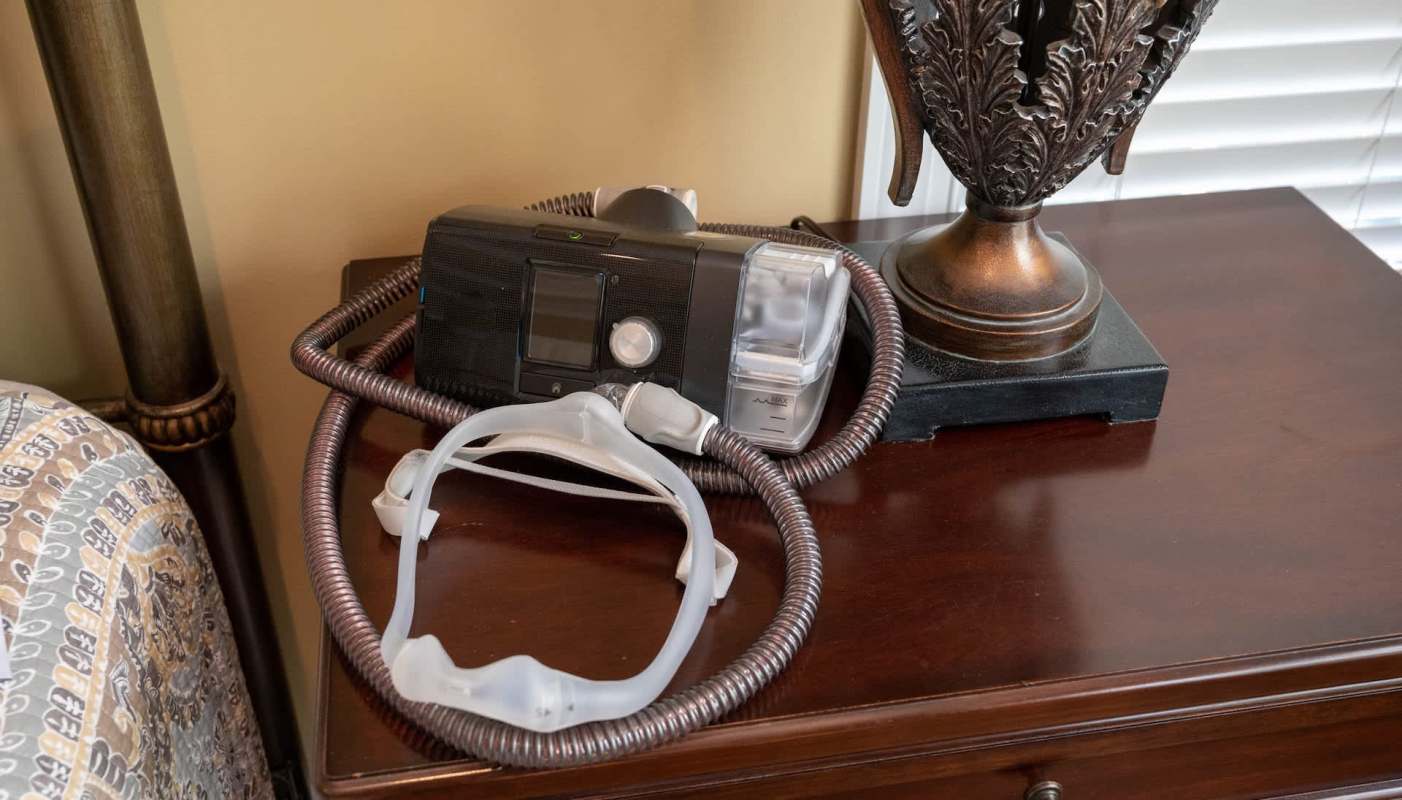
A family seeking backup power for a father's CPAP machine received an unexpected suggestion: that two changes to how the device runs could help them avoid paying for a larger battery.
Here's what to know
The family's backup power goal was about 24 hours of CPAP use over three nights. In a post on Reddit's r/Ecoflow_community, they asked how to keep their father's ResMed AirSense 10 AutoSet running during an outage.
"When the power goes out, he is unable to sleep without it, so we're looking for a reliable backup power solution," the original poster wrote.
Commenters questioned whether the family needed a battery as large as the EcoFlow Delta 2 Max they were considering. With that model's listed capacity of 2,048 watt-hours, a smaller, less expensive option might be enough.
A 1,000-watt-hour power station — roughly half the capacity under consideration — could work, according to one AirSense 10 owner. Their recommendation depended on whether the father could comfortably use a lower humidifier setting or switch it off, along with using a compatible DC converter.
More background
The adapter's maximum rating alone does not reveal how much electricity the father's CPAP uses overnight, commenters noted. Its ResMed AC adapter is rated at 90 watts, with a 24-volt, 3.75-amp output.
TCD Picks » Quince Spotlight
💡These best-sellers from Quince deliver affordable, sustainable luxury for all




More of a power station's stored energy can go toward running the CPAP when a compatible DC converter is used, the AirSense 10 owner explained. The converter connects through the station's vehicle-style outlet, reducing the losses associated with converting the battery's DC electricity to AC for the standard adapter.
Heating more water at higher humidity settings increases demand on the power station. To reduce that demand, the same owner suggested lowering the humidity to about level two to four, or switching it off if comfortable.
What can be done?
Another commenter, who uses a ResMed AirSense 11, shared their experience with a roughly 1,000-watt-hour battery. "When I turn off the humidifier and heated hose, I can get four to five nights off a full 90Ah battery (~1000wh)."
That user lives in a trailer and uses solar power to recharge. But winter travel through Canada made solar charging less useful, prompting them to add batteries and an 800-watt alternator charger to their setup.
The AirSense 10 owner also suggested putting money saved by choosing a smaller station toward a solar panel. The thread included no specific purchase prices or dollar savings.
Another commenter noted that measuring the father's actual overnight electricity use would help determine how much backup capacity he needs. "The easiest way to know for sure is to run it from the Delta for one normal night and see what percentage it used in the app."
Where can I learn more?
Choosing a battery to keep a CPAP running means accounting for both capacity and power losses. These stories cover CPAP backup, a compact battery's limits, and a budget apartment setup.
• In the U.K., a utility supplied a backup battery after outages interrupted a woman's CPAP.
• A compact battery kept a gaming rig running but shut down at 900 watts.
• A portable power station lost 300 watt-hours to idle draw despite its owner's freezer being off.
• A home battery owner spotted steady overnight power draw of 1.3 kilowatts and sought troubleshooting advice.
• A budget apartment backup setup combines battery, inverter, and generator input to prepare for outages.

Get TCD's free newsletters for easy tips, smart advice, and a chance to earn $5,000 toward home upgrades. To see more stories like this one, change your Google preferences here.






