


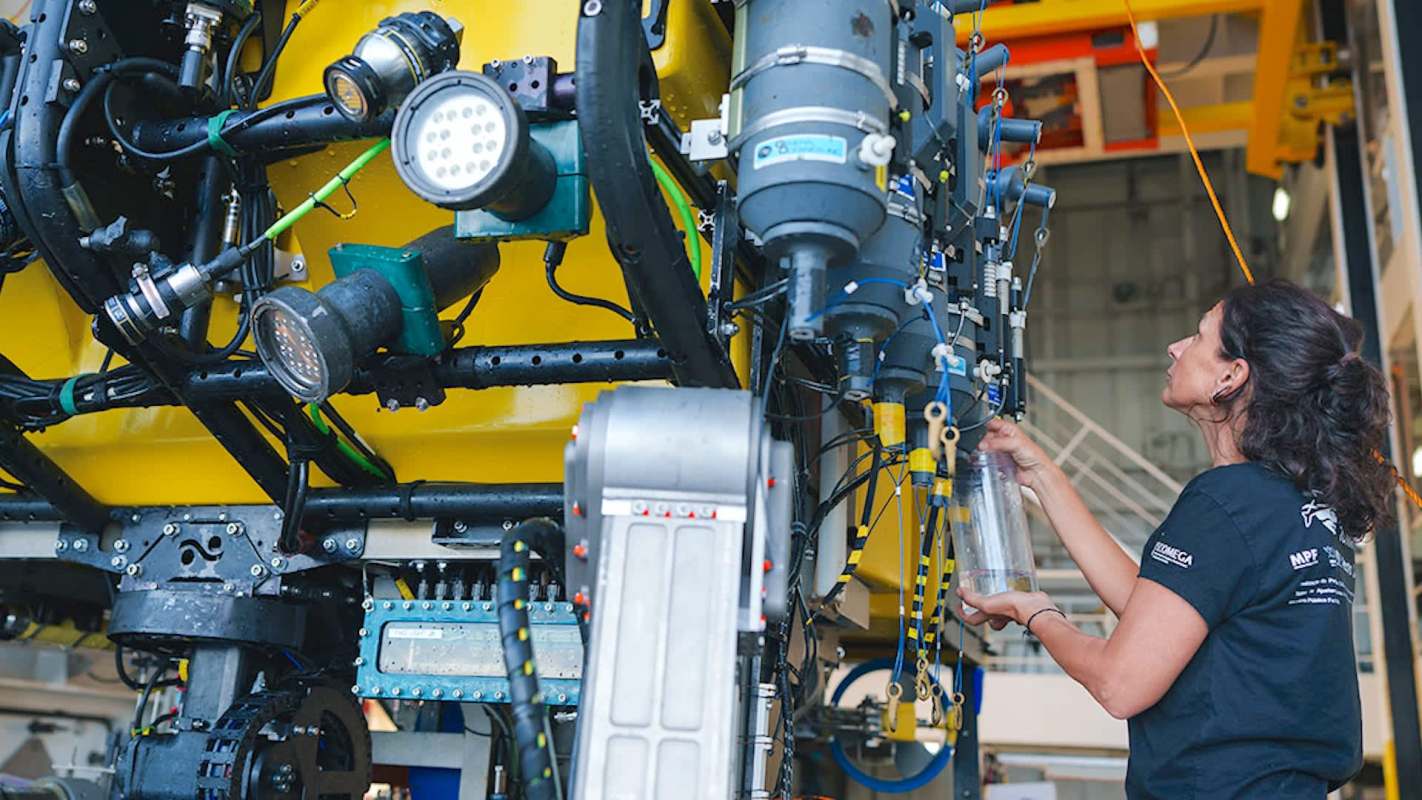
Off the coast of Brazil, researchers aboard a science vessel used laser-based imaging, shipboard DNA sequencing, and next-generation microscopes to confirm more than two dozen marine species in just days rather than the years such work often requires.
The expedition provided a rare view of the ocean's "midwater," a vast, dimly lit zone between surface waters and the deep seafloor that remains one of Earth's least explored habitats.
What happened?
While working in international waters in the tropical South Atlantic, an international team aboard Schmidt Ocean Institute's Falkor (too) identified a broad assortment of previously unknown marine life, Ocean News & Technology reported.
The confirmed new species included jellyfish, siphonophores, comb jellies, larvaceans, a crustacean, a fast-moving gossamer worm, and giant single-celled organisms called rhizarians.
One notable advance came from an onboard microscope called Squid, which Schmidt Ocean Institute said allowed scientists to capture 3D views of a living marine microbe's internal cell structures, a first for shipboard research.
Researchers also used the remotely operated vehicle SuBastian to laser-scan delicate midwater animals, generating 3D images without harming them.
TCD Picks » Quince Spotlight
💡These best-sellers from Quince deliver affordable, sustainable luxury for all




By combining those imaging systems with genetic sequencing on the ship, the team was able to determine which organisms were new species far more quickly than through the traditional process, which can take decades.
Why does it matter?
The midwater plays a major role in how carbon moves through the ocean, how marine food webs function, and how the planet regulates climate. Learning what lives there and how those organisms survive can improve ocean science, fisheries research, and climate forecasting.
Better tools can also aid conservation. Many midwater animals are gelatinous and easily damaged by nets or other standard collection methods, so noninvasive technology gives scientists a way to study this fragile life without destroying it.
That kind of progress could help researchers better understand and protect these ecosystems before industrial activity or warming oceans alter them.
"The largest habitat on Earth, the midwater, is filled with incredible animals we are only just starting to understand," said the expedition's chief scientist, Dr. Karen Osborn of the Smithsonian National Museum of Natural History.
Stanford University's Dr. Manu Prakash said the shipboard imaging breakthrough "opens a new door for researching deep-sea physiology," allowing scientists to witness "live internal processes" in organisms adapted to intense pressure and darkness.

Get TCD's free newsletters for easy tips, smart advice, and a chance to earn $5,000 toward home upgrades. To see more stories like this one, change your Google preferences here.






