


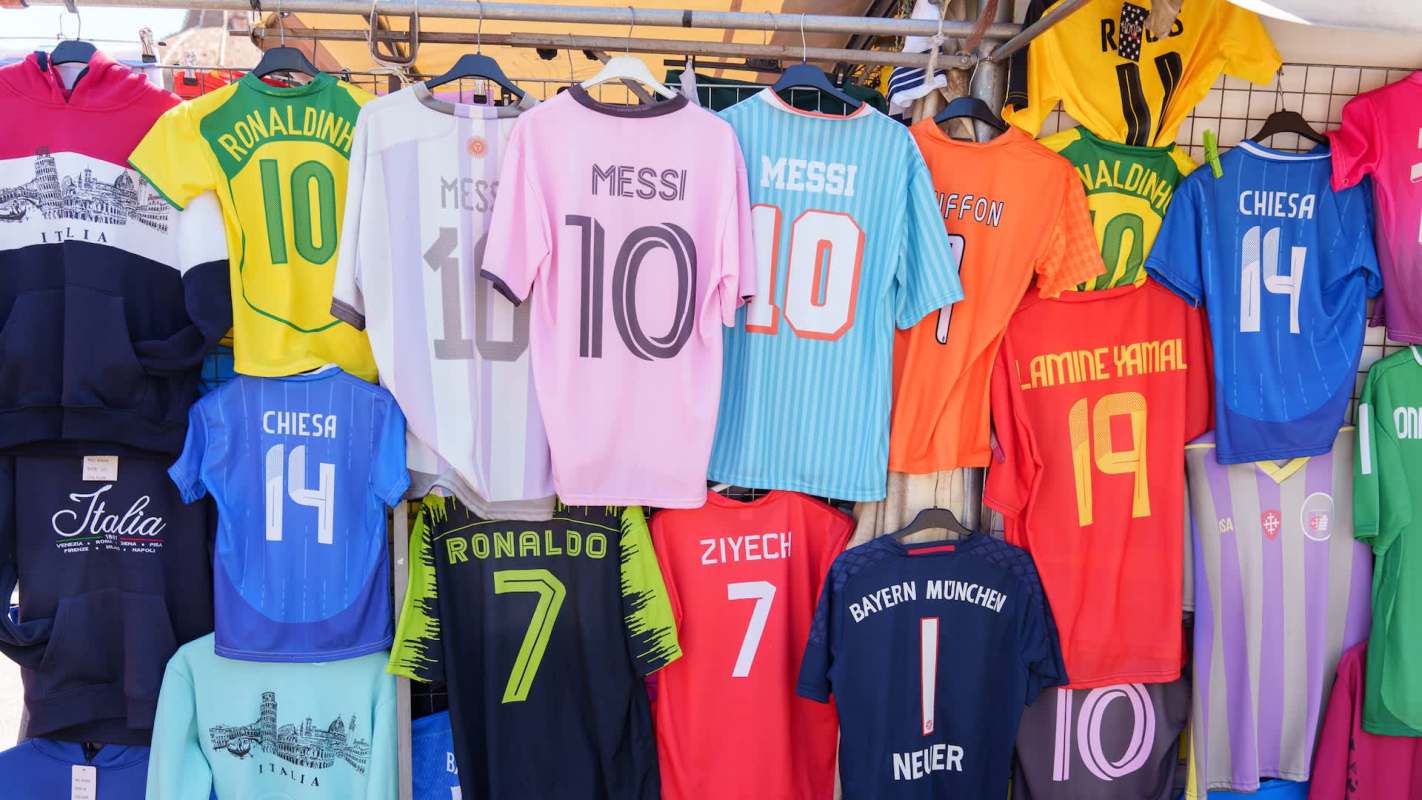
Researchers at the University of Portsmouth are launching a study into whether counterfeit football shirts may cause more pollution than authentic kits, including by shedding more microplastics, adding to textile waste and carrying a bigger climate impact.
The research at the British institution is examining whether imitation shirts shed microplastic fibers at a higher rate than official versions.
What's happening?
The project is being carried out by University of Portsmouth researchers with support from the UK Intellectual Property Office.
Teams from the Revolution Plastics Institute and the School of Criminology and Criminal Justice will compare the environmental footprints of genuine and counterfeit football shirts over their entire life cycles.
Their work will examine the energy use and carbon emissions tied to both products, while also testing whether fake shirts release more plastic fibers during wear and washing.
The researchers also plan to look at what happens when counterfeit shirts are thrown away and how much they add to textile waste.
TCD Picks » Quince Spotlight
💡These best-sellers from Quince deliver affordable, sustainable luxury for all




Demand for football fan gear often rises around major events such as the FIFA World Cup — when both licensed merchandise and knockoff gear can flood the market — which coincided with the start of the study.
"The trade in counterfeit products is a massive criminal industry, annually worth well over $500 billion," said Dr. David Shepherd of the School of Criminology and Criminal Justice. "This calls for strategies based on robust scientific evidence rather than speculation."
Why does it matter?
Concern over microplastics and their effects on the environment and human health is growing, and synthetic clothing is a major contributing source.
"The textile industry is a significant source of microplastic pollution as synthetic garments shed tiny plastic fibers during manufacturing, everyday wear, and most notably laundering," explained Felicity Webster, research associate at the Revolution Plastics Institute.
Once those fibers are released, they do not simply vanish.
Webster noted that many can bypass wastewater systems and reach waterways and soils, where they build up and threaten wildlife and human health.
The issue also connects to the broader damage caused by cheap, disposable clothing.
The mass production of low-cost apparel at scale has increased water contamination, air pollution, and labor exploitation, while poorly made garments wear out fast and need replacing.
What's being done?
The UK Intellectual Property Office is paying for the project, which is expected to result in a report for the office, an academic paper, and a workshop for stakeholders meant to guide future policy and public awareness efforts.
The team also plans to examine which kinds of messages do the most to discourage consumers from buying counterfeit products.
The project may also give brands, policymakers, and environmental groups more credible tools for tackling counterfeit sales instead of relying on arguments the public may doubt.
As project lead Dr. Kate Whitman from the Revolution Plastics Institute at the University of Portsmouth put it: "Textile waste is a growing environmental challenge, yet the contribution of counterfeit clothing is often overlooked."
"Our goal is to generate independent, scientific evidence that is credible and trusted by both industry and the public," Whitman added.

Get TCD's free newsletters for easy tips, smart advice, and a chance to earn $5,000 toward home upgrades. To see more stories like this one, change your Google preferences here.






