


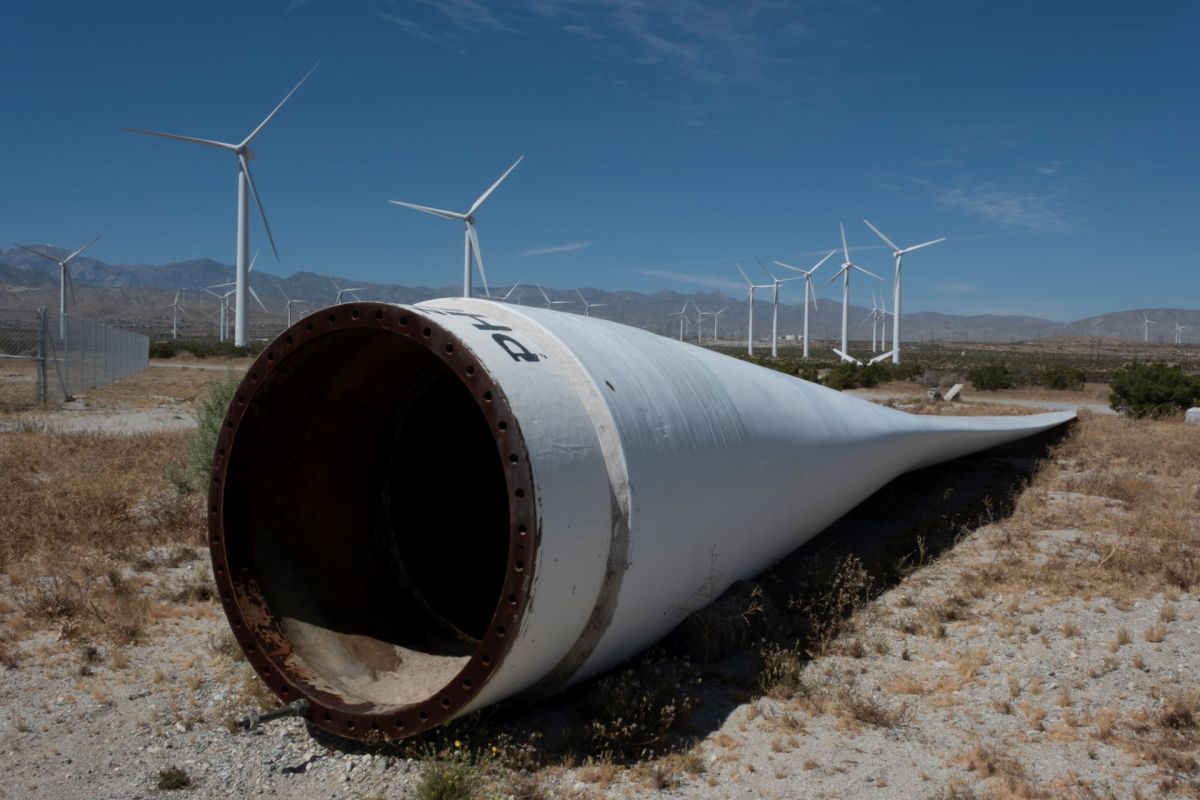
Wind turbines and solar panels have become defining symbols of cleaner energy, but what happens when that hardware reaches the end of its useful life?
Here's what to know
According to the IEC via pv magazine, many wind turbines installed in the early 2000s and earlier are approaching the end of their usual 20- to 30-year service life. As that retirement wave approaches, industries and governments are preparing for a growing stream of renewable-energy e-waste even as wind and solar become more important to meeting global climate goals.
Wind and solar remain among the most important tools for reducing the pollution that worsens extreme weather and harms human health.
The problem arises only after these systems have provided electricity for decades. IEC wind energy expert Alistair Mackinnon said, "Wind has become a mature and multi-billion industry, which is having to meet new challenges. One of them is the lifecycle of wind turbines."
Tony Sample, chair of IEC TC 82, said, "It's easy to meet targets by recycling aluminium frames, cables and glass. The difficult part is the module itself."
More background
The rapid spread of rooftop and large-scale renewable electricity has also created a future surge of equipment that will age out of service. If those materials are crushed, buried, or burned instead of recovered, a growing waste burden could weaken some of the environmental gains linked to cleaner energy.
TCD Picks » Quince Spotlight
💡These best-sellers from Quince deliver affordable, sustainable luxury for all




Wind turbine blades are among the most difficult parts to manage. Many are made from epoxy resin, a strong material that helps turbines withstand harsh conditions but is notoriously hard to recycle because it cannot simply be melted down and reused.
Solar panels face their own bottlenecks. Silicon is harder to recover, and shipping old modules to specialized recycling centers can be expensive, which can discourage full recycling.
What's being done?
Circular economy strategies prioritize repair and reuse of functioning solar panels and turbine components ahead of recycling so renewables can continue to provide healthier air, lower emissions, and energy savings without pushing waste and costs further down the road.
George Kelly, secretary of IEC Technical Committee 82, said companies specializing in that area "estimate that over 75% of a PV module can now be recycled thanks to innovative and high-performance processing and sorting techniques." He added that more industrial-scale recycling capacity is still needed to bring costs down.
On the wind side, newer turbine blades are beginning to incorporate thermoplastic composites and other materials designed for recyclability. Existing blades can also be mechanically processed for use in cement, concrete, or fiber boards, helping keep them out of landfills.
IECRE Secretary Wolfram Zeitz said, "The idea is to ensure that wind turbine assets that are used beyond their initial lifecycle still perform safely and efficiently. By working hand in hand, experts from TC 88 and IECRE can promote the idea of a more circular economy in the wind sector."
Where can I learn more?
Here are a few examples of how companies, scientists, and governments are working to keep renewable hardware out of landfills and move the industry toward a more circular model.
• In Texas, SolarCycle is expanding solar panel recycling capacity to handle aging modules domestically.
• In China, engineers are refining methods to recycle solar panels and recover harder-to-extract materials.
• Scientists have tested recyclable wind turbine blades made with resin designed to avoid landfill disposal.
• The U.S. Department of Energy is backing novel recycling solutions for old wind turbine materials.
Cleaning up the power grid is only part of the job. What happens to aging turbines and panels matters too, and handling that stage well will help preserve the climate benefits wind and solar are supposed to deliver.

Get TCD's free newsletters for easy tips, smart advice, and a chance to earn $5,000 toward home upgrades. To see more stories like this one, change your Google preferences here.






