


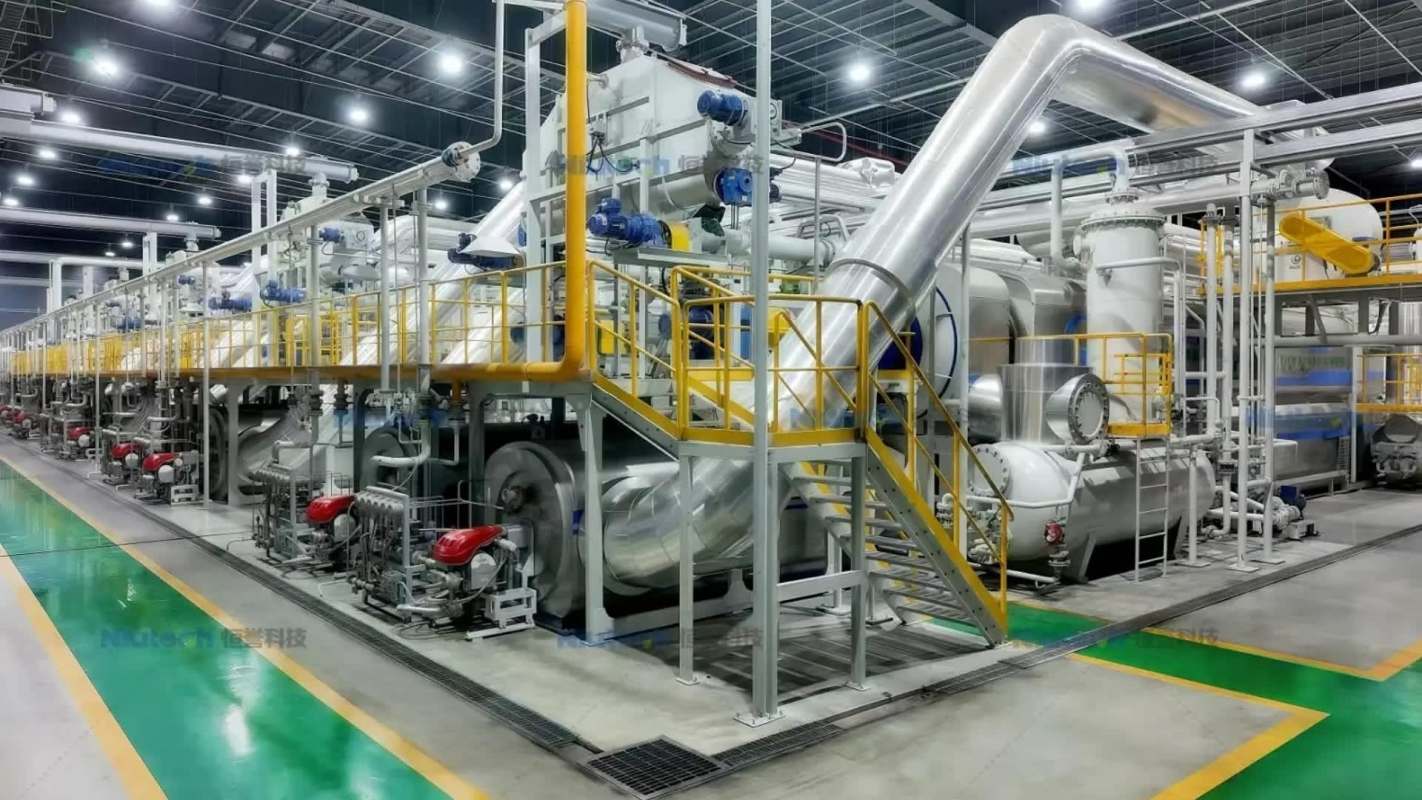
An unnamed energy company plans to work with Chinese pyrolysis technology provider Niutech on a refinery upgrade to turn waste plastic into material for sustainable aviation fuel (SAF), potentially helping to tackle rising plastic waste and the aviation industry's push for cleaner fuel.
Under a new deal, an unnamed energy company will work with Chinese pyrolysis technology provider Niutech to install an industrial-scale unit that turns waste plastic into material for sustainable aviation fuel, or SAF.
Here's what to know
According to Interesting Engineering, the plan is to add the system to an existing refinery, linking plastic-waste treatment with hydrotreated SAF production so that discarded plastic can move through a single chain into jet-fuel ingredients.
Niutech's system uses continuous pyrolysis, heating plastic with limited oxygen so it breaks down into hydrocarbon products such as pyrolysis oil. That oil can then be further refined into SAF. The planned production line will have a single-unit capacity of about 11,023 to 55,116 US tons per year (10,000 to 50,000 metric tons per year).
One notable aspect of the system is the range of plastics Niutech said it can process. The company said it can handle plastics such as polypropylene, polyethylene, polystyrene, acrylonitrile butadiene styrene, and nylon, either individually or in mixed streams.
Mixed and contaminated plastic waste is often difficult and expensive to recycle. If a commercial system can avoid extensive washing, sorting, and drying, it could lower processing costs and make it easier to handle plastic that might otherwise end up in landfills, incinerators, or nearby communities as pollution.
TCD Picks » Quince Spotlight
💡These best-sellers from Quince deliver affordable, sustainable luxury for all




More background
The agreement comes as airlines and fuel producers race to expand SAF supply. Under the EU's ReFuelEU Aviation rules, SAF must account for 2% of fuel supplied at EU airports in 2025, rising to 6% in 2030 and 70% by 2050.
Used cooking oil and similar waste oils are established SAF feedstocks, but supply remains constrained. Waste plastic could offer another source of hydrocarbons, particularly for facilities already equipped to refine fuel at scale.
Better systems for handling low-value plastic waste could ease pressure on local waste streams, reduce pollution risks, and support cleaner air by displacing some fossil-based inputs in aviation fuel production.
Niutech also said it has deployed continuous pyrolysis systems in the United Kingdom, South Korea, Denmark, Thailand, Vietnam, and China, with multiple projects already delivering roughly 11,023 US tons per year (10,000 metric tons per year).
What's being done?
The agreement is aimed at integrating the technology into a refinery setting rather than treating plastic-to-fuel as a small pilot project, where continuous operation is essential to both output and economics.
If successful, the project could open a larger commercial market for harder-to-recycle plastics while giving fuel producers another way to meet SAF targets. In practical terms, that could help diversify supply and potentially ease some of the cost pressure tied to limited feedstocks.
Still, it is not a replacement for reducing unnecessary plastic use in the first place. Households can continue cutting waste and saving money by choosing reusable goods and choosing plastic-free options for everyday products when possible.
The next major test will be whether waste plastic-to-SAF systems can run reliably, make economic sense, and perform at industrial scale. If they can, this refinery upgrade could point to a future in which more discarded plastic is put to use instead of piling up as pollution.
Where can I learn more?
This refinery plan is part of a broader push to find better uses for plastic that conventional recycling often can't handle. Other reporting and research in this space follow new fuel pathways, emerging chemical processes, and the bigger question of what to do with low-value waste that keeps piling up.
• Scientists have shown that powerful clean fuel from plastic waste could help power hydrogen cars.
• At Virginia Tech, engineers are advancing breakthroughs that could revolutionize how plastic gets reused.
• At the University of Texas, lasers may permanently change plastic by recovering reusable chemicals.
• Greenpeace argues plastic recycling is a failed concept as U.S. waste keeps rising.
That wider backdrop helps explain why plastic-to-SAF is getting attention as traditional recycling continues to fall short. It also highlights the big question behind all of these efforts: whether newer conversion technologies can move beyond the lab and work at commercial scale.

Get TCD's free newsletters for easy tips, smart advice, and a chance to earn $5,000 toward home upgrades. To see more stories like this one, change your Google preferences here.






