


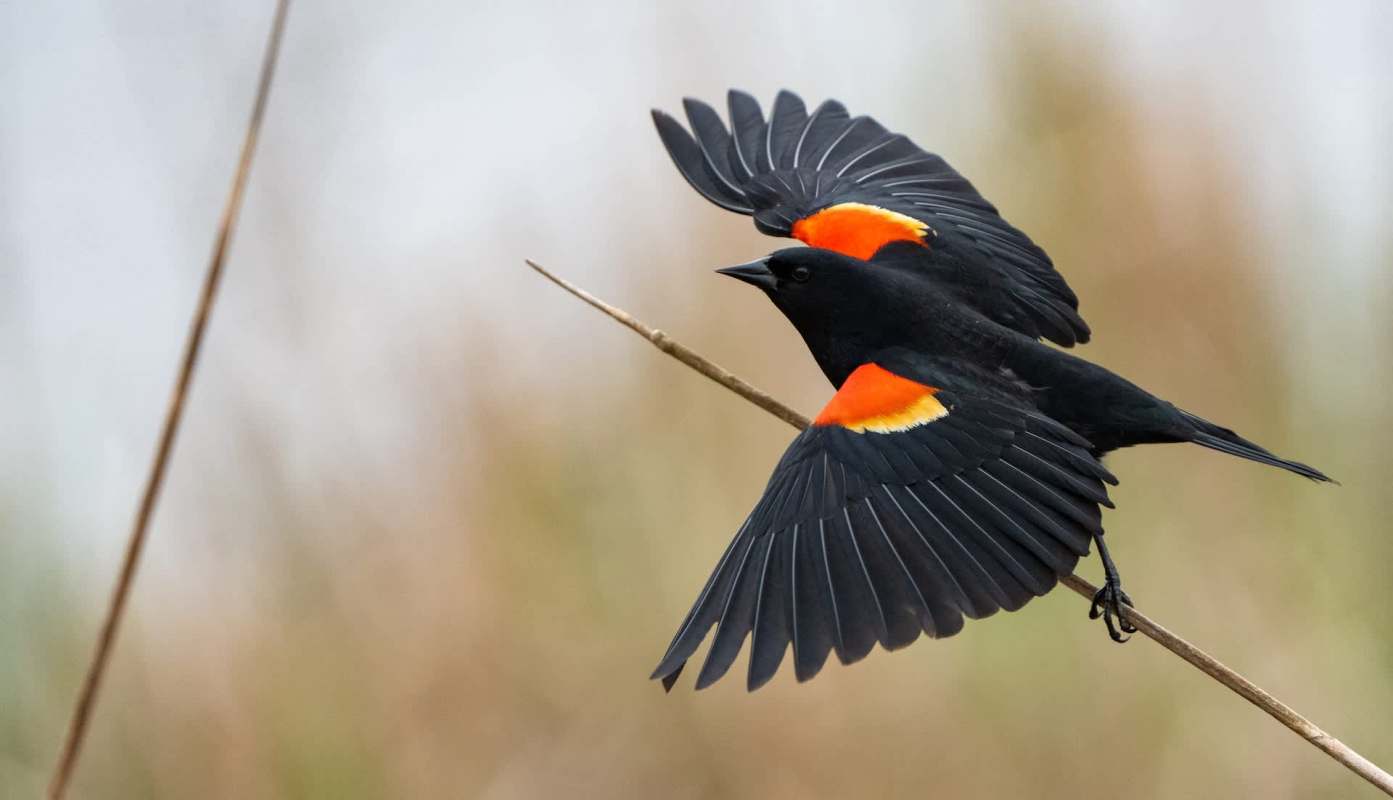
Red-winged blackbirds don't back down easily when something nears their nests. In western Oregon, though, researchers found that rattlesnakes drew a noticeably more cautious response.
The birds continued to dive at the venomous snakes, but unlike their behavior toward nonvenomous gopher snakes, they almost never actually hit them.
Here's what to know
In a study published in Behavioral Ecology in July, researchers observed that red-winged blackbirds guarding nests reacted aggressively to several likely nest predators in western Oregon. Those supposed predators include scrub jays, ground squirrels, and gopher snakes.
Rattlesnakes, however, stood out as the one threat that drew a different pattern.
As SciTechDaily reported, Shelby Lawson — a postdoctoral researcher in David Kikuchi's integrative biology lab at Oregon State's College of Science — led an experiment using realistic models placed on platforms a few feet from blackbird nests across western Oregon.
Across dozens of tests, the birds struck a rattlesnake model just once, but they struck gopher snake models more than 80 times.
TCD Picks » Quince Spotlight
💡These best-sellers from Quince deliver affordable, sustainable luxury for all




What made that result especially unexpected is that rattlesnakes were largely eliminated west of the Cascade Range in the 1800s, so the blackbirds nesting there likely have little direct experience with them.
"We don't know whether that's because they recognized the danger or if there's something about the viperid features or the rattle that gave the birds pause," Lawson said.
More background
This is another example of what biologists call parental investment theory — the idea that animals weigh the value of protecting their offspring against the risks to their own survival.
The birds still swooped at both gopher snakes and rattlesnakes, suggesting they recognized each as a threat to the nest.
"For example, they might physically beat up an egg-eating jay or squirrel near their nest, but in response to something like a hawk that could eat them, they might choose to keep their distance and alarm-call instead," Lawson said.
What's being done?
Lawson said this is the first paper to compare breeding birds' responses to both venomous and nonvenomous snakes through the lens of parental investment theory.
"We still don't fully know how birds recognize or make decisions regarding snakes despite them being a major threat to their nests," Lawson explained, "and this study is a good step toward understanding that."
Where can I learn more?
Snake threats can shape bird behavior in surprising ways, and people sometimes use snake look-alikes to push birds elsewhere.
• In western Wisconsin, a $1.24 rubber snake finally drove house sparrows from a yard.
• In Florida, wildlife crews deployed "Baby Bird" against tegus raiding sea turtle and bird nests.

Get TCD's free newsletters for easy tips, smart advice, and a chance to earn $5,000 toward home upgrades. To see more stories like this one, change your Google preferences here.






