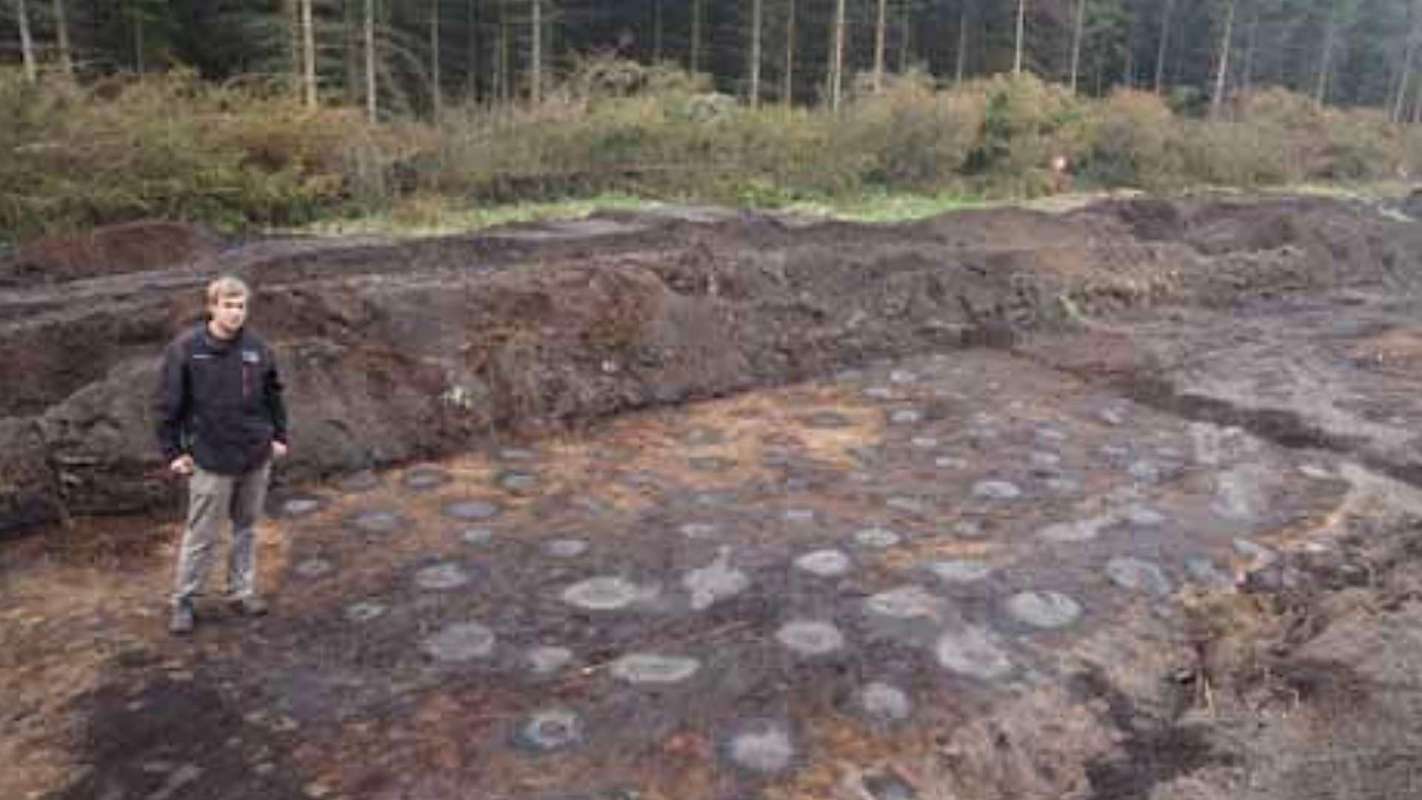
Iron Age communities in Denmark left behind mysterious rows of small pits stretching across the landscape, and archaeologists are still not sure what purpose they served.
To help solve the mystery, researchers have begun building a modern replica of one of these structures to test theories about how it may have been used.
According to Arkeonews, these pit alignments, called hulbælter, or hole belts, were made roughly between 500 BC and 300 BC. They appear across Denmark, especially in central and western Jutland, and some run for hundreds of meters or even kilometers.
To study them through practice instead of theory alone, associate professor Henriette Lyngstrøm of the University of Copenhagen's Saxo Institute has assembled 30 archaeology students at Sagnlandet Lejre's Iron Age village. Using reconstructed wooden tools, the group is recreating a hole belt to learn both how the pits were dug and what they may have been used for.
Each pit is relatively shallow, at about 30 to 40 centimeters deep, yet together they create broad strips several meters across. That unusual form has made them hard to categorize, since they do not resemble graves, standard postholes, or ordinary trash pits.
The experiment may also shed light on how Iron Age communities were organized. So far, rebuilding the feature suggests that digging a hole belt with wooden spades was slow and demanding, and that the tools needed repeated resharpening, pointing to a deliberate and carefully organized effort.
TCD Picks » Good Store Spotlight
Get 10% off your next purchase with code TCD10




The researchers are also exploring whether the pits could have been used as food storage. In one test, graduate student Angelyn Sørensen placed chicken in a ceramic jar inside a pit; on a day of about 20 degrees Celsius, the meat warmed only from roughly 10 degrees to about 12. That would not count as safe refrigeration by modern standards, but it does suggest that a covered pit could help moderate temperature during some seasons.
A staged combat exercise supported another idea, showing that the uneven ground gave defenders an advantage over attackers. Even so, archaeologists do not think every hole belt must have served the same purpose, and possible roles include defense, boundary marking, seasonal storage, ritual activity, or controlling movement.
For Lyngstrøm, the experiments suggest that Iron Age communities possessed the organization, leadership, and cooperation needed to plan and complete projects on this scale.
The experiments did not point to a single definitive explanation. Instead, they highlighted a wide range of possible uses for the features, suggesting the pits may have served multiple purposes rather than just one.

Get TCD's free newsletters for easy tips, smart advice, and a chance to earn $5,000 toward home upgrades. To see more stories like this one, change your Google preferences here.