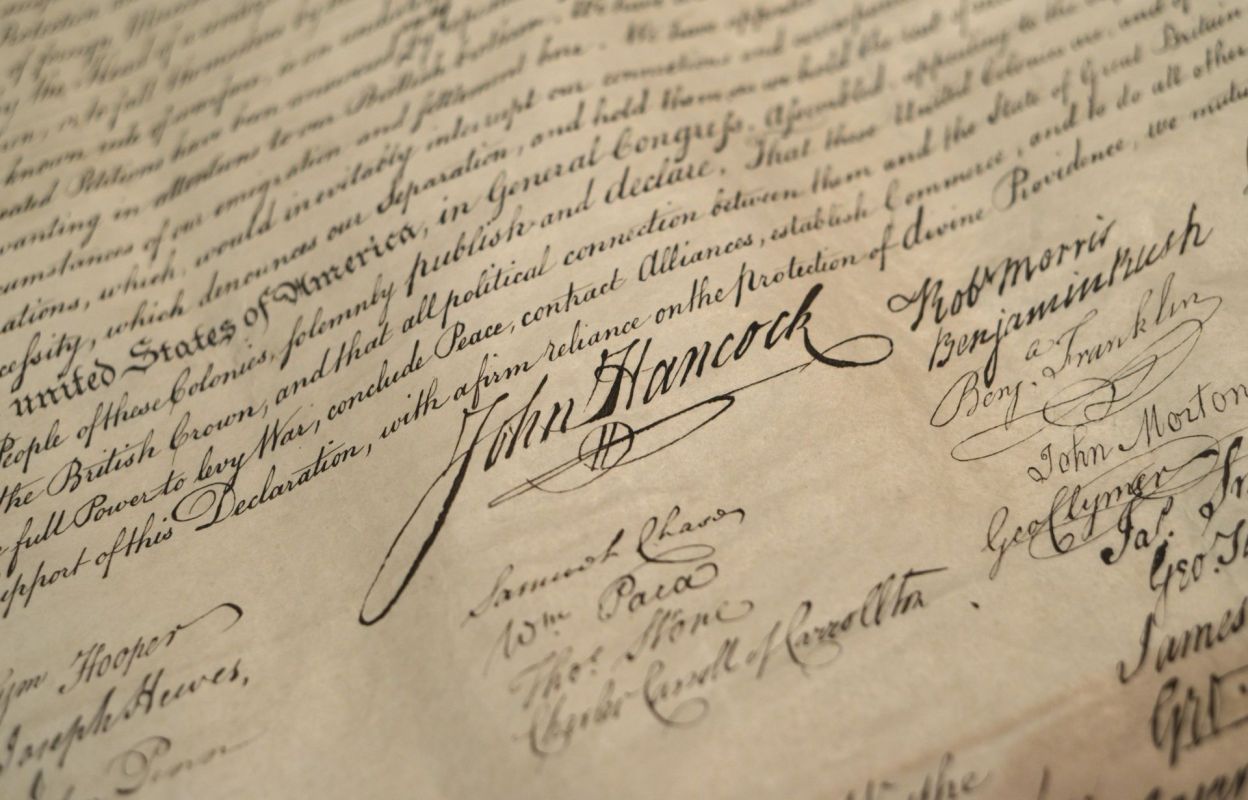
In London, historians have rediscovered an extremely rare copy of the Declaration of Independence that had been buried among archived materials for over two centuries.
According to NBC News, the newly recognized document is believed to be the sole known copy of this type outside the United States.
What happened?
Volunteer and retiree Michael Scurr made the discovery while carrying out routine cataloging work at Britain's National Archives, NBC News reported. Shortly after he pulled out the document, he realized it was something notable.
"I thought, oh, right, this is definitely a Declaration of Independence," Scurr told The Associated Press, as reported by NBC News. "How exciting is this?"
The document was printed in Exeter, New Hampshire, days after the Declaration of Independence was adopted in 1776. It, along with other copies made at the same time, was created to spread the news of America's independence throughout the American colonies, NBC News reported.
The outlet reported that researchers know of only 11 surviving copies from that Exeter printing. This example, apparently the first identified beyond the U.S., was found among records taken from an American privateer ship after it was captured by British forces in December 1776.
TCD Picks » EDF Spotlight
💡EDF's Vital Signs newsletter delivers stories about game-changing solutions close to home and around the world




In a Royal Navy inventory created after the ship was seized, the historic document was listed with little significance—simply described as "another paper," NBC News reported.
Amanda Bevan, who leads the National Archives effort to catalog Royal Navy correspondence from the American Revolution, explained to NBC News that privateer ships were privately owned vessels that were authorized to attack British merchant vessels.
"But the presence of the Declaration on [the ship] made it clear that they were doing this in the service of an ideal," Bevan told the outlet.
What's being done?
The discovery grew out of a long-running effort to catalog the National Archives' Revolutionary War-era naval records and make them more accessible to researchers.
The Declaration was found in the Prize Papers collection, which contains material removed from vessels seized by the Royal Navy and British privateers between 1652 and 1815.
Nicholas Guyatt, a professor of North American history at the University of Cambridge, told NBC News that the discovery shows how important physical archives are within the modern information system.
"It reminds us that it still takes someone working through physical collections to uncover an object that can reshape our understanding of an event or provide entirely new historical context," he said.

Get TCD's free newsletters for easy tips, smart advice, and a chance to earn $5,000 toward home upgrades. To see more stories like this one, change your Google preferences here.