


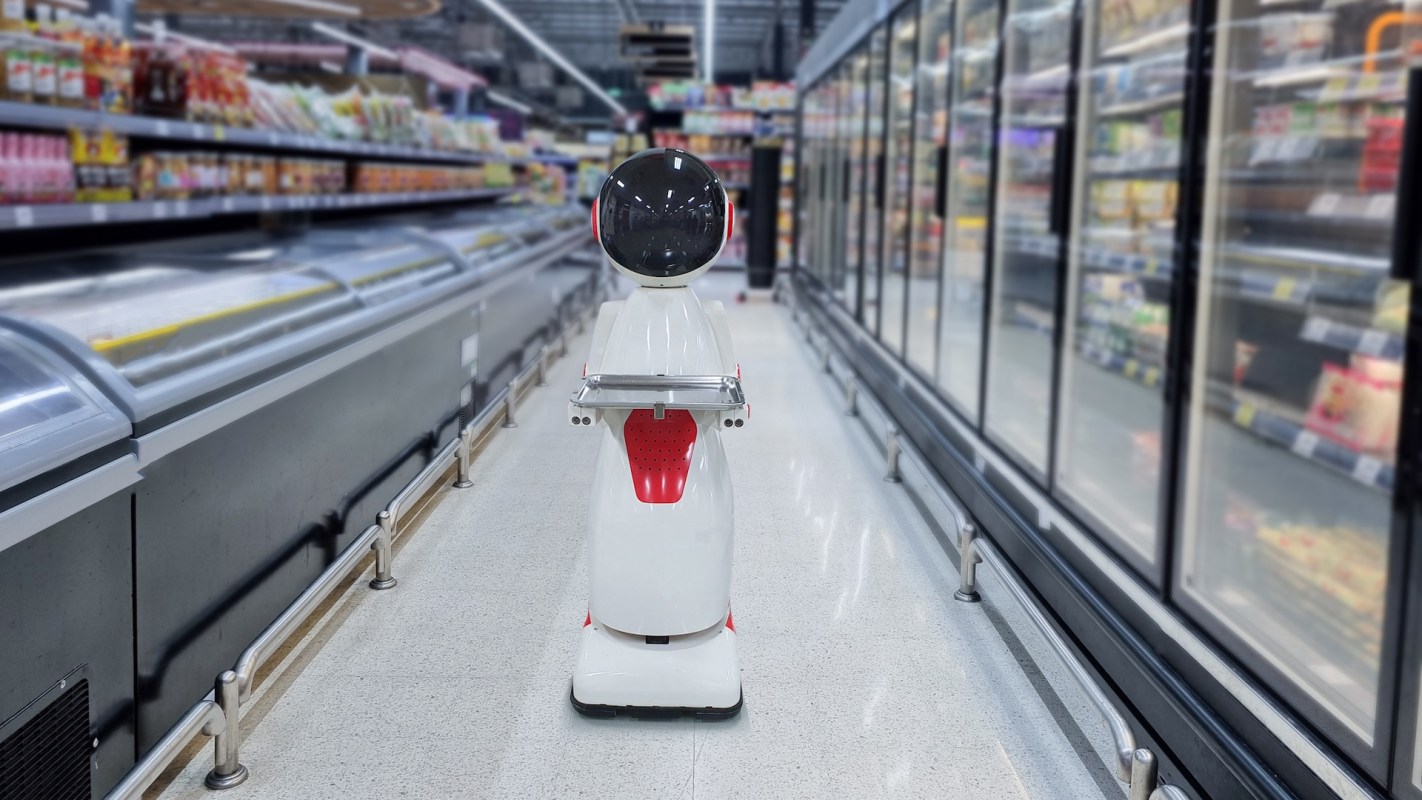
At a Ralphs on Los Angeles' Pico Boulevard, Ricardo Valadez got the impression that a six-foot robot was tailing him down the aisles. Valadez, a 62-year-old real estate agent who shops there regularly, said the machine stayed close enough to make the encounter feel directed at him.
A store employee later told him the robot was there to scan shelves, not shadow customers. The moment offered an early look at how AI-equipped machines are slipping into routine settings with little warning to those around them.
Here's what to know
TechTimes, citing reporting from the Los Angeles Times, said the robot at the Ralphs is called Tally, a shelf-scanning machine developed by Simbe Robotics.
In stores, it inspects shelves by checking stock levels, flagging misplaced products, and catching pricing discrepancies.
Simbe said Tally assesses shelf conditions and "does not identify or track people." The company said the robot relays shelf data to store teams so staff can address availability, placement, label, and pricing issues instead of manually checking every aisle.
Simbe unveiled Tally 4.0 in January with newer Nvidia hardware and software intended to make shelf scans faster and the resulting data more current.
TCD Picks » Quince Spotlight
💡These best-sellers from Quince deliver affordable, sustainable luxury for all




Simbe said it has contracts for more than 3,000 robots worldwide, and a manager at Kroger-owned Smith's Food and Drug stores wrote on LinkedIn in August that Kroger had reached 500 deployed robots.
More background
What remains unclear, more than anything else, is how much data these robots might collect while rolling past shoppers in busy stores.
The terms do not say whether shoppers might appear in any captured material or how long any footage would be stored. Simbe's service terms describe "Tally Digital Data" broadly enough to include product photos or video, display assessments, product tags, and pricing.
According to the Los Angeles Times, some Ralphs workers worry shelf-scanning systems could eventually be repurposed to watch employees or reshape store jobs. That said, no evidence suggests Tally is currently used to monitor staff.
Systems like Tally rely on electricity-intensive computing and digital infrastructure, which can create benefits when AI helps businesses optimize operations or support cleaner energy systems. At the same time, AI has raised concerns about power demand, water use, security risks, misuse, and unintended costs.
What's being done?
Simbe's current pitch is that Tally supports store employees rather than replacing them.
The robot gathers shelf information and routes it to store teams so employees can check out-of-stock items, misplaced goods, labels, and prices. In that setup, the machine handles scanning while staff members decide what to do.
Simbe said the technology can also give stores insight into product placement, promotions, and pricing, giving teams faster information about what is happening in the aisle.
Those privacy concerns are still open. In Valadez's case, he did not know what the machine was doing until a store employee told him.
Where can I learn more?
AI tools like the shelf-scanning robot at Ralphs are appearing in everyday businesses, raising new questions about oversight and impact. These stories examine how Walmart and McDonald's are automating tasks, and why critics are raising alarms about AI's resource demands and data practices.
• Walmart backed Cropin's AI produce forecasting to reduce fresh-food waste across its supply chain.
• McDonald's said its AI drive-thru system handled 1 million orders with limited human help.
• Public pressure is building as AI power, water, and jobs become flashpoints in broader backlash.
• The Common Crawl Foundation faced criticism over sensitive web content scraping tied to AI training.

Get TCD's free newsletters for easy tips, smart advice, and a chance to earn $5,000 toward home upgrades. To see more stories like this one, change your Google preferences here.






