


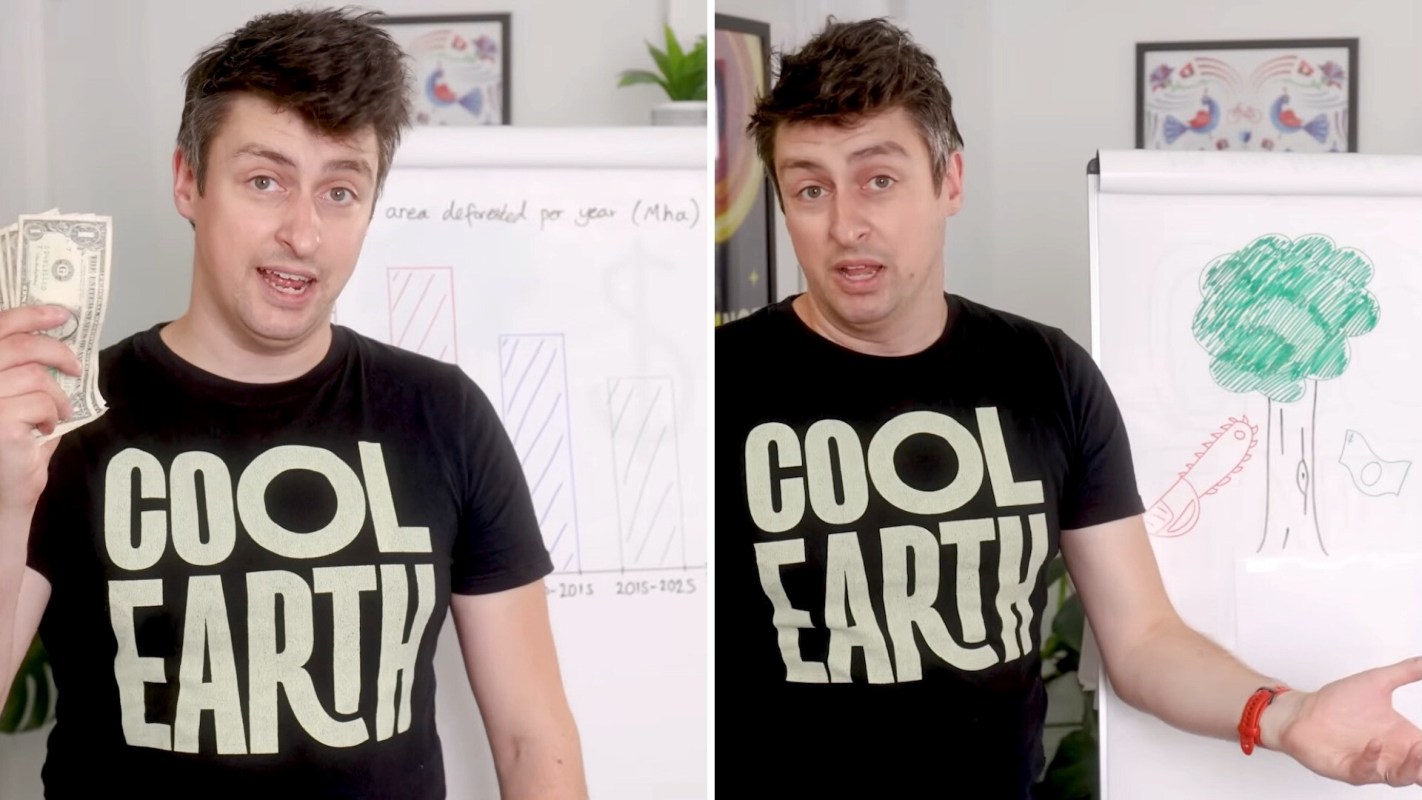
What if the strongest defense against rainforest destruction is not a patrol, a drone, or a carbon credit, but cash?
In a YouTube explainer, Simon Clark (@SimonClark) argued, "The best way to save our rainforests is to offer people cash in hand."
Here's what to know
At the heart of the proposal is a simple mechanism: no-strings-attached cash sent directly to Indigenous and local communities in tropical forest areas.
When households can pay for food, school, housing, and healthcare without giving outsiders access to their land, they may be better positioned to refuse logging or mining offers that can leave them worse off after the forest is cleared.
The video highlighted Cool Earth, a charity working with communities in the Amazon basin, parts of Central Africa, and Papua New Guinea.
Citing a peer-reviewed Nature paper, the creator said that in "the exact frontline areas where they work … 99% of the rainforest remains completely intact."
TCD Picks » Quince Spotlight
💡These best-sellers from Quince deliver affordable, sustainable luxury for all




The results were presented as unusually strong overall, even if the strategy has not worked in every instance: one supported community in Papua New Guinea still chose logging.
Even so, the video did not frame cash as the only answer to deforestation.
Brazil's drop in forest loss was tied to multiple government measures, including satellite monitoring, expanded firefighting capacity, and tighter rules on credit.
The stakes are enormous. As the video notes, the Amazon contains more than a tenth of Earth's land-based biodiversity, stores vast amounts of carbon, and is home to about 50 million people, including many Indigenous communities whose lives are closely tied to a healthy forest.
More background
Trends suggest forest loss can be reduced, but the scale of destruction is still immense.
One figure cited in the explainer put global tropical primary rainforest loss in 2025 at 4.3 million hectares — about 10.6 million acres, roughly the area of Denmark.
Researchers in the video described rainforests as systems that help sustain their own moisture, meaning that if enough tree cover is removed, recovery may be difficult or even out of reach on human timescales.
Johan Rockström, a director of the Potsdam Institute for Climate Impact Research, said forests are "showing cracks in their capacity" to keep absorbing carbon.
That has direct consequences for people far beyond the forest edge.
Because the Amazon's "flying rivers" influence rainfall across South America, the video linked drought in 2023 and 2024 to weaker harvests, stressed river systems, and pressure on hydropower and local economies.
Protecting forests also helps safeguard water supplies, food systems, and economic resilience for communities across the region.
What's being done?
Brazil's enforcement and lending reforms show how governments can shift incentives at scale.
The video argues that where state support is distant or weak, direct cash can fill an important gap by giving communities the ability to refuse destructive offers they might otherwise feel compelled to accept.
Beyond funding, Cool Earth gives communities access to forest data so they can track changes and, if they want, work with local institutions.
That combination of income support and information can give communities more control over what happens on their land.
As one commenter on the video wrote, "The work they are doing is exactly what this world needs more of, and I'm proud to be a part of it."
For people living closest to the rainforest, the goal is straightforward.
"We want to protect our rainforest and the trees and animals, and that's what Cool Earth wants, too," said Sipo Limani, a community facilitator in Kondo, Papua New Guinea.

Get TCD's free newsletters for easy tips, smart advice, and a chance to earn $5,000 toward home upgrades. To see more stories like this one, change your Google preferences here.






