


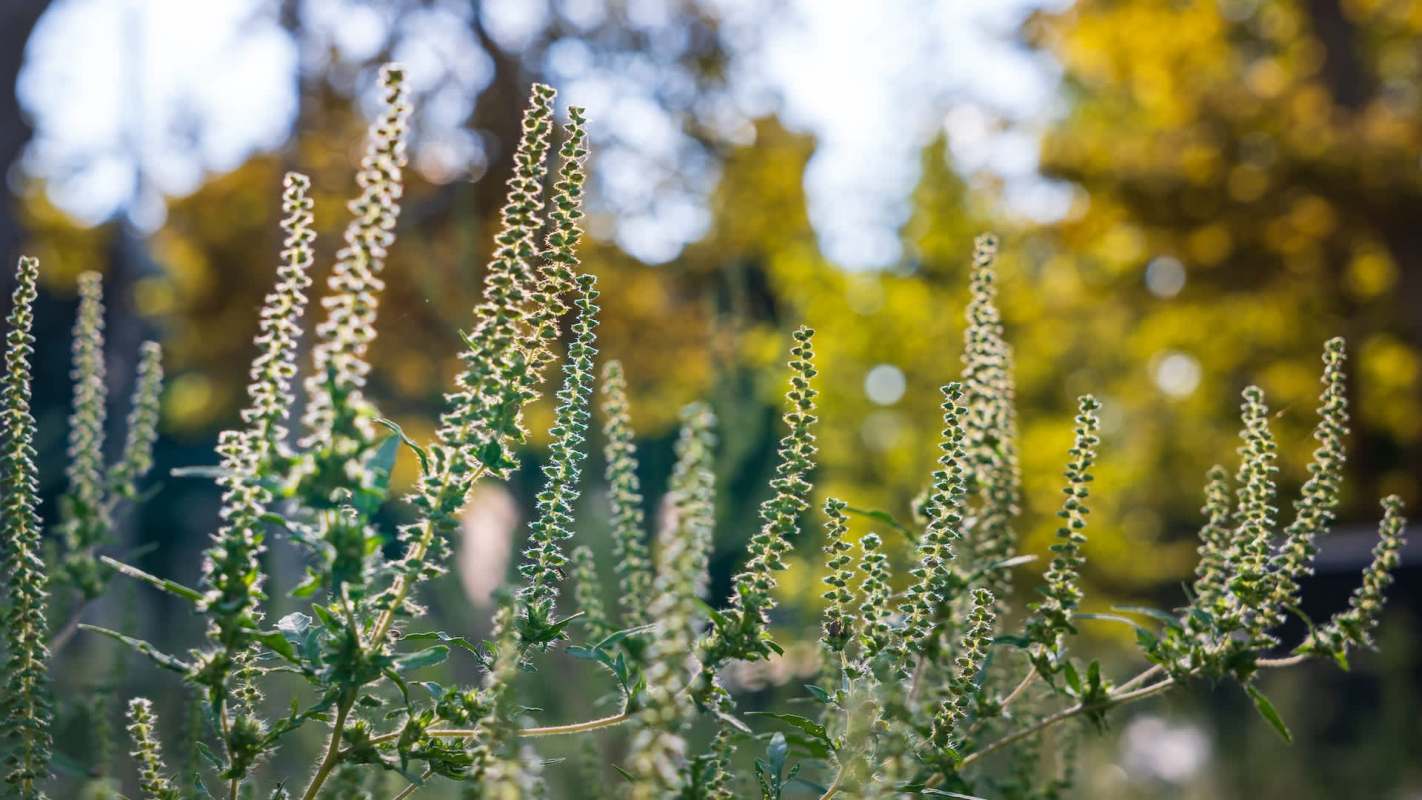
Cooler days do not necessarily bring fall allergies to an end. Some persistent plants, like ragweed, keep shedding pollen until a hard freeze kills them, and across much of the United States, that first frost is arriving later and later.
Here's what to know
The first frost is being pushed back. Compared with 1970, the frost-free stretch from September through November was about 11 days longer on average in 177 of 202 U.S. cities by 2025, according to Earth.com. Those figures come from Climate Central's look at fall frost-free days. Of those cities, 67 saw that window lengthen by at least two weeks.
The Asthma and Allergy Foundation of America says ragweed pollen affects roughly one in seven people in the U.S. Until a hard freeze ends production, ragweed is joined by other pollinating weeds, including mugwort, sagebrush, pigweed, cocklebur, lamb's quarters, and Russian thistle.
Climate Central found growth in freeze-free seasons in 173 of 198 cities between 1970 and 2025 when it measured the span from the last spring freeze to the first fall freeze. The average increase was 21 days, with Raleigh, North Carolina, adding 41 days and Reno, Nevada, adding 100.
"As temperatures rise, freeze-free seasons are stretching in every region of the country, giving plants weeks of extra time to grow and release pollen," said Kristy Dahl, vice president for science at Climate Central.
More background
Using records from 60 North American pollen-counting stations between 1990 and 2018, a 2021 study in the Proceedings of the National Academy of Sciences found that pollen seasons began about 20 days earlier, lasted roughly eight days longer, and contained about 21% more pollen overall.
TCD Picks » Quince Spotlight
💡These best-sellers from Quince deliver affordable, sustainable luxury for all




William Anderegg and his colleagues at the University of Utah estimated that human-caused warming explained about half of the change in season timing and about 8% of the rise in pollen. Carbon dioxide also played a role. In a 2002 greenhouse experiment, ragweed exposed to twice as much carbon dioxide produced 61% more pollen.
Air pollution may make that pollen even more irritating. A 2025 position paper in the journal Allergy, with Claudia Traidl-Hoffmann of the University of Augsburg and Helmholtz Munich as the senior author, summarized evidence that roadside ragweed carried more Amb a 1, the main protein behind most ragweed reactions.
In the Asthma and Allergy Foundation of America's 2026 Allergy Capitals report, Salt Lake City and Ogden in Utah, San Francisco and San Diego in California, and Spokane, Washington, ranked among the worst metro areas for weed pollen.
What can be done?
The Asthma and Allergy Foundation of America recommends starting a daily allergy medicine at least two weeks before the local pollen season. Since ragweed often starts in August, that points to a late-July start for much of the country.
Allergy shots and a ragweed tablet that dissolves under the tongue require even more lead time; the tablet label advises people to start at least 12 weeks before the season.
A 2017 national treatment guideline from a joint task force of the two main U.S. allergy societies recommends a steroid nasal spray alone as a starting treatment for seasonal hay fever in people 12 and older. The panel found no added benefit from pairing it with an antihistamine pill, though doctors may use an antihistamine nasal spray when symptoms are moderate to severe.
In a 2025 Frontiers in Allergy trial, Le Cui of Peking Union Medical College Hospital and colleagues found that mugwort-allergic patients who started a combined spray roughly two weeks before pollen arrived had lower in-season symptom scores than those who waited until symptoms became moderate or worse.
The Asthma and Allergy Foundation of America also suggests keeping windows closed on high-count days, running a portable air cleaner in the room where you spend the most time, taking shoes off at the door, washing hair at night, and wiping pets down before they come inside.
"For people with multiple pollen allergies, symptoms can be present nearly year-round due to an earlier start to tree pollen season and a longer-lasting weed pollen season," said Melanie Carver, the AAFA's chief mission officer.
Where can I learn more?
For a closer look at why fall allergies can drag on, these stories examine how warming and shifting frost dates are changing the season. They cover worsening pollen in Georgia, giant ragweed in a home garden, shifting first-frost and first-freeze dates, and extreme heat bleeding into autumn.
• In Georgia, allergy season gets longer as climate change drives up pollen counts.
• One gardener's cherry tomato patch turned into giant ragweed with airborne pollen instead.
• In Virginia, the first frost date decides what can keep growing.
• From Chicago to Atlanta, first-freeze dates are shifting, changing when hard frosts arrive.
• Across more than half the world, extreme heat is spilling into autumn.

Get TCD's free newsletters for easy tips, smart advice, and a chance to earn $5,000 toward home upgrades. To see more stories like this one, change your Google preferences here.






