


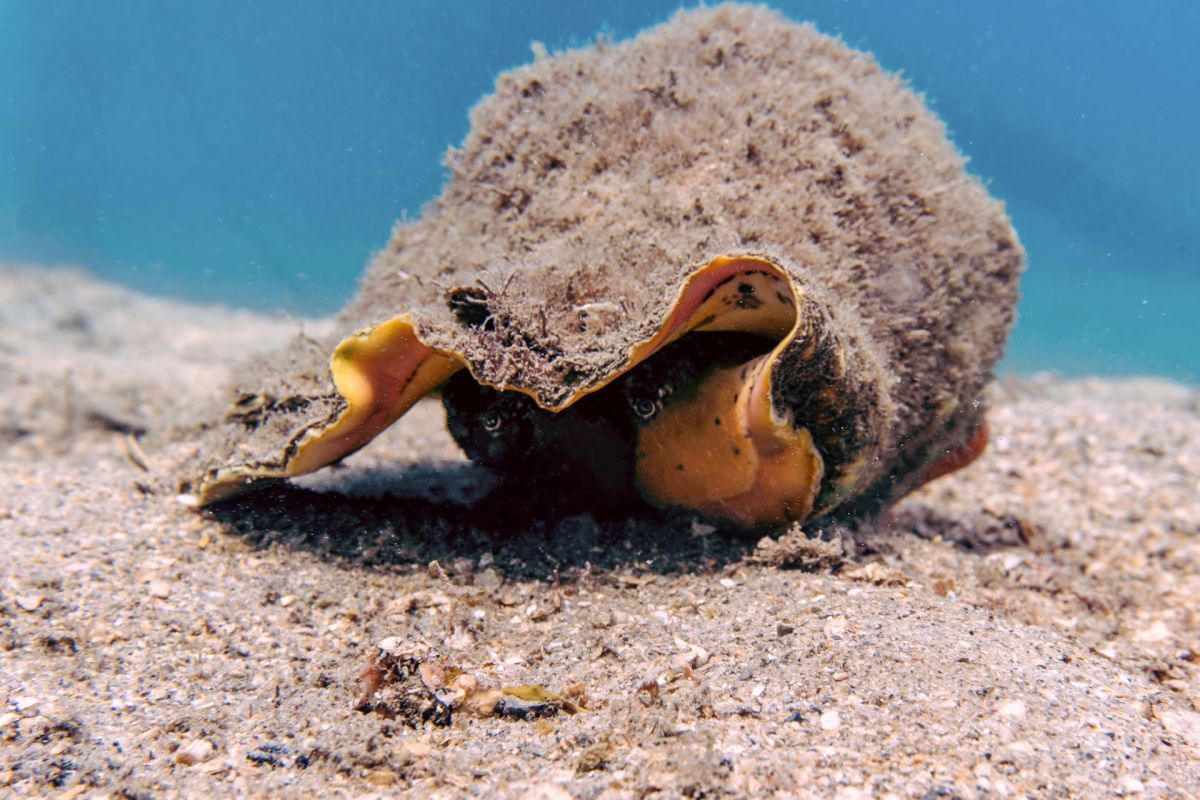
Often treated as an unofficial emblem of the Florida Keys and an important part of coastal ecosystems, the queen conch is confronting another challenge just as conservationists say stronger safeguards are badly needed.
The latest dispute centers on a lawsuit that says federal officials let a key deadline pass without identifying and protecting the habitat the threatened species depends on, leaving breeding areas exposed to dredging and other disturbances.
What happened?
In July, the Center for Biological Diversity sued the National Marine Fisheries Service, saying the agency failed to meet a February 2025 deadline to designate critical habitat for the queen conch, USA Today reported via Yahoo News.
The queen conch was listed as threatened under the Endangered Species Act on Feb. 14, 2024. At that point, the National Marine Fisheries Service said there was "inadequate data" to map critical habitat, which gave the agency one additional year to finish the designation. The lawsuit says that still had not happened by July 2026.
Alex Muir, a Florida-based attorney at the Center for Biological Diversity, told USA Today that the delay has real consequences because two Broward County dredging projects could affect nearby conch populations. He said that without a habitat designation, "some of the analyses that were undertaken for the permitting of both of those projects" were not as "thorough" as they might have been.
Conservationists are especially concerned about the Sand Bypass project and the closely watched Port Everglades expansion, which they say could threaten a queen conch breeding aggregation in Florida.
TCD Picks » Quince Spotlight
💡These best-sellers from Quince deliver affordable, sustainable luxury for all




Why does it matter?
Queen conchs play a role in maintaining seagrass beds, and those underwater habitats help sustain wider marine ecosystems that coastal communities depend on.
Dr. Megan Davis, director of the Queen Conch Lab at Florida Atlantic University Harbor Branch Oceanographic Institute, said juvenile conchs depend heavily on particular seagrass habitat. "When they are young, they very much rely on the seagrass beds, and the seagrass beds very much rely on them," Davis said.
To describe that role, Davis compared conchs to grazing animals on land: "It's almost like a cow grazing in a field, right?" As they feed and move through seagrass beds, conchs help clean and enrich the habitat, making it more dynamic for fish, turtles, rays, octopus, and other marine animals.
The species is also dealing with overharvesting, runoff, pollution, and stronger climate-fueled storms, which makes habitat protection even more important.
What's being done?
Through the lawsuit, the group is trying to get the federal agency to commit to a schedule for proposing and finalizing critical habitat protections.
Muir said that is the basic objective: "We would like to see the National Marine Fisheries Service admit to a specific date by which they will propose critical habitat, and then another date by which they can finalize critical habitat for the queen conch." Once a proposal is issued, it would also go through a public comment process.
Scientists are still documenting where queen conchs breed and how habitat protections could help the species recover. A 2024 survey near Port Everglades, USA Today reported, examined one of the area's two known breeding groups of adult queen conchs.
Those breeding grounds are especially important because queen conchs have difficulty reproducing when too few of them remain in one place.
"The most important aspect of filing the suit is ensuring that the queen conch gets the protections it's entitled to," Muir said. "That ensures it's allowed to recover, and is given the habitat in which it can do so."

Get TCD's free newsletters for easy tips, smart advice, and a chance to earn $5,000 toward home upgrades. To see more stories like this one, change your Google preferences here.






