


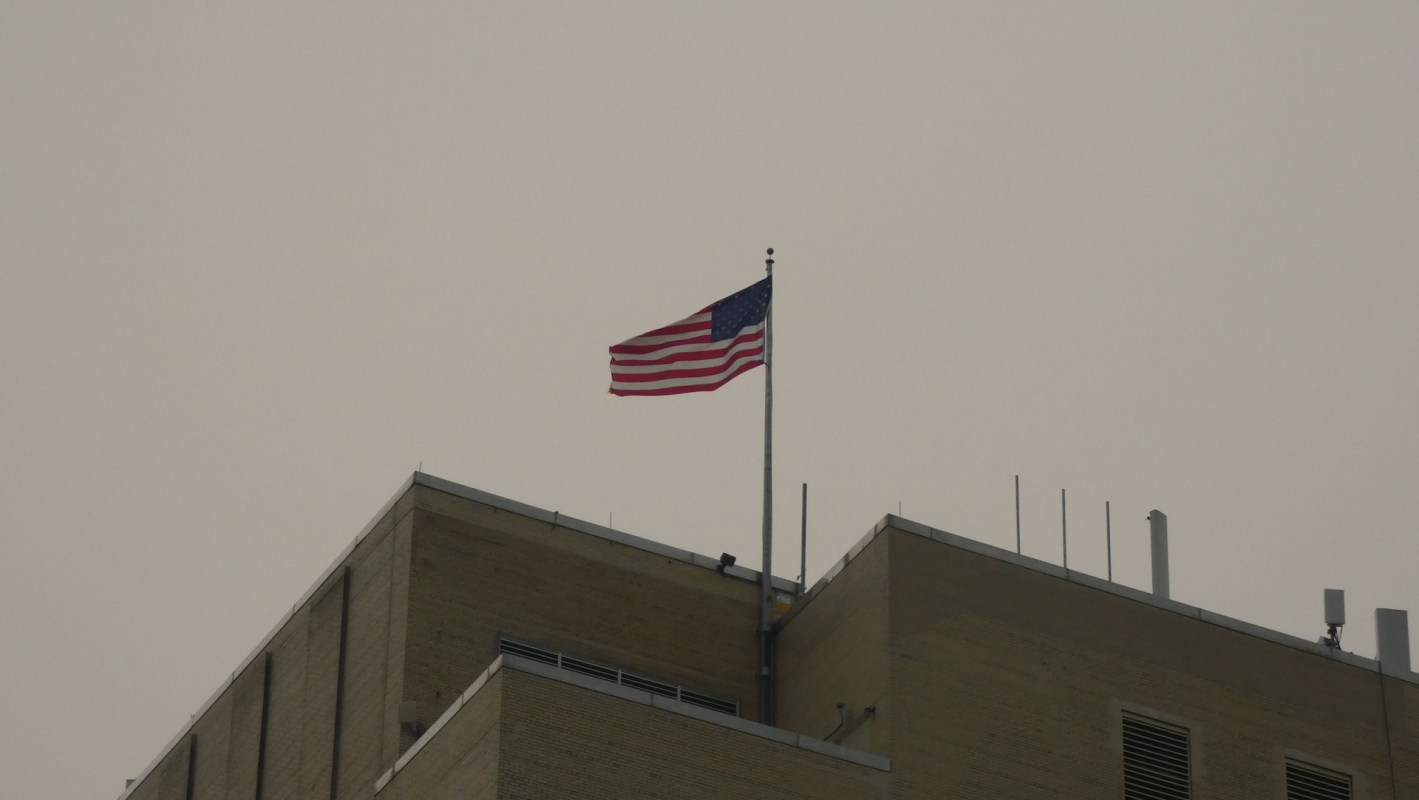
A State Department program designed to give people a clearer picture of the air they breathe may have done more than inform the public.
Here's what to know
According to NPR, researchers say that after the Trump administration shut down U.S. embassy air-quality monitoring in March 2025, pollution levels rose sharply in dozens of cities.
In 46 cities, satellite data indicated that pollution rose by 24% to 33% following a March 2025 halt in publicly shared air-quality readings from U.S. embassies and consulates.
The research, published in the Proceedings of the National Academy of Sciences, estimated that the increase amounted to roughly a 4% rise in PM2.5, the tiny particles that can lodge deep in the lungs and enter the bloodstream, contributing to serious health problems.
Zoey Yiyuan Zhou, a climate researcher at Columbia University and one of the study's authors, said the findings stood out because there are few examples of such an abrupt drop in air pollution surveillance.
Her team found no major pollution trend during the 300 days before reporting stopped.
TCD Picks » Quince Spotlight
💡These best-sellers from Quince deliver affordable, sustainable luxury for all




Andrea La Nauze, an environmental economist at Deakin University in Australia who was not involved in the study, discussed the findings with NPR.
"That magnitude is certainly concerning … Particulate matter is a serious and dangerous thing, and being exposed to it is not good," La Nauze warned.
More background
Researchers have long said that public pollution readings can push governments, businesses, and residents to demand cleaner air.
The State Department effort that provided that information started in Beijing in 2008 and eventually spread to more than 80 embassies and consulates.
Eric Zou, an environmental economist at the University of Michigan, grew up in 1990s Shanghai near a chemical plant, where thick smog was often seen as ordinary weather rather than a threat to public health.
"Once you have pollution information, it tends to be that it actually helps people to realize, 'Oh, I actually value air quality,'" he observed.
In places with few local backup systems — especially low- and middle-income countries — losing public monitoring can leave communities with less leverage to hold polluters accountable.
The study found the biggest spikes in Southeast Asia — including Manila, Rangoon, and Vientiane — and the increases were greater where other monitoring options were scarce.
What's being done?
The State Department says it intends to restore public access to air-quality monitoring data, but it has not said when that will happen, per NPR.
Pollution appeared to ease somewhat after peaking.
Still, the reasons for both the rise and the later decline are not fully understood. Zhou suggested that some of the recovery may reflect local governments or individuals stepping in with other forms of monitoring after the U.S. withdrew.
Independent public data remains especially important in places where local systems are weak or still developing.
Without it, progress toward cleaner air — and a healthier future for families living near traffic, factories, and industrial centers — can slow or even reverse.
"Data is just so important," Zhou noted. "Having access to information is necessary to make sure that these previous gains can continue. Public information creates accountability."
Where can I learn more?
These articles cover coal policy, air quality gains in Europe, border pollution in El Paso, and Switzerland's emissions strategy.
• Finance experts said Trump's plan to revive closed coal plants made no economic sense.
• Across Europe, researchers found air quality improved, with major implications for public health.
• In El Paso, residents warned round-the-clock border traffic was worsening daily air pollution.
• Switzerland approved a long-term strategy amendment that could reshape the nation's power supply.
Air quality is a global issue, and as these stories show, both gains and setbacks immediately affect people living in areas with volatile pollution levels.

Get TCD's free newsletters for easy tips, smart advice, and a chance to earn $5,000 toward home upgrades. To see more stories like this one, change your Google preferences here.






