


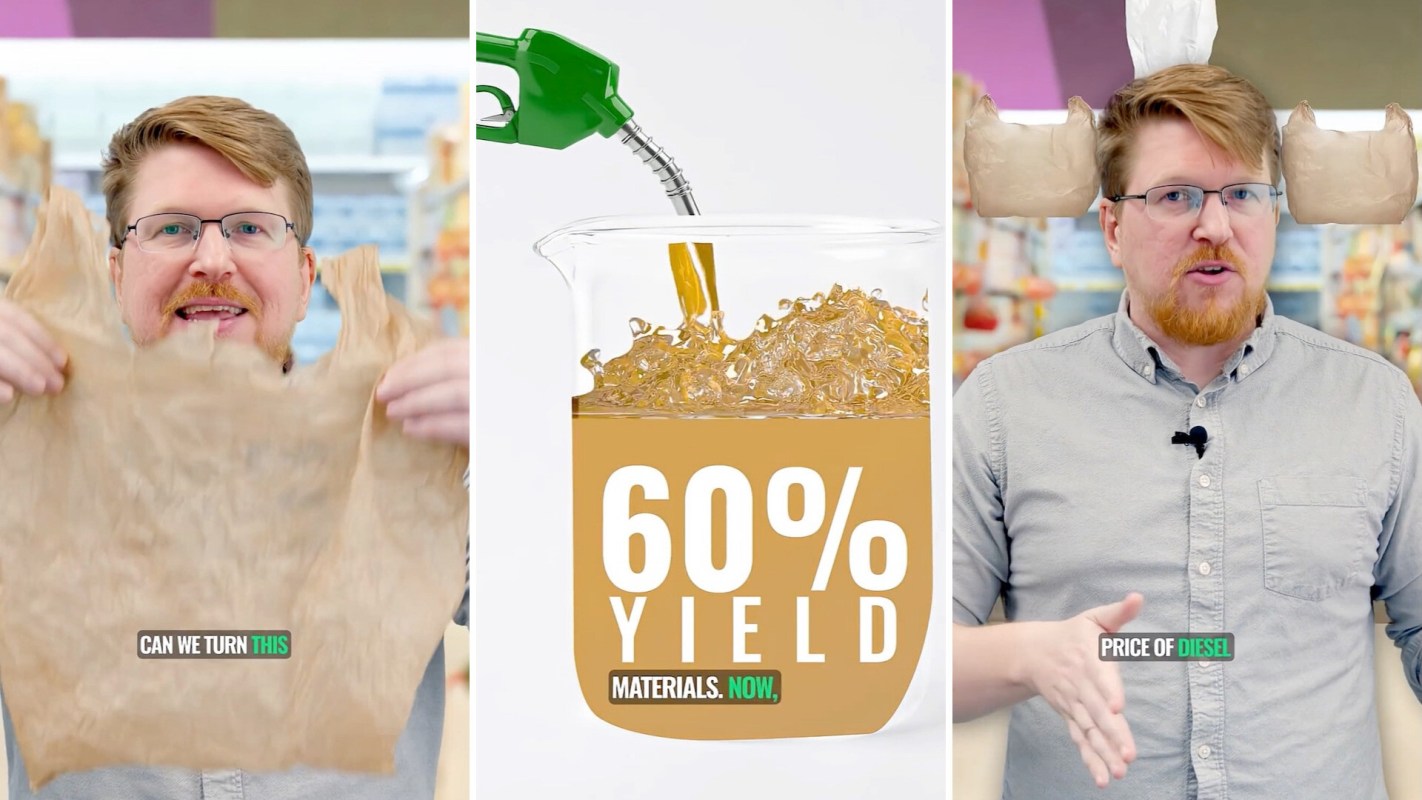
Scientists at Oak Ridge National Laboratory reported that polyethylene from shopping bags can be broken down into fuel-range hydrocarbons using comparatively mild heat. They likened that range to cooking chicken nuggets.
Here's what to know
In a YouTube short, host Justin Pack of EcoBits (@EcoBitsOfficial) said the Oak Ridge team used inexpensive, aluminum-based molten salts to break down polyethylene's long molecular chains into fuel-range hydrocarbons.
After asking, "Can we turn this into gasoline?" the video said the conversion took place below 392 degrees Fahrenheit.
Because other plastic-to-fuel methods, including pyrolysis, run around 842 to 932 degrees Fahrenheit (450 to 500 degrees Celsius), a cooler process could, if it scales, reduce energy demand and operating costs.
In preliminary testing, the team found that the early-stage approach delivered roughly a 60% gasoline yield and avoided several expensive ingredients often used in other plastic-to-fuel processes. The setup also skipped noble-metal catalysts, added hydrogen, and organic solvents, inputs that can raise costs and add complexity.
More background
Polyethylene is one of the most common plastics in daily life, especially in shopping bags and other flexible packaging. Finding a use for that waste could help communities recover value from material that often ends up in landfills instead of being meaningfully reused.
TCD Picks » Quince Spotlight
💡These best-sellers from Quince deliver affordable, sustainable luxury for all




This isn't the first time plastic has been turned into fuel, but the novelty here is using cheap aluminum-based molten salts at temperatures far below the extreme heat typical of conventional systems.
Even so, it is still far from commercial deployment because the work is preliminary and the molten salts can absorb moisture and become unstable.
What can be done?
Researchers would need to stabilize the salt system without losing the benefit of the lower operating temperature, Pack noted. Because the method uses inexpensive aluminum-based salts and skips costly noble metals, it could offer a more affordable way to process certain plastic waste streams.
Another priority is moving beyond a proof of concept. Any real-world use would require the process to run reliably and safely at scale before it could lower waste-management costs or create a meaningful fuel supply.
Reducing disposable plastic still matters. Improved recycling technology could help address existing waste, while using fewer single-use items would prevent more buildup in the first place.
That combination of smarter material choices and better recovery technology is likely more realistic than expecting plastic waste alone to solve fuel prices.
Where can I learn more?
Researchers are testing a range of ideas for turning hard-to-recycle waste into fuel or energy. These efforts include making jet fuel, hydrogen, syngas, and electricity from discarded plastics and other trash.
• Scientists are turning common garbage into jet fuel that could reshape future aviation.
• Researchers have found another way to make hydrogen from plastic garbage bound for landfills.
• A government-backed team is converting plastic and coal into syngas to optimize efficiency.
• Researchers are turning plastic waste into usable energy with nanogenerators instead of fuel.

Get TCD's free newsletters for easy tips, smart advice, and a chance to earn $5,000 toward home upgrades. To see more stories like this one, change your Google preferences here.






