


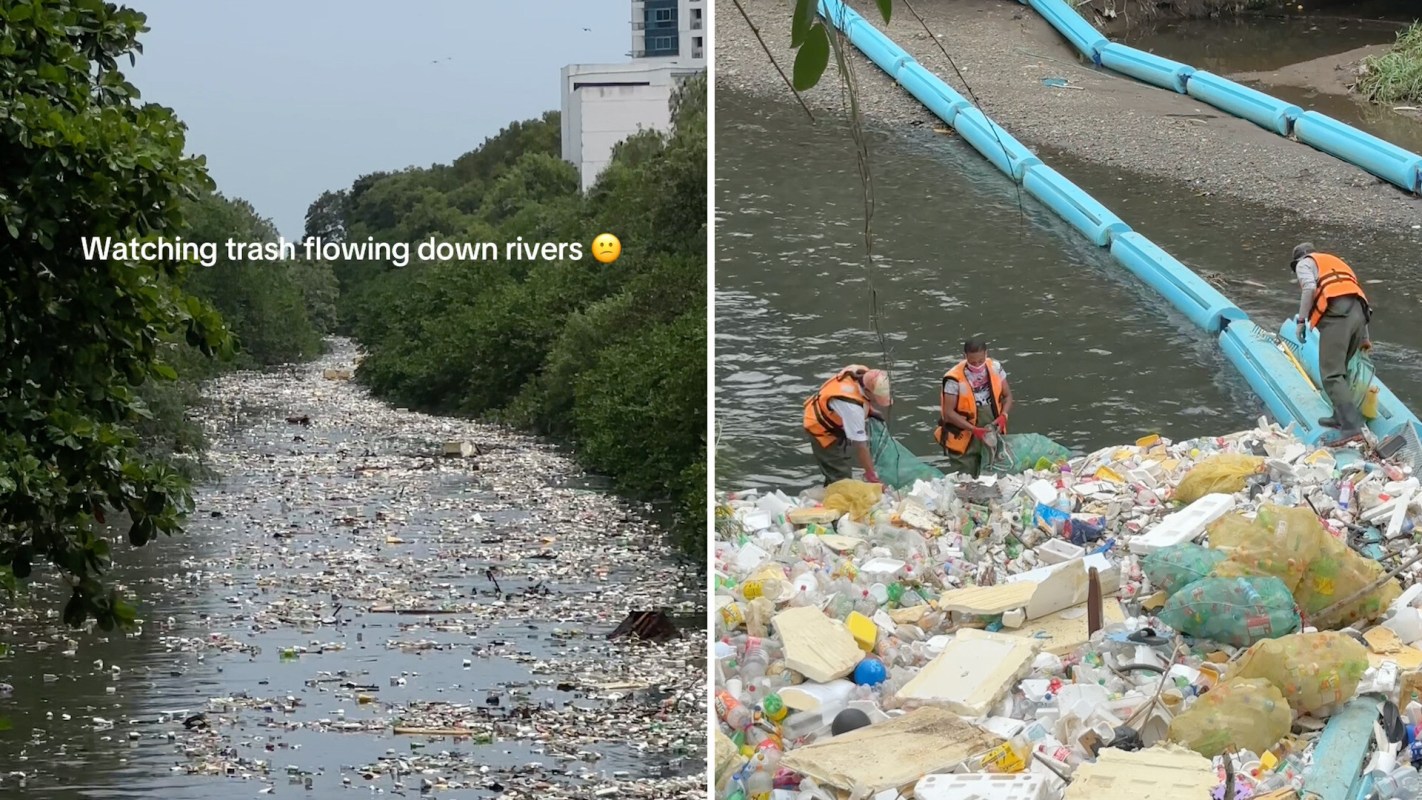
A single piece of litter on the street can travel much farther than many people realize. In Panama, a post from The Ocean Cleanup's Interceptor 025 is drawing attention to the surprisingly direct route plastic often takes from city streets to the sea.
Here's what to know
In its Panama post from Interceptor 025, The Ocean Cleanup shared a video showing a river full of trash, writing in the caption, "We are often asked: where does all this plastic come from? Often, plastic builds up on streets. Wind and heavy rains carry it into rivers, which become the main arteries that carry waste from land to the ocean, especially in coastal cities."
@theoceancleanup 📍Interceptor 025, Panama We are often asked: where does all this plastic come from? Often, plastic builds up on streets. Wind and heavy rains carry it into rivers, which become the main arteries that carry waste from land to the ocean, especially in coastal cities. While the majority of plastic emissions originate in countries where plastic use is rising fast, but waste-management systems haven't caught up yet, it's a global problem you can see almost anywhere in the world.
♬ original sound - Jacobdoodle
The caption also said the largest share of plastic pollution comes from places where plastic use is increasing quickly while waste-management systems have not kept pace. In that process, rivers become the route that carries trash from land out to the ocean.
As the caption put it, "It's a global problem you can see almost anywhere in the world." The video ends on a positive note, with tons of plastic being stopped by Interceptor 025 and collected by workers.
More background
Plastic doesn't need to be tossed directly into a river or left on a beach to end up in marine ecosystems; in many cases, wind, rainfall, and drainage systems move it.
Cleaner rivers can also benefit nearby communities. Less floating trash can mean better public spaces, healthier ecosystems, and fewer cleanup demands for cities that would otherwise have to deal with waste after it spreads farther downstream.
TCD Picks » Quince Spotlight
💡These best-sellers from Quince deliver affordable, sustainable luxury for all




What can be done?
One helpful step is reducing the amount of disposable plastic that can become street litter. Choosing reusables and plastic-free options for everyday products can reduce waste.
People can also help by securing trash and recycling bins, especially before storms, and by disposing of waste carefully so lighter items are less likely to blow away.
None of that replaces the need for citywide solutions, but it can make those broader systems work better. The easier it is to stop plastic on land or in rivers, the less costly and less complicated it becomes to protect the ocean.
Where can I learn more?
These stories look at river cleanup efforts, ways to keep microplastics out of household wastewater, and efforts to reuse plastic waste.
• In Thailand, The Ocean Cleanup placed an interceptor in a heavily polluted river to trap trash.
• At home, microfiber filters can stop tiny plastic strands before they reach waterways.
• At Virginia Tech, engineers are exploring how plastic waste gets reused instead of being discarded.
Read alongside the Panama example, they show both how much plastic escapes into the environment and how many responses are already in motion.

Get TCD's free newsletters for easy tips, smart advice, and a chance to earn $5,000 toward home upgrades. To see more stories like this one, change your Google preferences here.






