


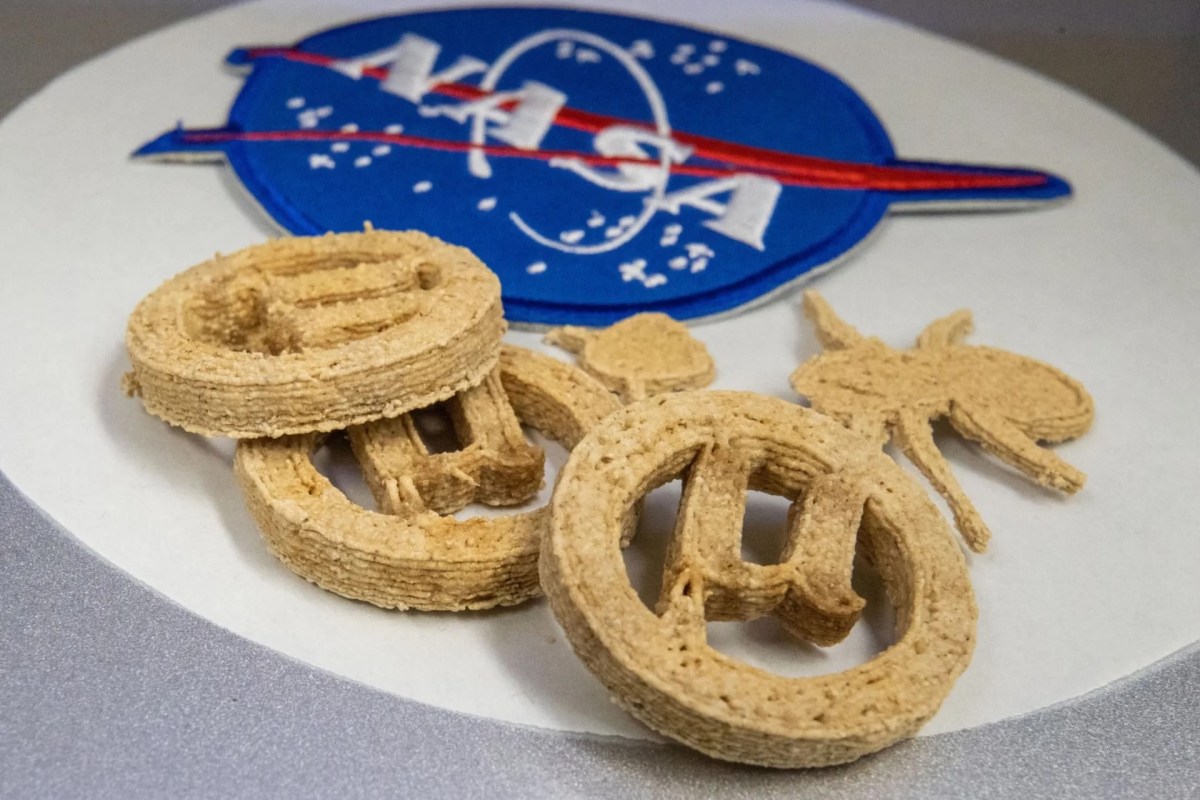
Scientists at Southern Illinois University Carbondale say a future emergency snack — or even a space ration — could begin as a plastic bottle after engineering yeasts that can turn plastic waste and crop leftovers into protein-rich cookies, a concept that could reduce pollution while creating food for resource-limited situations.
Convincing people to actually eat them, however, may prove to be the harder task.
Here's what to know
The work grew out of a NASA project on feeding people during deep-space missions.
The scientists were set to present the results in Chicago this week at the American Chemical Society's fall meeting, the organization reported.
Using engineered yeasts, including baker's yeast, associate professor Lahiru Jayakody and graduate student Sandhya Jayasekara made edible ingredients from broken-down plastic and farm waste, such as proteins, vitamins, and flavor compounds. Those ingredients are used in a 3D-printed cookie called a µBite, or "microbite."
Their process relies on polyethylene terephthalate, or PET, the plastic commonly used in water and soda bottles. Because PET contains abundant carbon, the researchers see it as a useful starting point for rebuilding food-related molecules.
TCD Picks » Quince Spotlight
💡These best-sellers from Quince deliver affordable, sustainable luxury for all




"We were trying to develop technologies for plastic upcycling to make more valuable products." Jayakody said. "We thought, why not focus on making food? Because plastic is carbon and food is carbon."
In theory, the approach could tackle two problems at once: reducing plastic pollution and creating additional food options for emergencies or other circumstances wherein traditional farming or supply chains are hard to sustain.
More background
The cookie-making process begins with PET, corn stalks, leaves, and other biomass. The team puts those materials through oxidative hydrothermal dissolution, a technique developed by SIU Carbondale geology professor Ken Anderson that uses heated, pressurized water and oxygen to break tough waste into compounds microbes can consume.
The engineered yeasts then transform those compounds into proteins, fats, acids, and other food-building materials. After that, researchers mix in fiber, starch, and sweetener and use a 3D printer to form the blend into cookies.
If plastic waste can be turned into something useful instead of accumulating in landfills or ecosystems, that could ease a growing burden on cities and households.
The idea could also help in places where resources are scarce, including disaster zones and submarines.
Public willingness to try the product may be a bigger hurdle than the science behind it. The researchers say data shows the cookies are safe to eat, but they still need institutional permission before taste tests can start.
What's being done?
The team is trying to make the cookies more appealing. Jayasekara developed yeast strains that can produce additives for that purpose, including vanilla flavoring from plant biomass and beta-carotene made using ethylene glycol derived from PET.
Early feedback on smell has been encouraging. The cookies received strong aroma scores, and most participants said they would be willing to eat them in resource-limited situations.
Over time, the researchers want the microbes to make up more of the recipe itself, including the added starch, fiber, and sweetener. If that works, the system could become more self-contained and better suited to closed environments such as spacecraft and submarines.
The same idea points to turning waste into something that supports human health instead of contributing to environmental harm.
"Microbes are very clever," Jayakody said. "So, we are using their traits to solve the problems we created."

Get TCD's free newsletters for easy tips, smart advice, and a chance to earn $5,000 toward home upgrades. To see more stories like this one, change your Google preferences here.






