


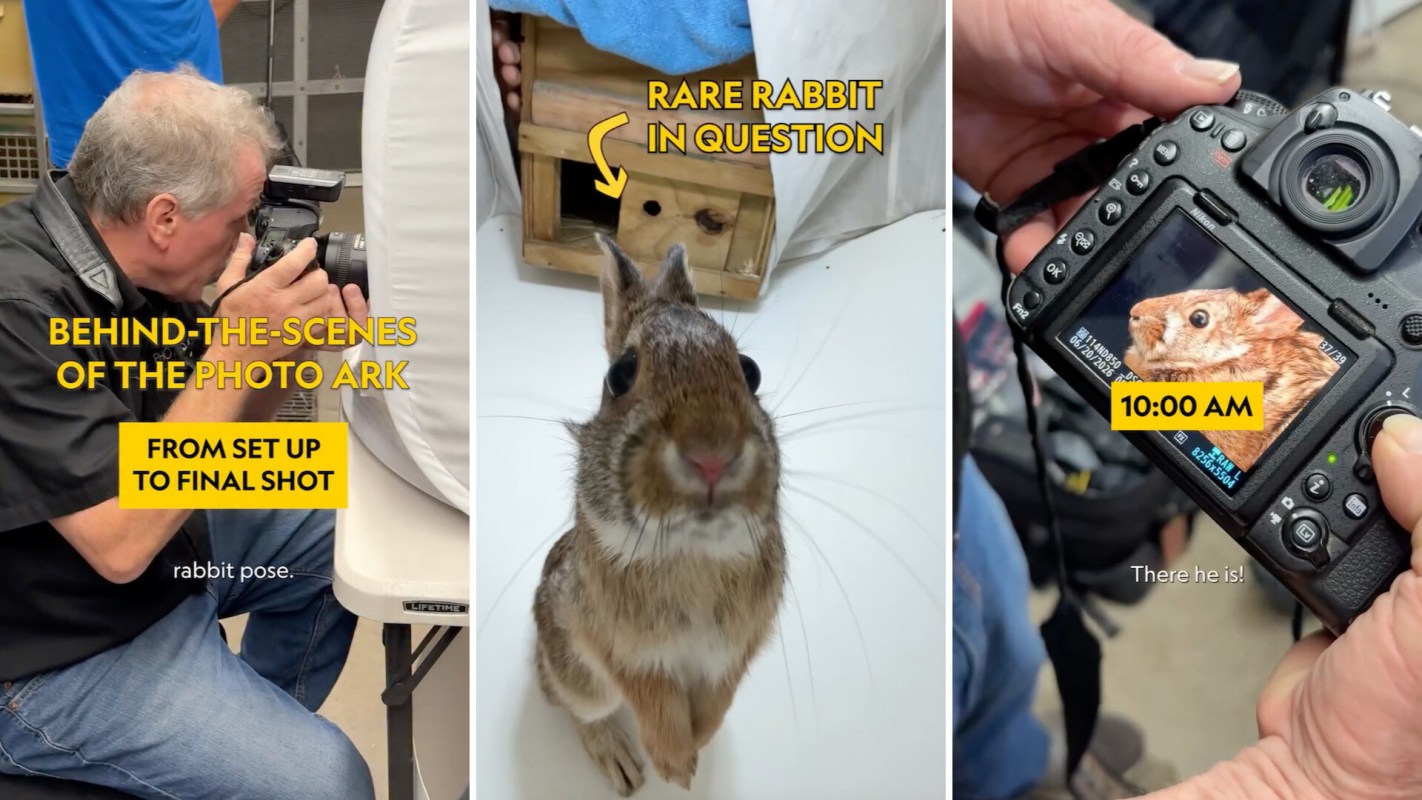
Twenty years into one of wildlife photography's most ambitious projects, National Geographic Explorer Joel Sartore is still finding fresh surprises in front of the lens.
After photographing more than 18,000 species for the Photo Ark, the photographer said the work has not become routine — and that may be exactly why it continues to resonate.
What's happening?
The National Geographic Explorer and founder of the Photo Ark is marking two decades of documenting the world's biodiversity through portraits of animals at conservation institutions worldwide.
The post on Instagram includes footage of Sartore photographing a New England cottontail rabbit, and he called it "A better rabbit shoot than I've ever had on any other rabbit, I think, that was an adult."
In the caption, he said, "For 20 years, I've been on a mission to document the world's biodiversity."
Sartore used the post to show how the project comes together, including Photo Ark taxonomists and partner institutions that help identify and locate species still missing from the archive.
TCD Picks » Quince Spotlight
💡These best-sellers from Quince deliver affordable, sustainable luxury for all




Why does it matter?
The Photo Ark is more than a photography archive. It is also a public-facing effort to get people emotionally invested in species they may never otherwise encounter — especially animals that are threatened, overlooked, or unfamiliar.
Biodiversity loss can feel abstract until people see what is actually at stake.
The New England cottontail is a fitting example. Many people know rabbits as common backyard animals, but a rare native cottontail photographed with care can tell a very different story about habitat, conservation, and survival.
What's being done?
Sartore's post shows that the work is highly organized rather than improvised.
A shoot is shaped by both planning and animal care.
Sartore said "our two Photo Ark taxonomists" work with animal institutions to determine which species still need to be photographed, and on-site animal care experts help make sessions as "efficient and quick and stress-free as possible." Successful conservation storytelling depends on animal welfare as much as on compelling imagery.
There are practical ways to support biodiversity closer to home. Visiting accredited zoos and wildlife centers, supporting habitat restoration efforts, and learning about native species in your area can all help build stronger local conservation networks.
Sartore's long-running project is a reminder that protecting wildlife starts with paying attention — and that one photograph can help people do exactly that.
One user said, "Love getting a peek behind the lens of this project 💛".
Another commented, "Loved seeing kids and adults interact with the Photo Ark exhibit at the Museum of Exploration! ❤️ Such an amazing and important project to be a part of."

Get TCD's free newsletters for easy tips, smart advice, and a chance to earn $5,000 toward home upgrades. To see more stories like this one, change your Google preferences here.







