


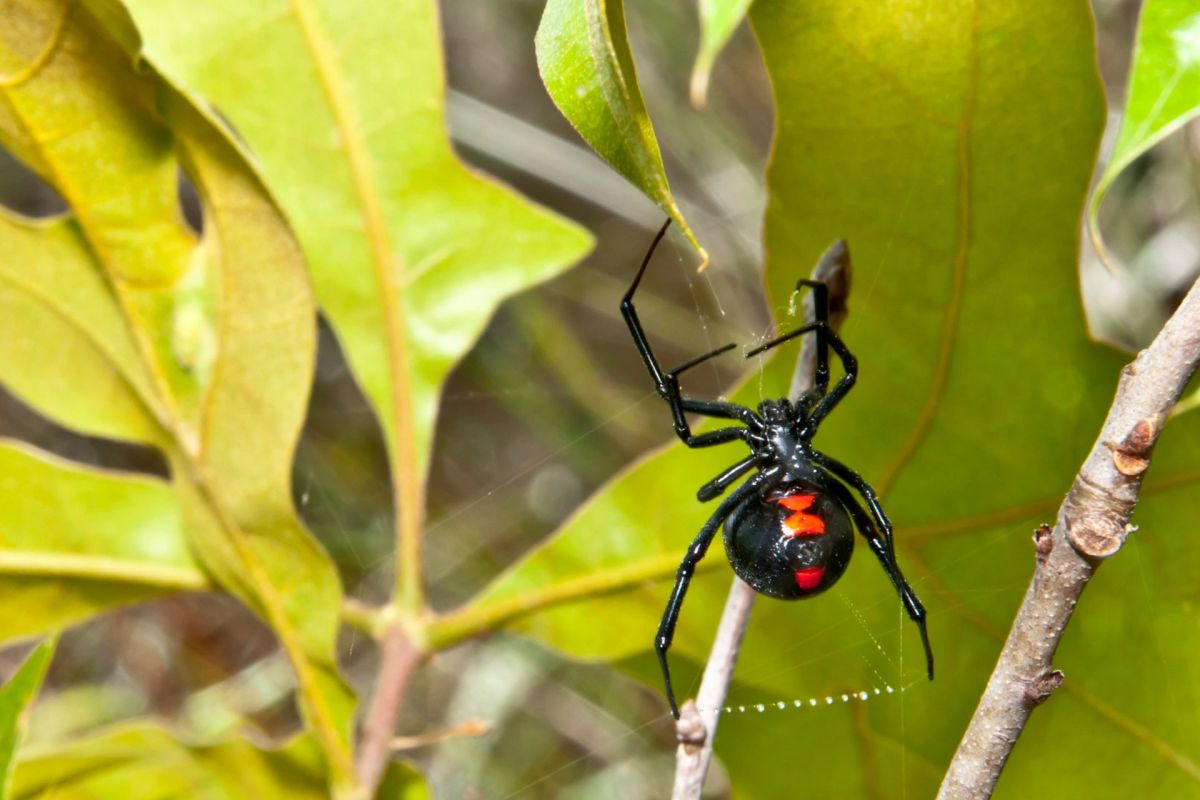
For Arizona State University researchers, black widows offer a way to explore how species respond to a hotter planet. Their investigation focuses on what allows these spiders to thrive near human development in Phoenix despite the city's extreme heat.
Here's what to know
At ASU's West Valley campus, researchers are raising Western black widows and collecting spiders from urban and desert environments to compare their behavior and development, according to ASU News.
Researchers have reared hundreds of spiders in the lab to better understand how their surroundings shape their lives.
Chad Johnson, an associate professor in ASU's School of Mathematical and Natural Sciences, has studied spiders for 30 years and shifted his focus to black widows after his first decade. His work has found that human-developed areas can support dense black widow populations.
Katharine Smas, a Barrett STEM research aide in ASU's Black Widow Lab, has been testing how heat affects spider behavior, growth, energy consumption, and web-building.
Initial results suggest city-dwelling black widows build smaller webs, potentially reducing their energy expenditure in hot conditions. Researchers have not yet confirmed that explanation.
TCD Picks » Quince Spotlight
💡These best-sellers from Quince deliver affordable, sustainable luxury for all




More background
Shelter and access to prey and water could all help explain why black widows do well in developed parts of Phoenix. Heat is not the only condition that human development brings to their habitat.
Why some species vanish as urban temperatures rise while others survive is a broader question that Johnson's lab could help answer. The researchers are working to identify which conditions contribute to the spiders' success.
Johnson describes black widows as secretive spiders that usually stay in their webs and bite when handled, confined, or disturbed. Their venom can cause intense pain, muscle cramps, nausea, and, in severe cases, difficulty breathing. However, an analysis covering over 15,000 reports of black widow exposure to U.S. poison centers recorded no fatalities, with about 10% of patients admitted to a hospital, according to ASU News.
What's being done?
Smas's honors thesis will examine differences in DNA methylation between urban and desert black widows.
This chemical process can activate or silence genes without altering the DNA sequence itself, giving researchers a way to study how the spiders respond to environmental pressures.
Although the black widow's genome has already been mapped, Smas said DNA methylation remains little studied in these spiders. Her comparison could help reveal whether urban conditions influence gene activity.
For residents sharing space with black widows, Johnson recommends checking living areas, minimizing water use, and clearing developing webs at night rather than spraying pesticides.
Where can I learn more?
These stories cover a spider's arrival in England, Phoenix's shade plans, heat-driven snake encounters, and a false widow bite.
• In England, a wasp spider appeared in Cheshire for the first time.
• Phoenix plans to add 27,000 trees and 550 structures to provide shade against extreme heat.
• Arizona firefighters answered six snake calls before noon as summer heat drove snakes toward homes.
• In the U.K., a mother struggled to reclaim her garden after a false widow bite left her injured.

Get TCD's free newsletters for easy tips, smart advice, and a chance to earn $5,000 toward home upgrades. To see more stories like this one, change your Google preferences here.






