


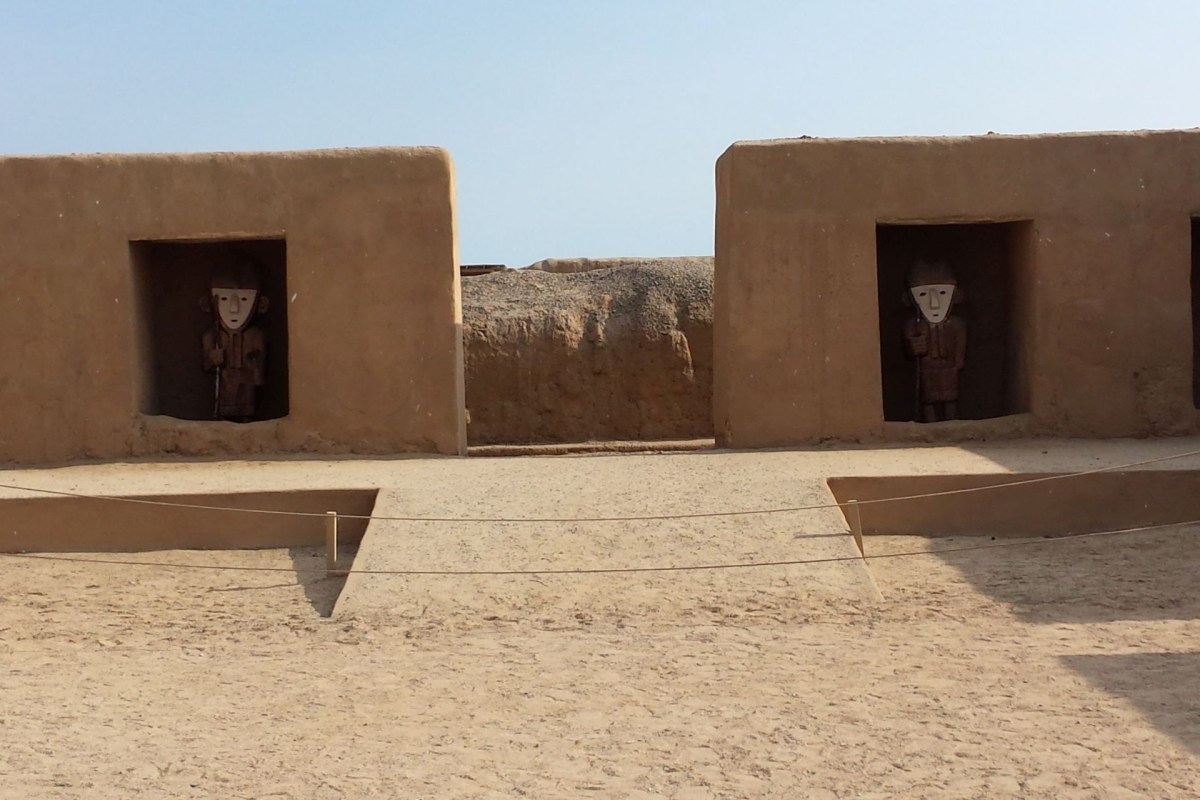
A tomb in Peru remained untouched by looters for nearly 600 years, preserving at least 38 burials alongside gold artifacts, metal weapons, jewelry, and colorful textiles.
Here's what to know
Chan Chan, the UNESCO-listed site near modern-day Trujillo, is where archaeologists found the mausoleum's entrance buried under stone, soil, and sand, according to Smithsonian magazine.
The Inca took control of the region in the mid-15th century; the burial occurred shortly before or during that conquest.
Located in the Utzh An complex, the tomb features a staircase leading down to a central chamber about 16 feet deep and 4 feet across, Smithsonian reported, citing the state-run Andina news agency.
That chamber held one individual, while a side room contained around 20 sets of remains. Excavations elsewhere on the platform revealed another 17 skeletons.
The individuals' ages, genders, and causes of death remain unknown. Their burial objects nevertheless offer clues about their social positions, suggesting high status and possibly royalty.
TCD Picks » Quince Spotlight
💡These best-sellers from Quince deliver affordable, sustainable luxury for all




More background
The Chimú civilization flourished in northern Peru from approximately 900 to 1470, according to Smithsonian. At its peak, its capital, Chan Chan, surpassed every other urban center in the Americas in size, with as many as 60,000 residents.
Irrigation canals allowed Chimú communities to sustain life in the desert valley. Hydraulic engineer Charles Ortloff highlighted their engineering achievements in a 2009 Smithsonian story, calling the Chimú the "first true engineering society in the New World."
Each new reign brought a royal compound. Chimú kings built these complexes when they took power and lived in walled palaces.
Many surviving palaces still contain the burial places of rulers and members of their retinues in the form of funerary platforms.
What's being done?
Researchers hope studying the tomb will reveal more about Chimú burial customs and social rank.
"What was known about elite burials in Chimú society came from looted platforms, private collections, and museum holdings," lead archaeologist Jorge Meneses told El País, according to Smithsonian. "There was no scientific data on the individuals and their corresponding artifacts and associations."
Missing bones have led researchers to consider whether someone relocated or reburied the central chamber's occupant. The individual's skull also bore reddish pigment, possibly cinnabar, a crystalline mineral composed of mercury sulfide.
That possibility is consistent with a practice known among Andean societies, whose communities continued to interact with, and sometimes worshipped, deceased relatives and leaders.
Researchers hope the tomb will clarify the customs of the upheaval surrounding the Inca conquest.
Meneses told El País that researchers have excavated "no more than 7% of Chan Chan's total area," according to Smithsonian. "Evidently, the citadel has much more to tell."
Where can I learn more?
From tombs to buried cities, such discoveries reveal details of past societies.
• In Egypt, a tomb revealed Ramesside burial rites while flash floods threatened its painted walls.
• In Denmark, a homeowner digging for a terrace uncovered the country's biggest Viking silver hoard.
• At Turkey's Karahan Tepe, a rare Neolithic sculpture depicts a human riding a leopard.

Get TCD's free newsletters for easy tips, smart advice, and a chance to earn $5,000 toward home upgrades. To see more stories like this one, change your Google preferences here.






