


Why do period-care shoppers have to search through so many brands just to find one that meets their needs and preferences?
In a recent product aisle breakdown, one content creator argued that people hoping to reduce plastic exposure during their cycles should pay close attention to all the layers of a product — even those marketed as "clean" or "organic."
Here's what to know
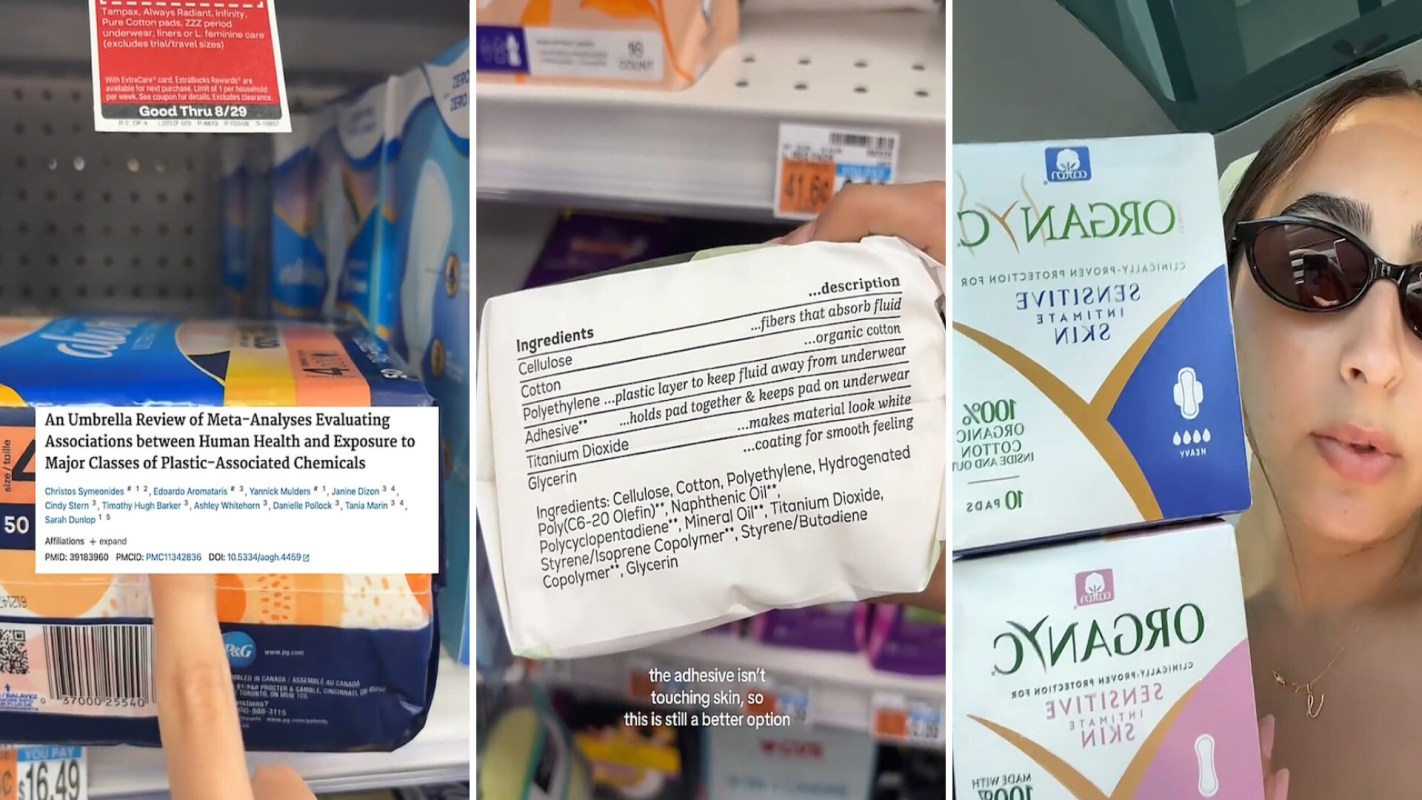
In a short video shared on social media, creator Victoria Noelle (@noelle_asmr) said major period-care brands began printing more ingredient information on packaging only after consumers and activists demanded it. "I mean, I think you deserve to know what's going in your underwear," she says in the clip, referring to the components of menstrual pads.
Showing several of the pads sold at CVS, Victoria pointed to materials commonly found in the standard options, including cellulose, polyethylene, and polyester. Cellulose was described as a plant-based fiber used in the absorbent center, while polyethylene and polyester were described as plastic materials derived from fossil fuels that some shoppers may wish to avoid.
The creator appeared to be pointing out how difficult it may be to limit plastic products in one's period care, even when buying brands marketed as clean and green.
More background
The video highlights how products marketed as cleaner or more eco-conscious can still be assembled with dyes, adhesives, and plastic-based components. Labels like "clean," "pure," "plant-based," and even "organic" can suggest an entirely plastic-free pad, but some products still contain certain plastic-based ingredients.
TCD Picks » Quince Spotlight
💡These best-sellers from Quince deliver affordable, sustainable luxury for all




Many people may need or want to use menstrual products that include plastics, and sexual and reproductive health experts agree that no one should be demonized for their period care choices. That's because these choices are so personal and because access to the full range of options can be inequitable — and expensive.
Still, there is an argument to be made that consumers should have more and better options — including truly plastic-free items — that work for them. And consumers speaking out about their preferences could help stimulate innovative product development as well as more transparent labeling.
What can be done?
Content creator Victoria urged shoppers not to rely only on the marketing on the front of the box but to check what each layer of the product actually contains, from the top sheet to the core, backing, and adhesive.
The creator ended up buying a product she said was made with "100% organic cotton inside and out" and had a cornstarch-based backing, while also noting that some adhesive ingredients can still be fossil-fuel-derived.
One commenter wrote, "switched to period underwear never looked back." Another added, "You should make a video like this for tampons."
Though the issues of limited menstrual products and greenwashed period care aren't the responsibility of individual consumers, when consumers do speak out about their preferences, it can help motivate brands to improve options and transparency.
Where can I learn more?
If you want to think more about how period care can overlap with questions of personal preferences for plastic-free and nontoxic options, you might want to read these pieces:
• Carefree faced a lawsuit over pad chemicals that consumers called a serious health concern.
• In South Korea, pad testing revealed chemical compounds that raise awareness about everyday exposure.
• Some toilet paper brands contained concerning additives in sample testing, widening personal-care exposure concerns.
These articles can help show why even small choices about materials and marketing can matter — and why user-centered design that meets real needs should always be a part of menstrual product development and packaging.

Get TCD's free newsletters for easy tips, smart advice, and a chance to earn $5,000 toward home upgrades. To see more stories like this one, change your Google preferences here.






