


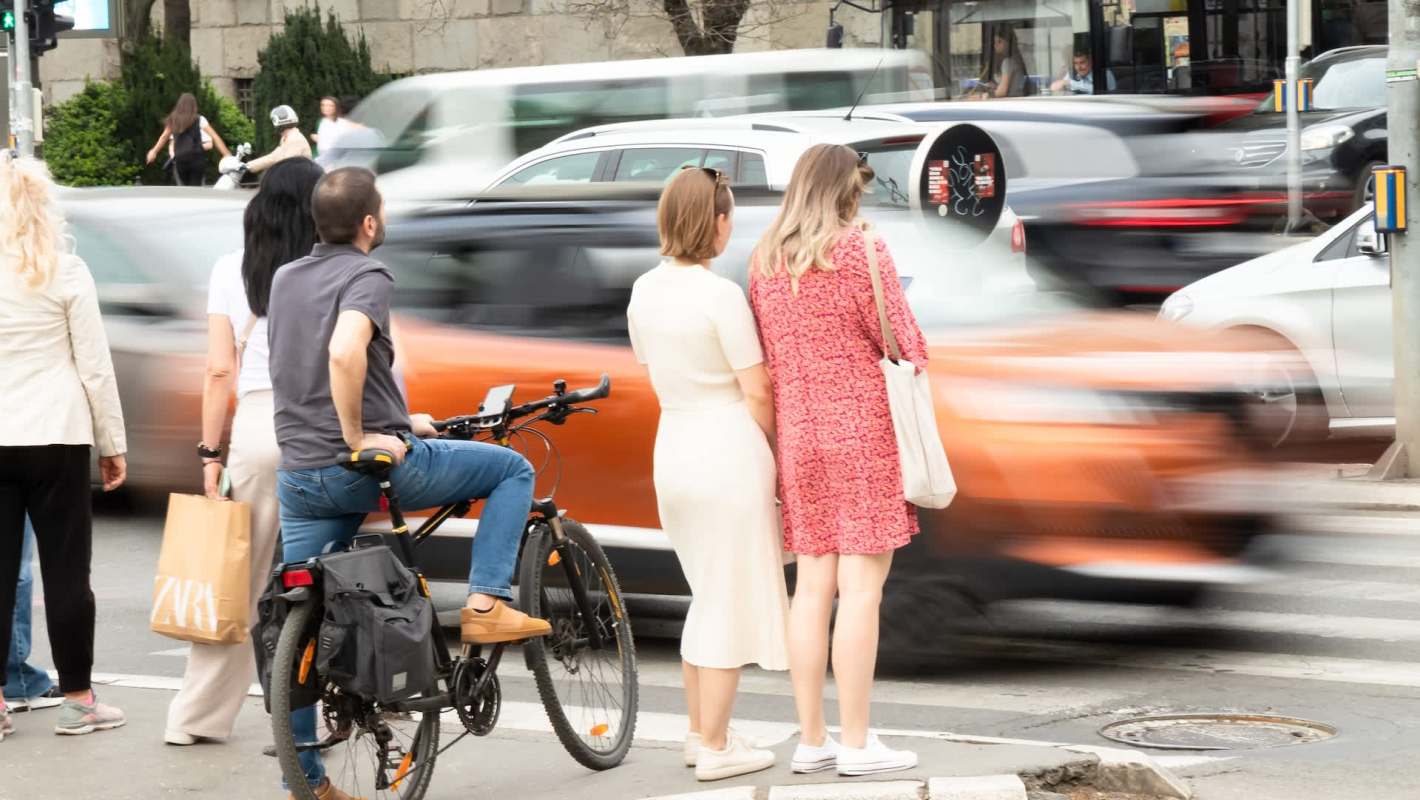
America's pedestrian-safety crisis is becoming harder to ignore, and a new analysis of Smart Growth America's latest road-safety report says the danger is built into the system: many U.S. streets are engineered to speed vehicle travel, even when that puts people at risk.
The result is a system in which walking can be deadly in places that should feel routine, from neighborhood streets to state-owned roads.
What's happening?
In a new breakdown, Ray Delahanty, the content creator behind CityNerd, used the "Dangerous by Design 2026" report published by Smart Growth America and the National Complete Streets Coalition to explain why U.S. road deaths remain so high.
Delahanty zeroed in on a stark number from the report: from 2009 to 2024, pedestrian deaths rose 72%, faster than both population growth and the increase in vehicle miles traveled. He described that trajectory as "incredibly backwards."
Using deaths per resident instead of per mile driven, the report measures pedestrian danger in a way Delahanty said reflects the problem more accurately. By that standard, Memphis, Tennessee, ranked worst, and many of the highest-fatality metros clustered in Sunbelt cities and inland California.
He connected that regional pattern to when and how those places grew. Metros that did most of their expanding in the car era often ended up with street networks geared toward moving vehicles efficiently, not toward protecting people on foot, on bikes, or using transit.
TCD Picks » Quince Spotlight
💡These best-sellers from Quince deliver affordable, sustainable luxury for all




Why does it matter?
Street design shapes whether people can safely get to school, work, stores, transit stops, and parks without risking serious injury or death.
Older adults also face outsized danger: People 65 and older accounted for 23% of pedestrian deaths despite making up 18% of the population. Delahanty also noted that 57% of roadway fatalities in 2024 happened on state-owned roads, where design rules often emphasize speed and traffic movement.
The report also compares the United States to 34 peer nations and found that America performs far worse on road safety. Delahanty emphasized that even Canada — with sprawling landscapes and cities developed around the same time frame — has a roadway fatality rate less than half that of the United States.
One commenter wrote, "Why do we do this to ourselves?" Another said the video was a "Good reminder that it's not all or nothing and there are ways to make it safer."
What's being done?
As an example of what can work, Delahanty cited Central Avenue in Albuquerque, New Mexico. After the corridor was redesigned as part of a bus rapid transit project, he said, serious injuries and fatalities fell by 60%.
Results like that come from making different design choices — improving transit access and giving people outside cars a central role in the street layout rather than treating them as secondary.
He encouraged viewers to check their own city's capital improvement plan for where safe-streets projects are showing up — and where they are missing. Whether proven fixes get built depends on choices made in local budgets, by state transportation departments, and by elected officials.
He made a similar argument about federal policy: roadway safety should sit at the center of transportation planning instead of being handled as a minor add-on. That would mean backing street redesigns, adopting lower-risk road standards, and supporting leaders prepared to value lives over speed.
As Delahanty put it, "We know how to make them safer."

Get TCD's free newsletters for easy tips, smart advice, and a chance to earn $5,000 toward home upgrades. To see more stories like this one, change your Google preferences here.






