


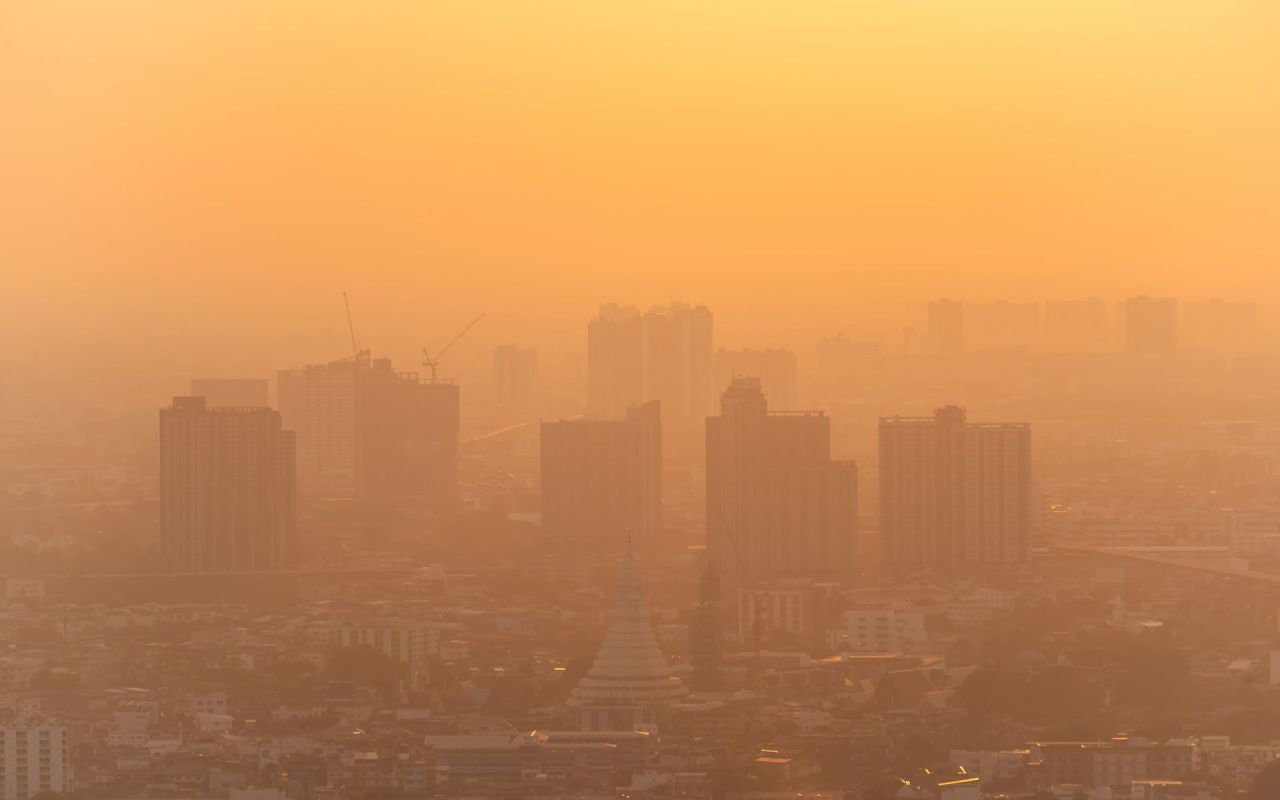
A European Union analysis released on Sept. 30 suggests that adding heat waves and wildfire smoke to existing air pollution has exposed about a third of the world's population to what it classified as "extremely poor" air quality.
Here's what to know
Malay Mail reported that the European Union's Copernicus Climate Atmosphere Monitoring Service said 34% of people worldwide faced what it labeled "extremely poor" air quality from Jan. 1 through Sept. 15.
Another 17% of the global population fell into the "very poor" category, and only 5% reached what it described as "good" ozone levels.
Asia was hit the hardest, with 53% of the region's population in the "extremely poor" category and another 22% in "very poor" ozone conditions.
Those exposure categories were measured against World Health Organization guidance that caps eight-hour ozone exposure at 100 micrograms per cubic meter.
More background
On hot, sunny days, pollution from vehicles, industry, and wildfires can react in the air to create ground-level ozone, a pollutant that can turn already polluted conditions into a major health risk.
TCD Picks » Quince Spotlight
💡These best-sellers from Quince deliver affordable, sustainable luxury for all




Health effects can include damaged lung tissue, trouble breathing, and asthma attacks.
According to the analysis, record heatwaves and wildfires in Europe and North America helped drive the increase, with smoke spreading far beyond the burned areas.
Ozone has been especially hard to bring down, even as some other harmful pollutants have declined, because climate conditions make it easier to form. The analysis also pointed to major wildfires in Indonesia and said El Niño, which began in June, could contribute to more fires in Southeast Asia.
What's being done?
The Copernicus Climate Atmosphere Monitoring Service tracks pollution and wildfire activity using satellite data and computer models.
That helps explain why ozone remains a stubborn problem even after declines in some other major air pollutants over recent decades.
Dangerous air is not always local or visible. A stretch of hot, sunny weather combined with smoke or urban pollution can worsen air quality even far from a wildfire, making air-quality alerts more important during heat events.
As CAMS director Laurence Rouil said in the Atmosphere Watch report: "Air pollution does not stop at borders. It can travel thousands of kilometres, crossing continents and oceans and affecting air quality far from its source."
Where can I learn more?
These stories look at the same ozone and smoke threats highlighted in this report.
• Across the U.S., blazing heat and wildfires are wiping out air quality gains.
• Across the U.S., wildfire-driven ozone is linked to premature deaths far from the flames.
• In China, scientists found that winter ozone pollution can spike even without summer heat.

Get TCD's free newsletters for easy tips, smart advice, and a chance to earn $5,000 toward home upgrades. To see more stories like this one, change your Google preferences here.






