


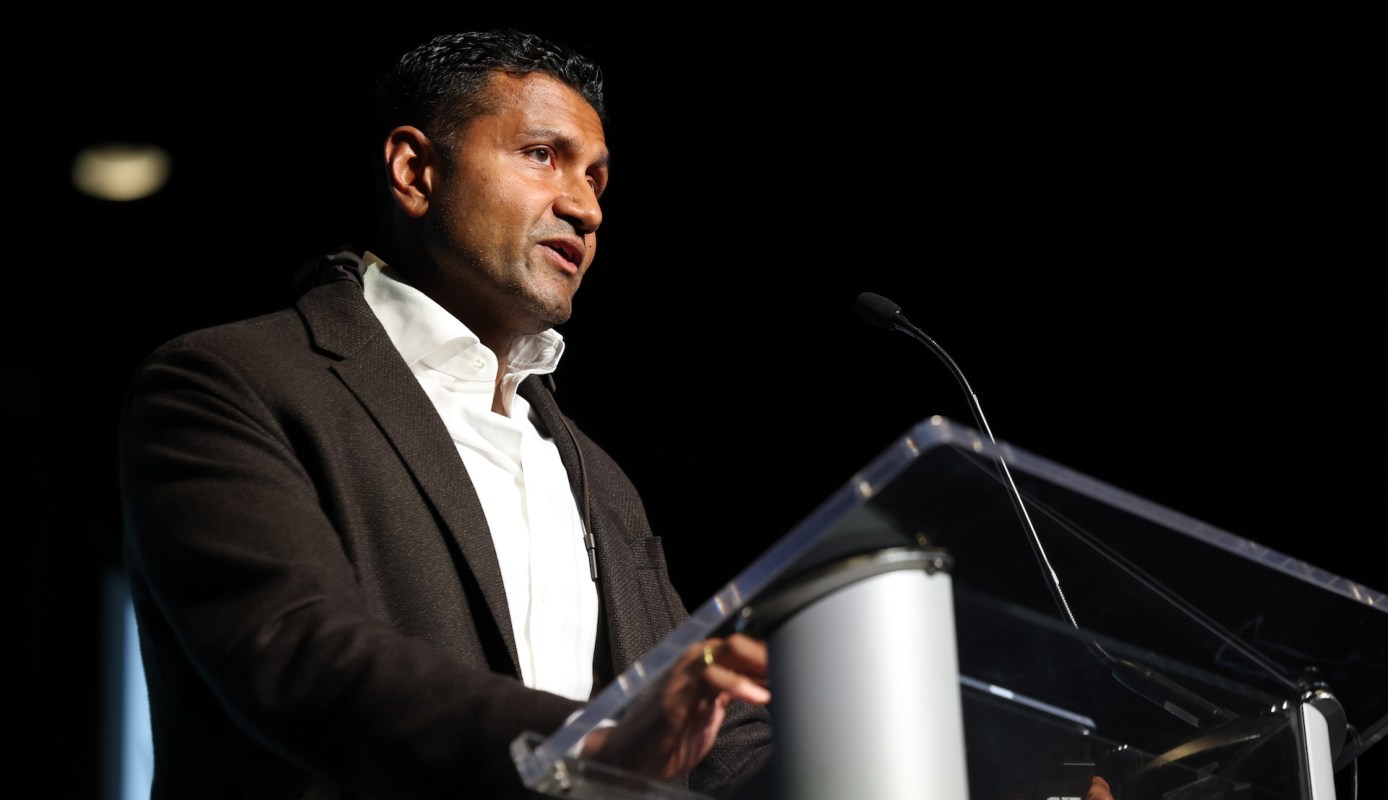
Palantir chief technology officer Shyam Sankar said on CBS's Face the Nation that some AI researchers have found a type of religious devotion to artificial intelligence itself — so much so that he believes there's a "mass psychosis, social delusion around it."
Gizmodo covered Sankar's remarks, which began circulating on the social platform X, and offered a blunt take: "Probably best not to treat this like a real trend."
Here's what to know
On CBS's Face the Nation, Sankar suggested that many Silicon Valley researchers were trying to fill "a God-shaped hole in their heart" with the "machine god of AI."
"For example, so many AI researchers have started smoking as a way of signaling to other researchers how much they believe in AI," he said.
He added to describe the thinking behind that behavior: "I believe so much in AI that it's going to cure cancer. So I will — I'm showing you my chips are all in.'"
Sankar did not offer specifics regarding where that impression came from, but Gizmodo believed he may have been referring to Business Insider's reporting on Silicon Valley, titled, "Silicon Smokers: Meet the tech founders who think that cigarettes are their edge."
TCD Picks » Quince Spotlight
💡These best-sellers from Quince deliver affordable, sustainable luxury for all




More background
The vast computing power that can help AI optimize clean energy systems and grid operations is also expected to lead to medical breakthroughs.
For his part, Friend CEO Avi Schiffmann has claimed, according to Gizmodo, "By the time you do get lung cancer, our AI robots are supposed to have cured that." But executives like Sankar have cautioned against overconfidence that excuses risky behavior today.
AI is also increasingly tied to the energy grid, driving higher electricity demand, water use for cooling, security concerns, and higher utility costs if infrastructure cannot keep pace.
What can be done?
The issue is less about Silicon Valley aesthetics than about separating actual medical progress from hype and groupthink. AI is already useful in research and pattern-finding, but treating it as a guaranteed cure-all can distort decisions about health, risk, and even public investment.
"Anyway, try not to get any stupid ideas from any of this," Gizmodo concluded. "Not even Grok thinks AI is remotely close to curing cancer."
Where can I learn more?
For more on AI issues, these stories dig into the hype and fallout tied to the AI boom.
• Psychologists are warning that rapid increase in AI use is reshaping behavior and demanding regulation.
• Researchers found very small words can dangerously alter advice from AI health chatbots.
• Data centers' overlooked toll on human health is emerging as an urgent public-health issue.

Get TCD's free newsletters for easy tips, smart advice, and a chance to earn $5,000 toward home upgrades. To see more stories like this one, change your Google preferences here.






