


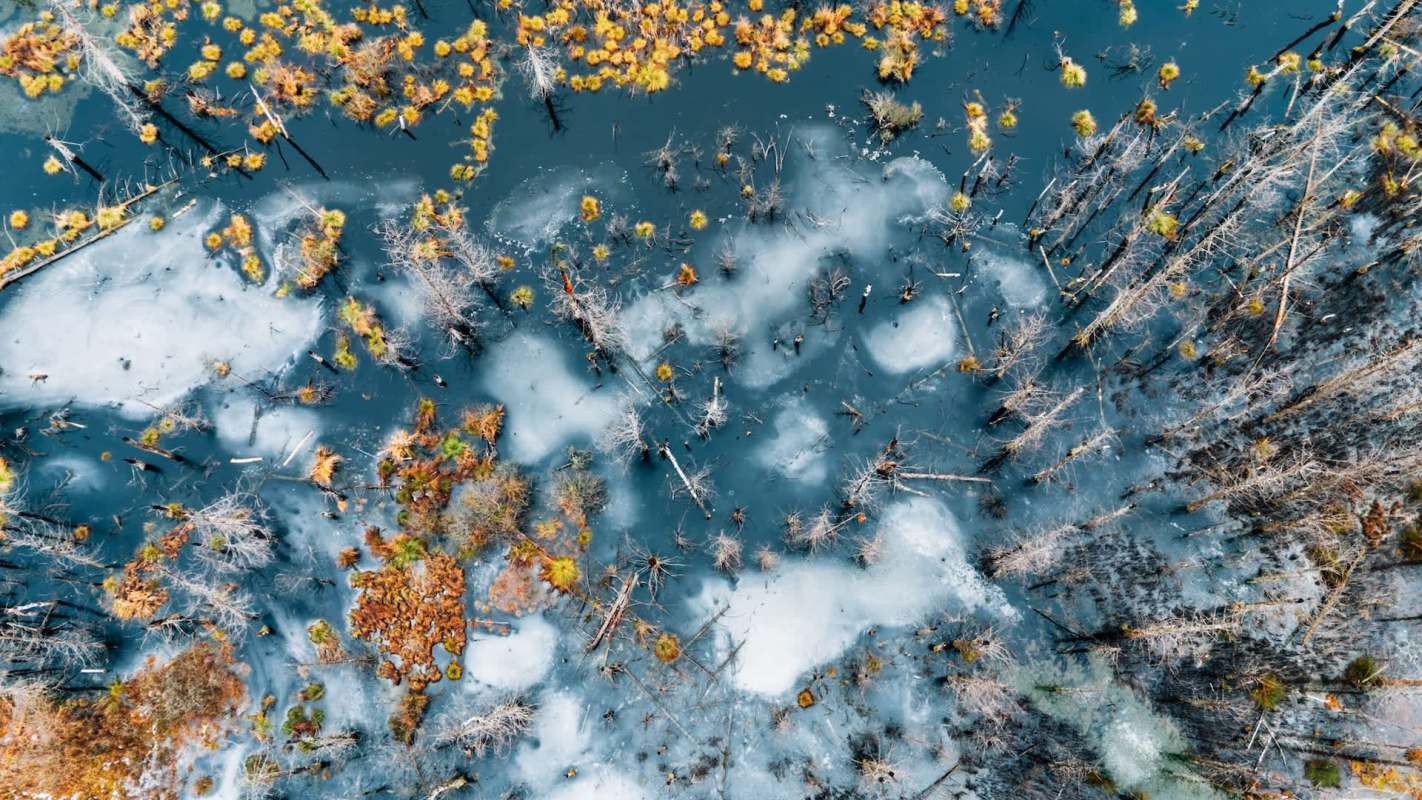
Scientists have found several often-overlooked chain reactions of the climate crisis that could make human-caused warming up to 30% worse by 2100.
Here's what to know
A new study suggests forecasts haven't taken into consideration important climate factors such as thawing permafrost, warming wetlands, inland waters, and more intense wildfires that could raise post-2020 human-driven warming by roughly 20% to 30% by 2100.
Per Gizmodo, the team's reduced-complexity climate model estimated that these feedbacks could add around 0.4 degrees Fahrenheit by 2100 even in a net-zero world, and about 0.5 degrees by 2100 if global emissions keep moving at their current pace. That would translate to a 20% to 30% increase in human-caused warming after 2020.
Published in Environmental Research Letters, the paper looked at climate feedbacks that many major models do not yet include completely. Climate feedbacks are mechanisms in which rising temperatures cause additional greenhouse gas emissions, which then lead to still more warming.
Brian Buma, a senior climate scientist at the Environmental Defense Fund, said in a release, "This research makes clear that the Earth and climate system doesn't stand still while we debate policy. Emissions from permafrost, wetlands, and wildfire could meaningfully erode our remaining time to warming thresholds—and they are unaccounted for in most scenarios."
More background
The 2015 Paris Agreement set a target of limiting warming to 2.7 degrees Fahrenheit in hopes of avoiding the most severe consequences of climate change. If existing models are undercounting warming from natural feedbacks, the remaining margin for error may be even smaller than many policymakers assume.
TCD Picks » Quince Spotlight
💡These best-sellers from Quince deliver affordable, sustainable luxury for all




Extra warming can mean more dangerous heat, worsening wildfire conditions, ecosystem losses, and higher risks to food systems, infrastructure, and public health.
Chris Bowen, Australia's climate change and energy minister and COP31 negotiations president, said in a recent statement, "Every fraction of a degree of warming above 1.5 leads to increasing and increasingly severe climate impacts."
The study noted that some factors, including water vapor and the ocean's declining ability to absorb carbon, are already represented more fully in climate models.
By contrast, emissions driven by warming in land and water systems have been much harder to capture, even though the study suggests they can further erode the world's remaining carbon budget.
What's being done?
Improving the climate models governments and institutions use to shape policy could help decision-makers set more realistic carbon budgets and faster emissions-cutting timelines.
Co-author Robert Jackson, a provostial professor at Stanford University's Doerr School of Sustainability, said in the release, "The results are a wake-up call, and it's imperative that they be included in the next generation of climate policies. Failure to do so will make meeting the world's climate goals less and less likely."
Where can I learn more?
Climate scientists warn the world may be approaching dangerous thresholds sooner than many forecasts have suggested. The stories below show why even modest increases in expected warming can bring major consequences for climate risks and economic damage.
• Across climate science, every tenth of a degree matters as dangerous thresholds draw closer.
• "Godfather of Climate Science" James Hansen warns the world may soon pass a catastrophic threshold as temperatures keep climbing.
• Economists now estimate a warming world could bring economic losses six times worse than earlier projections.

Get TCD's free newsletters for easy tips, smart advice, and a chance to earn $5,000 toward home upgrades. To see more stories like this one, change your Google preferences here.






